UAE Property Economics: Reviewing The Real Estate Wealth Map
Von Dr. Pooyan Ghamari · · 3 Min. Lesezeit
Dieser Artikel ist derzeit nur auf Englisch verfügbar. Eine deutsche Ausgabe ist nicht erschienen.
A Masterclass in
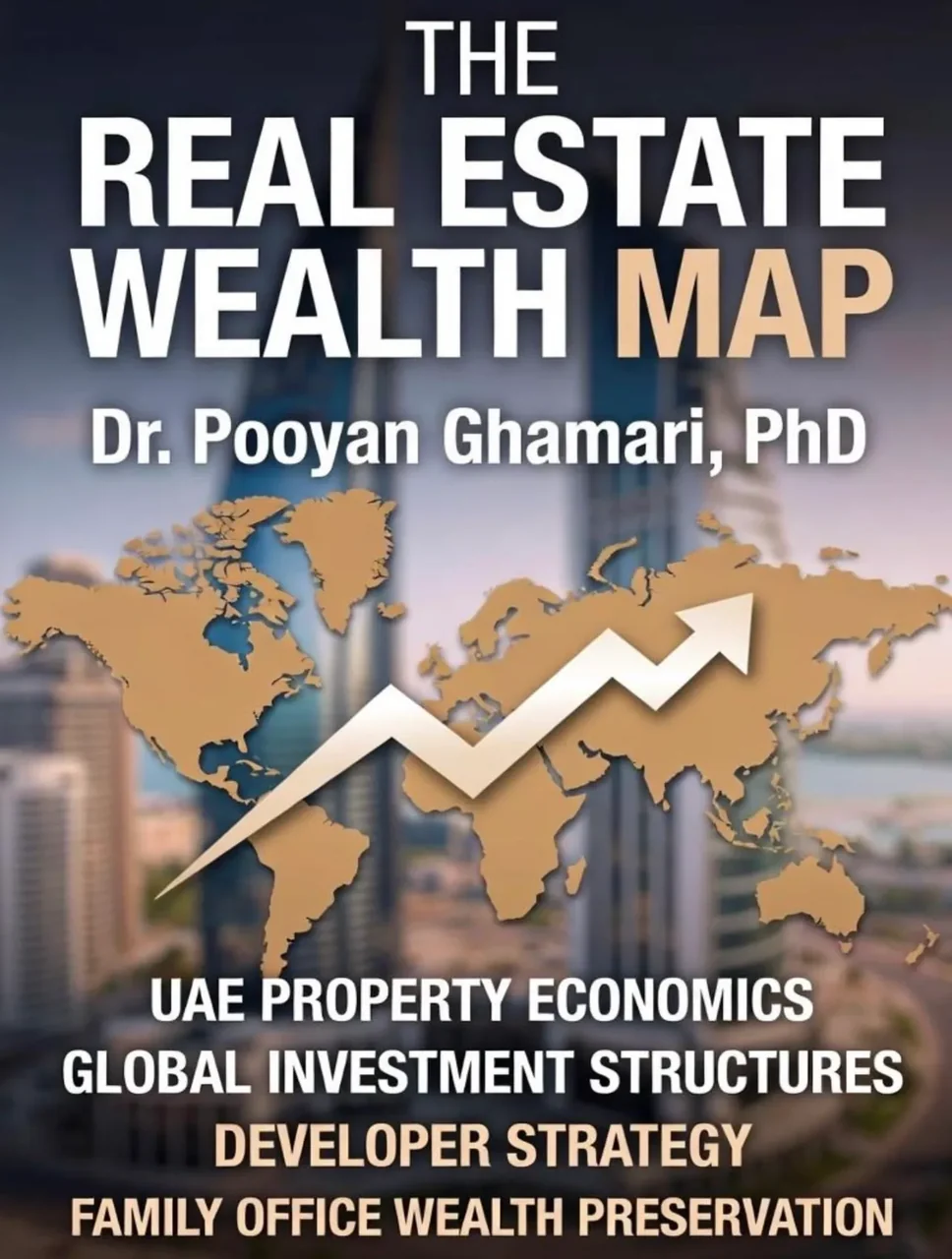
Most literature surrounding UAE real estate is saturated with generalized market optimism that fails to deliver actionable strategies. The Real Estate Wealth Map: Prices Then, Prices Now, Prices Next cuts through this noise to deliver a precise, data-driven blueprint for serious investors.
Authored by Swiss economist and ALand FZE CEO Dr. Pooyan Ghamari, this book is not written from a detached research desk. Instead, it is forged in deal rooms, land registries, and developer boardrooms, capturing the unwritten knowledge that elite practitioners rely on.
Here is a comprehensive breakdown of the book’s core insights and why it serves as an indispensable guide for navigating the next decade of UAE real estate.
1. The Structural Evolution of the Market
To accurately predict where the UAE market is heading, Dr. Ghamari insists that investors must understand the structural forces of the past decade. The book outlines three defining phases:
- The 2014–2016 Correction: Triggered by collapsing oil prices, this phase separated genuine assets from speculative paper stories. Locations anchored by real infrastructure and owner-occupier demand recovered significantly faster than speculative zones.
- The Quiet Accumulation (2017–2019): While public sentiment was soft, sophisticated developers and investors quietly acquired land at cyclical lows, capitalizing on the "silent advantage window".
- The Pandemic Reset (2020–2022): The UAE’s decisive handling of COVID-19, combined with new remote work and Golden Visa programs, catalyzed a massive wave of global wealth migration.
2. Corridor-by-Corridor Reality
Rather than painting Dubai and the wider UAE with a broad brush, the book segments the market by specific economic corridors:
- Established Prime: Areas like Downtown Dubai, Dubai Marina, and Palm Jumeirah are fully priced and function primarily as wealth preservation locations for lifestyle buyers and institutional capital.
- Growth Communities: Master-planned areas such as Dubai Hills Estate offer consistent appreciation and strong developer presale absorption.
- Infrastructure Plays: Dubai South currently represents the widest gap between current land pricing and future structural value, heavily driven by the confirmed Al Maktoum Airport expansion.
- Beyond Dubai: Sharjah has solidified itself as a robust owner-occupier economy, Ras Al Khaimah is undergoing international repricing due to the "Wynn Effect," and Abu Dhabi maintains an institutional premium stewarded by Aldar Properties.
3. The Architecture of Wealth Protection
A standout feature of The Real Estate Wealth Map is its deep dive into corporate structuring. Buying a property is only the visible act; the invisible architecture holding it determines its survival across tax regimes and generations. Dr. Ghamari recommends a robust three-point structure:
- The British Virgin Islands (BVI): The BVI endures as a cornerstone for holding companies due to its zero corporate tax, asset protection, and English common law foundation.
- UAE Free Zones: Entities in zones like the DIFC or ADGM serve as the operational layer, providing a formal base for family offices.
- Prospera Honduras: This special economic zone offers a complementary jurisdiction for digital-era business operations and remote management.
4. The 10-Dimension Land Scoring Framework
For developers and family offices, the book introduces a strict ten-dimension framework for evaluating any land plot before committing capital. This diagnostic tool assesses factors such as clean title history, clear permitted use, predictable approval paths, and resale liquidity.
The scoring rule is ruthless but necessary: a plot with concentrated risk in a single dimension can destroy a transaction, meaning any plot scoring below 65 out of 100 requires serious reconsideration.
Final Verdict
The Real Estate Wealth Map is an authoritative, uncompromising guide to the realities of UAE property investment. Dr. Ghamari successfully distills two decades of cross-border real estate experience into a highly readable, strategic playbook.
Whether you are a developer planning phased acquisitions, a family office establishing generational governance, or an investor seeking to capitalize on the infrastructure gap in emerging corridors, this book provides the exact frameworks required to act with conviction and precision. It proves that the market does not reward patience with certainty; it rewards anticipation with structural precision.
Originalartikel: https://ghamari.org/articles/f/uae-property-economics-reviewing-the-real-estate-wealth-map