What Eu Strategic Project Status-Means Critical Minerals
Von Dr. Pooyan Ghamari · · 11 Min. Lesezeit
Dieser Artikel ist derzeit nur auf Englisch verfügbar. Eine deutsche Ausgabe ist nicht erschienen.
What Does EU Strategic Project Status Mean for Critical Minerals?
By Dr. Pooyan Ghamari, PhD | Swiss Economist and Independent International Strategist | 10 October 2026
EU Strategic Project status means a critical raw material project receives priority treatment, shorter permitting deadlines and coordinated help accessing finance. It does not guarantee EU funding, an operating permit, a buyer or commercial success. The designation reduces administrative friction. It does not remove geology, price, environmental or financing risk.
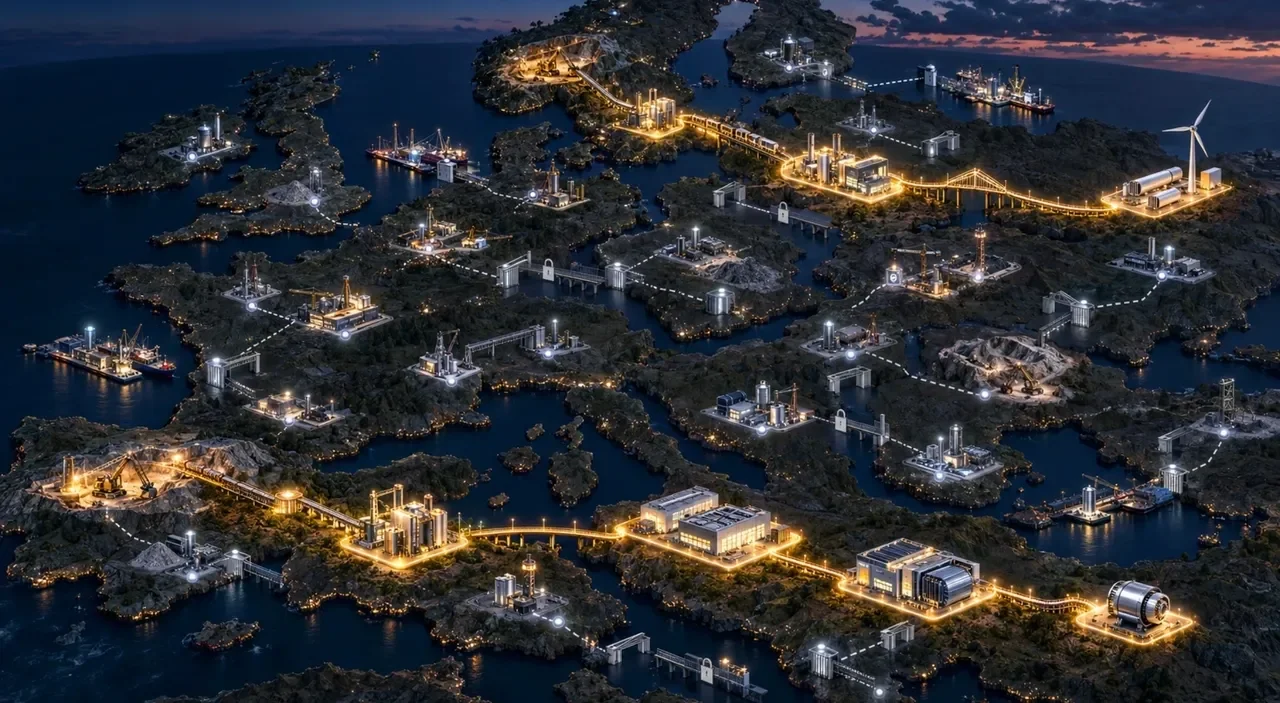
On 9 October 2026, the European Commission approved 46 new Strategic Projects inside the European Union under the Critical Raw Materials Act. The new list brought the total number of designated projects to 106, including projects selected earlier inside and outside the Union. The latest group covers extraction, processing, recycling and substitution across 16 EU countries. The Commission says the projects concern 15 of the Union’s 17 strategic raw materials and require about €21.1 billion in capital investment.
The announcement sounds like an industrial breakthrough. It is more accurate to call it an administrative and political signal whose economic value still has to be earned.
That distinction is the heart of the issue.
What EU Strategic Project status actually provides
The Critical Raw Materials Act entered into force in May 2024. It created a framework for identifying projects considered important to the security of European supply chains.
Selected projects receive three principal advantages.
Priority in national administration
Each member state must provide a single point of contact to coordinate the permitting process. Strategic Projects are treated as having public importance, which is intended to prevent applications from becoming trapped between agencies.
Shorter permitting timelines
The Commission states that the permitting process should generally be completed within 27 months for extraction projects and 15 months for processing and recycling projects. These timelines do not erase environmental assessment, public consultation or other legal obligations. The regulation also allows extensions in defined circumstances.
Coordinated access to finance
The Commission, member states and European financial institutions can help promoters identify financing sources, discuss funding gaps and connect projects with public or private capital. This can strengthen credibility with lenders, industrial buyers and equity investors.
The decisive word is access. Access to finance is not the same as financing.
The Commission’s own framework does not turn Strategic Project status into a cheque, a sovereign guarantee or an obligation for the European Investment Bank to lend. Reuters reported on 9 October that the latest projects do not automatically receive EU funding. The designation can open doors, but the project must still pass through them.
The hidden chain between political status and physical supply
A mineral deposit does not become strategic supply because it appears on an official list. It becomes supply only after a chain of difficult conversions:
Resource becomes reserve. Geological potential must be confirmed through drilling, metallurgy and an economically credible mine plan.
Reserve becomes a permitted project. Environmental, land, water, waste and community requirements must be satisfied.
A permitted project becomes a financed project. Equity, debt, guarantees and often public support must cover construction and working capital.
A financed project becomes a supply chain. The operator needs processing capacity, energy, transport, skilled labour, insurance and customers.
Production becomes strategic autonomy. The refined material must reach European manufacturers at a quality, price and volume they can actually use.
Failure at any link can leave Europe with a designated project but no usable material.
This is why I read the 46 project announcement as a map of political priorities, not a forecast of production.
The financing gap is the real test
Critical mineral projects are difficult to finance because they combine high capital costs, long development periods, uncertain prices and specialised processing risks. A project can be strategically valuable to Europe while remaining unattractive to a commercial lender.
The European Court of Auditors warned in its 2026 report that the Critical Raw Materials Act itself does not provide EU funding for Strategic Projects. The Court also found that European efforts to diversify critical material imports had yet to produce sufficient tangible results.
The European Investment Bank has responded with a dedicated Critical Raw Materials Strategic Initiative covering exploration, extraction, processing, recycling, substitution and innovation. That gives Europe a more capable financing platform. Yet a financing platform still must select projects, price risk and decide how losses are shared.
Here is the structural problem. Europe wants mineral security, but many projects cannot compete at current market prices with established suppliers that possess larger processing ecosystems, lower costs or state support. If Europe refuses all public risk, strategically important projects may never be built. If it absorbs too much private risk, taxpayers can be left financing weak projects without receiving an adequate public return.
The intelligent solution is disciplined risk sharing, not blank cheques.
Public support should be tied to measurable milestones, transparent capital structures, binding customer commitments and clear rights if a project fails. Where public money absorbs early risk, the public should receive value through royalties, warrants, repayment rights, supply commitments or another enforceable benefit.
Why permits alone cannot create mineral sovereignty
Faster permitting matters. Time is capital. Every year of delay increases financing costs and exposes a project to another commodity price cycle.
But the permit is only one constraint.
The International Energy Agency reported in its 2026 Global Critical Minerals Outlook that investment in critical minerals fell by 9 percent in 2025. It also found that processing remains highly concentrated. In Europe, prices for gallium and heavy rare earths were around five times Chinese domestic prices, while germanium prices were almost three times higher.
These figures reveal the industrial challenge. Europe is not simply trying to open mines. It is trying to recreate parts of an integrated ecosystem that includes chemical separation, refining, specialist equipment, technical knowledge, byproduct recovery and long term customer relationships.
Mining without processing can leave dependency largely unchanged. Processing without reliable feedstock can create underused factories. Both without binding demand can leave investors exposed to price suppression by dominant producers.
Strategic policy must therefore connect the entire chain.
Who gains?
Project promoters gain political recognition, administrative priority and greater visibility with financiers and customers.
European manufacturers gain a larger pipeline of potential suppliers for batteries, magnets, defence systems, aerospace, digital infrastructure and renewable energy equipment.
Member states gain investment prospects, tax revenue, jobs and industrial capacity. Regions with old mining or metallurgical skills may gain a route to economic renewal.
The European Union gains negotiating leverage. A credible alternative supply pipeline reduces the power of any single external supplier, even before full independence is achieved.
Who pays?
Private shareholders pay through equity and dilution. Banks and bondholders provide debt only when project risks are acceptable or sufficiently protected.
Industrial customers may pay through advance purchases, price floors or binding offtake agreements. These contracts can be more valuable than political endorsement because they create bankable demand.
Member states and EU institutions may pay through grants, guarantees, loans, infrastructure or research support. Taxpayers carry risk when public support is not repaid or when infrastructure is built for projects that fail.
Host communities may pay through land use, water pressure, traffic, noise or environmental risk. Their costs are real even when they do not appear in a project finance spreadsheet.
Consumers may ultimately pay somewhat higher prices for materials produced under stricter environmental, labour and security standards. That premium should be stated honestly. Sovereignty is a form of insurance, and insurance has a price.
Who decides?
The European Commission decides which applications receive Strategic Project status under the criteria in the regulation.
National and regional authorities retain responsibility for permits and environmental procedures. The designation does not abolish local law.
Banks, the European Investment Bank, public funds and private investors decide whether capital is available and on what terms.
Industrial buyers decide whether to sign long term purchase commitments. Without buyers willing to share price risk, many projects remain politically important but financially fragile.
Local communities, courts and civil society can influence whether projects retain social legitimacy. A project that treats consultation as an obstacle may win a faster administrative process and still lose years through conflict.
Who is excluded?
Smaller project developers may struggle to match the application capacity of large industrial groups. Regions without established administrative expertise may fail to convert geological potential into bankable proposals.
Communities can be formally consulted yet remain excluded from ownership and long term economic benefit. Employment promises may be temporary while environmental liabilities remain local.
Supplier countries outside Europe can also be excluded if diversification becomes a new extractive relationship in which raw materials leave while processing, technology and profit remain in Europe.
Europe should avoid replacing dependency on one dominant supplier with unequal dependency imposed on several smaller partners. Strategic autonomy is credible only when partnerships create value on both sides.
How investors should evaluate an EU Strategic Project
The designation should begin due diligence, not end it.
1. Check the financing, not the announced capital need
An estimate of required investment is not committed capital. Identify secured equity, approved debt, public support, remaining funding needs and the conditions attached to each source.
2. Look for binding offtake agreements
A memorandum of understanding is weaker than a take or pay contract. Examine the buyer’s credit quality, the contract duration, pricing formula, minimum volume and termination rights.
3. Follow the processing route
Ask where the concentrate will be separated, refined and converted into a usable industrial input. A European mine feeding a foreign controlled processing chain may reduce one dependency while preserving another.
4. Test the project against lower prices
Strategic minerals are still commodities. A project should be tested against price declines, construction overruns, delayed permits and slower demand. Political importance does not protect shareholders from poor economics.
5. Examine water, power and waste
The physical bottleneck may be electricity, water, tailings, chemical handling or transport rather than the mine itself. These costs should appear in the capital plan and the permit strategy.
6. Measure local participation
Look beyond job numbers. Ask whether local communities receive training, procurement opportunities, infrastructure, revenue sharing or ownership. Durable consent is an economic asset.
7. Identify who absorbs failure
If the project stops, who repays the public loan, restores the land and carries the unfinished infrastructure? The answer reveals whether the arrangement is genuine partnership or hidden risk transfer.
What Europe should do next
The project list becomes meaningful only if Europe closes the space between designation and production.
First, it should publish a transparent progress dashboard showing permits, secured financing, binding offtake, construction milestones and expected production. This would separate active projects from symbolic listings.
Second, public support should be conditional and recoverable. Guarantees and grants should release against verified milestones, with public participation in upside where public capital carries exceptional risk.
Third, Europe needs coordinated purchasing. Manufacturers that benefit from supply security should commit to long term contracts rather than expect governments to finance projects while they continue buying solely at the lowest spot price.
Fourth, policy should reward processing, recycling and substitution alongside extraction. Sovereignty lies in the whole chain, not only in the mine.
Fifth, community benefit agreements should become part of bankability. A project without local legitimacy carries delay risk, legal risk and reputation risk.
My judgment
The EU’s 46 new Strategic Projects are a necessary signal, but the label should not be mistaken for an asset already delivered.
The designation has real value because it can reduce delay, coordinate institutions and attract attention from capital. Its limitation is equally real: Europe has not promised to fund every selected project, buy its output or protect it from global price competition.
The measure of success is not how many projects enter the official database. It is how many reach responsible production, complete European processing routes, secure durable customers and survive a full commodity cycle without transferring disproportionate losses to taxpayers or host communities.
That is the difference between announcing sovereignty and building it.
Dr. Pooyan Ghamari is a Swiss economist, author and independent international strategist. His work examines how capital, infrastructure, technology and legal power shape sovereignty and human consequences.
Frequently asked questions
What does EU Strategic Project status mean?
It gives a selected critical raw material project priority treatment, coordinated permitting, shorter target timelines and support in accessing finance. It does not guarantee funding, permits or commercial success.
Does the EU automatically fund Strategic Projects?
No. The Critical Raw Materials Act is not itself a funding instrument. Projects must still secure grants, loans, equity, guarantees or customer financing through separate decisions.
How fast are EU Strategic Project permits?
The Commission states target timeframes of 27 months for extraction and 15 months for processing and recycling. Environmental assessments and legally permitted extensions can affect the final timeline.
How many EU critical raw material Strategic Projects exist?
As of 9 October 2026, the Commission reported 106 designated projects overall, including the 46 projects in its second EU list.
What should investors check before investing?
Check secured financing, binding offtake, processing capacity, cost competitiveness, permit status, infrastructure, community support and who bears the loss if the project fails.
Sources
1. European Commission, Selected Strategic Projects under the Critical Raw Materials Act, updated 9 October 2026.
2. Regulation EU 2024/1252 establishing the Critical Raw Materials Act, 11 April 2024.
3. European Commission, Critical Raw Materials Act overview, accessed 10 October 2026.
4. European Court of Auditors, Special Report 04/2026: Critical raw materials for the energy transition, 2 February 2026.
5. European Investment Bank, Critical Raw Materials Strategic Initiative, 21 March 2025.
6. International Energy Agency, Global Critical Minerals Outlook 2026, 2026.
7. Reuters, European Commission picks 46 new strategic critical mineral projects, 9 October 2026.
Originalartikel: https://ghamari.org/articles/f/what-eu-strategic-project-status-means-critical-minerals