
A Sovereign Europe: The Power to Choose Peace
A Sovereign Europe: The Power to Choose Peace
Geopolitic · 12 min read
Ghamari.org — the author’s site
Economist, author and cross-border investment strategist
Rapperswil-Jona, Switzerland
Writing on sovereignty, global finance, and the architecture of power — from Switzerland with a global lens.
A Sovereign Europe: The Power to Choose Peace
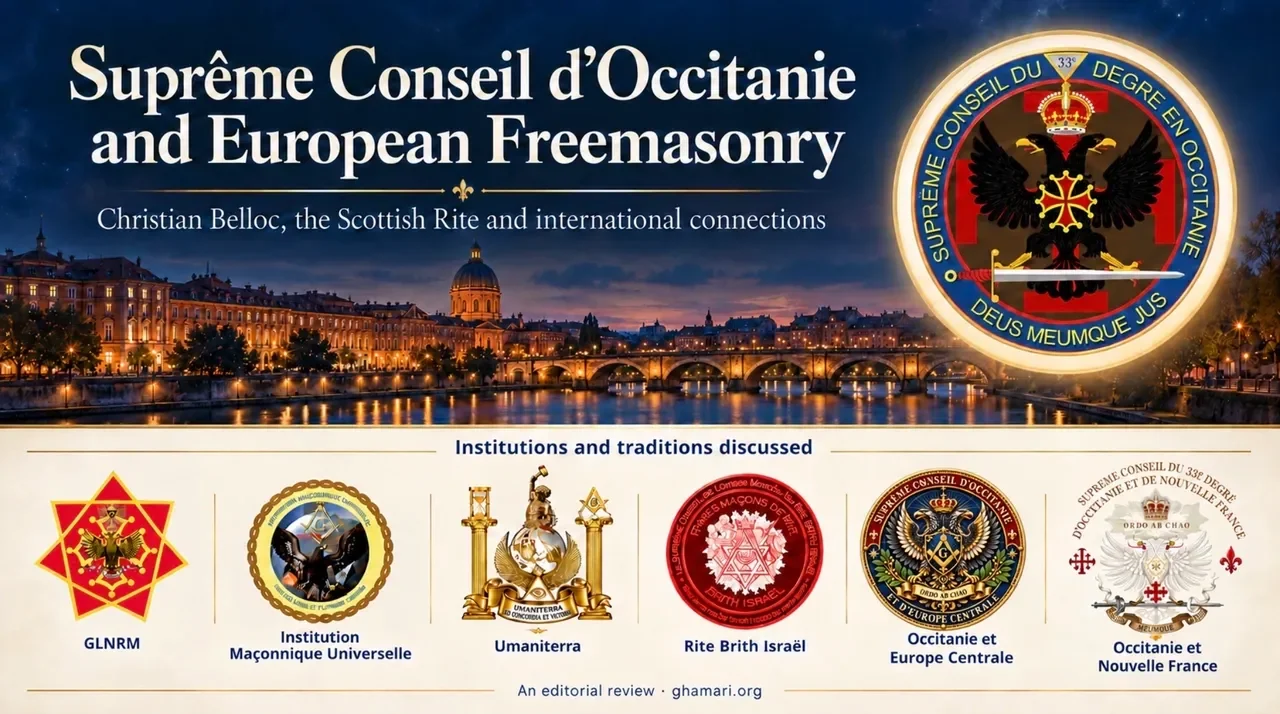
Suprême Conseil d’Occitanie and European Freemasonry
Freemasonry and Public Life in Europe
Freemasonry Across European Borders

European Freemasonry Between Tradition and Freedom of Conscience

GHAMARI Watches: Code 33 and the Meaning of Earned Recognition
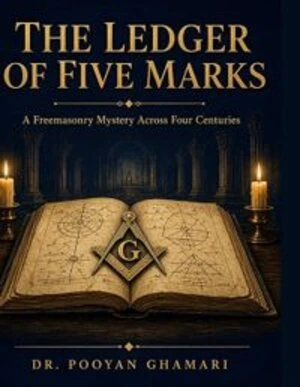
When Geneva archivist Pierre Savary is found dead beside a sealed cabinet he was never supposed to open, provenance lawyer Mara Voss inherits both the key and a dangerous question. Deposit 33 has been closed for eighty years. Inside is a private ledger that has passed through seven hands across four centuries, from a Scottish mason daughter in 1598 to a Swiss instrument maker in 1946. The ledger does not record secrets in the usual sense. It records obligations: who asked, who was asked, and what was owed. As Mara follows the trail of the Five Marks, the past and the present begin to answer each other. In Edinburgh a young woman counts the stone of a collapsed vault and refuses to let five deaths be written off. In London, Geneva, Vienna and Basel, successive keepers decide what must be hidden and what must be preserved. In 2026, powerful interests want the cabinet emptied before its term ends. Mara must decide whether the record she has been given is a tool for truth or a liability she cannot afford to carry. The Ledger of Five Marks is a Freemasonry mystery across four centuries about the cost of trust. It moves between the craft lodges of early modern Scotland and the discreet private archives of modern Switzerland, asking how power works when it does not give orders: through access, silence, gratitude and debt. For readers of literary historical fiction and intelligent archival thrillers.
Fiction
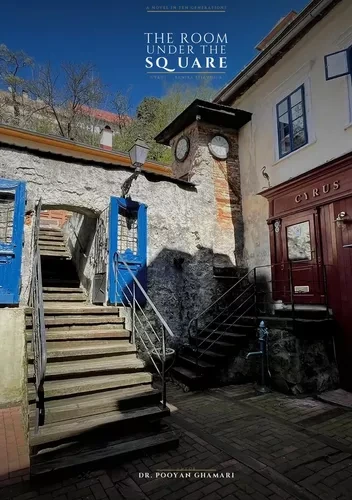
The Room Under the Square is a historical novel about ten generations in the mining town of Banská Štiavnica. Nine days after the fire of 2023, Marek Pilch enters a cold stone room beneath the square and opens a family box. Its contents draw him into eight centuries of the town’s history: medieval settlers and miners, religious upheaval, the mining accident of 1627, the water reservoirs and mining academy, wartime persecution, the upheaval of 1919 and the final mining shift in 2001. The story follows the ordinary people who keep a craft, a habit or a place alive when written evidence is incomplete. The town and its documented history are real; the family, house and hidden vault are fictional. An afterword distinguishes historical sources from invention. First published in 2026 as H E R O O M UNDER THE SQUARE, subtitled C Y R U S · B A N S K Á S T I A V N I C A: A Novel in Ten Generations.
Historical fiction
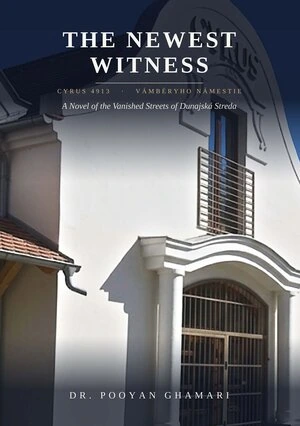
Dunajská Streda, 1999. The photographer Júlia Fodor comes home and finds an envelope waiting on a bench beside the church. Inside is a print that cannot exist: the residents of a street cleared by machines in 1971, standing in their good coats before the Cyrus building on Vámbéryho námestie, which was not built until this decade. She has seven Wednesdays before a commemorative book fixes a beautiful and false version of her town in nineteen hundred kitchens. What she uncovers is thirty six household keys the state ordered destroyed, a housing officer who counted very slowly, a confession signed five days before the act it confesses to, and one uncropped negative proving that the photograph which made her name was never hers alone. Set on the Great Rye Island, the Csallóköz, and moving between the winter of the clearance and the last weeks of the century, The Newest Witness asks whether a town can recover its memory without inventing its past. It is a novel about captions, and about how a true sentence in the wrong place can erase a place twice. With eight photographs of the square and six facsimile plates, and an afterword separating documented history from invention.
Fiction
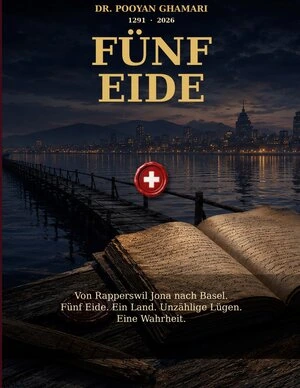
1291, on the shores of Lake Zurich. A betrayal grants a family a disputed right. Anna records what others wish to conceal: not only the profit, but its price. A red seal, an old merchant’s ledger and five notches in wood survive. Basel, 2026. Lena Rossi Darvishi inherits her mother’s archive. She has twenty-one days before a restructuring transfers a centuries-old reserve into an opaque financial arrangement. But the records are not neutral evidence. They have been selected, altered and incompletely transmitted. From the conflicts surrounding the Swiss federal state through railways, migration, war and modern financial power, Fünf Eide tells of people who inherit without knowing what their inheritance contains. A Swiss family novel about memory, guilt and who owns truth, money and the power to decide.
Philosophy
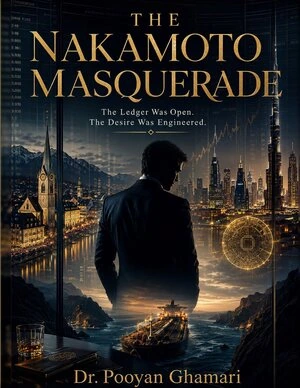
THE NAKAMOTO MASQUERADE is a literary financial and geopolitical thriller about a crypto collapse that begins with a seven second information gap and expands into a global architecture of money, desire, shipping, insurance, recognition, and power. Forensic investigator Zara Saleh discovers that privileged accounts moved before ordinary users could see the truth. In Los Angeles, Daniel Park watches the education fund of his daughter become a legal category. In Dubai and Bangkok, private rooms, tokenization deals, spiritual branding, and engineered desire reveal how human weakness can be measured before markets move. Across the Strait of Hormuz, shipping insurance, blacklisted liquidity, medicine delays, and maritime risk expose a deeper battlefield: the fight over who is allowed to move, settle, and be recognized. This is not a simple search for Satoshi. It is a novel about the hidden casino of modern life, where the ledger may be open while the exits remain privately controlled. Through Zara, Daniel Park, Mira Kade, Dr. Arman Amini, and the Civic Ledger, the story explores how small records, witness, family memory, and moral courage can resist systems designed to turn harm into procedure. A high intelligence thriller of Bitcoin, desire, power, Hormuz, and institutional control.
Fiction
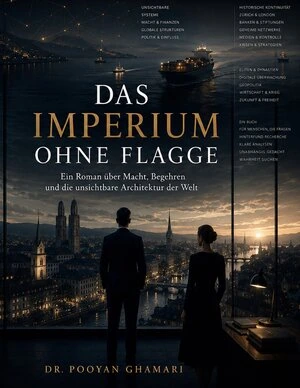
Das Imperium ohne Flagge (The Empire Without a Flag) is a literary geopolitical novel about power, control, capital, desire and the unseen systems that shape modern societies. Between Zurich, Frankfurt, Dubai, Tehran, London and the Strait of Hormuz, an inconspicuous architecture of banks, insurers, media, ports, sanctions and psychological influence emerges. At its centre lies institutional power: risk assessments, access, narratives, databases, contracts and the ability to control movement without visibly ruling. The novel combines philosophical reflection with geopolitical tension and asks how individuals can preserve their dignity when systems quietly determine identity, fear and freedom. It explores the invisible order of the present through a modern European story of power.
Geopolitics
For enquiries, review copies, or scholarly correspondence, the author’s office can be reached by email.