Commodity Sovereignty A Real Value Currency System
By Dr. Pooyan Ghamari · · 51 min read
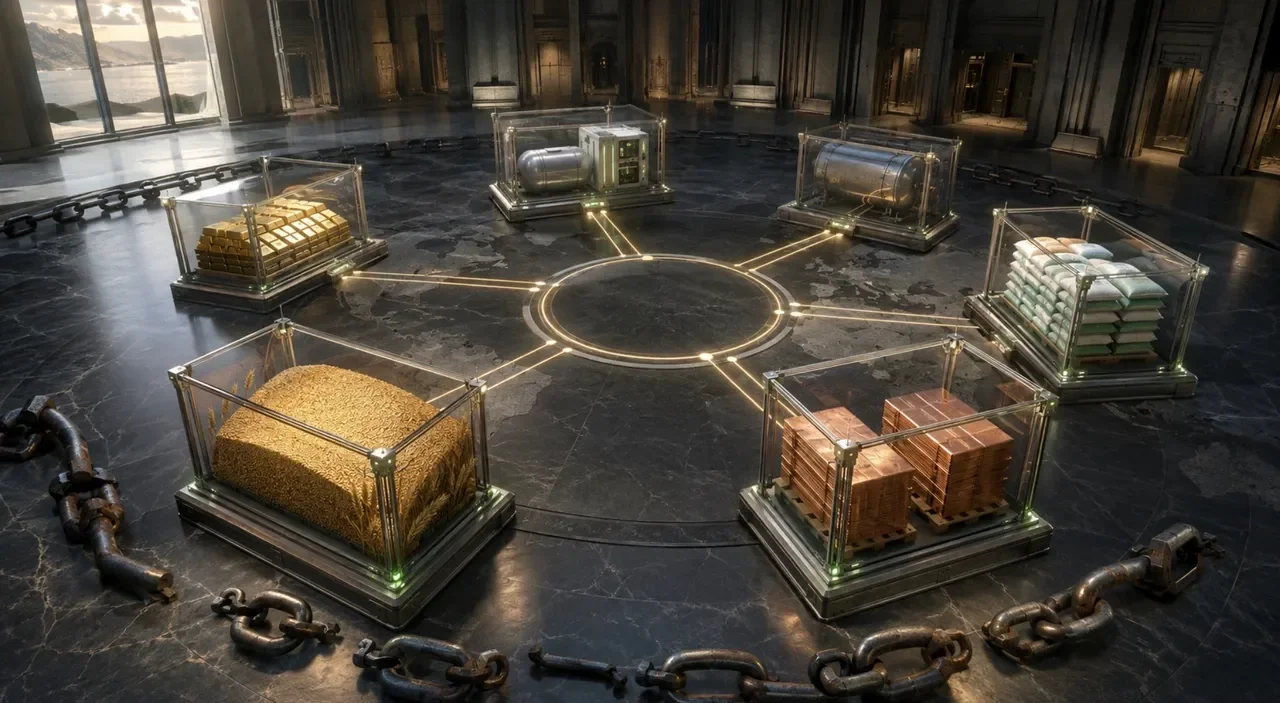
Commodity Sovereignty: How a Real Value Currency Could Return Monetary Power to Nations
COMMODITY SOVEREIGNTY
How a Real Value Currency Could Return Monetary Power to Nations Without Creating a New Empire
By Dr. Pooyan Ghamari
Swiss Economist and Author
A nation may possess gold, grain, copper, energy, productive land and skilled people, yet still depend on a currency created elsewhere to sell its wealth, finance its development and settle its international trade.
This dependence is rarely controlled from one room or by one institution. It emerges through an architecture. Commodities are priced in another nation’s currency. Payments travel through foreign banking networks. Development depends on external credit. National reserves are stored as liabilities issued by other governments or commercial banks. Insurance, ratings, settlements and debt contracts remain concentrated in financial centers far from the resources that create the underlying value.
This is the invisible chain.
Replacing one dominant national currency with another would change the manager of the system, but not its structure. Creating a digital token and attaching the word gold or commodity to it would not solve the problem either. A credible alternative must answer practical questions.
Who owns the reserves? Where are they held? How are they valued? Who may issue currency against them? What happens when commodity prices fall? What happens if stored reserves disappear, a government defaults, or a powerful member tries to exclude a weaker country?
The answer must be an institution that converts verified real wealth into international settlement power while preventing economic contribution from becoming political domination.
THE CENTRAL PROPOSITION
A nation should be able to transform verified essential wealth into international purchasing and settlement power without surrendering its resources, domestic currency or political independence to a foreign center.
The proposed structure is a Sovereign Commodity Clearing Union, issuing a wholesale international settlement asset called the Real Value Unit, or RVU.
The RVU would not initially replace national currencies. Countries would continue to manage their domestic money, taxation, banking systems and monetary policies. The RVU would operate above national currencies as a common instrument for international trade, central bank reserves and selected development financing.
The purpose is not to create a world government or global central bank. The purpose is to create a second monetary road that no single nation, corporation, bank or technology provider can close.
CENTRAL ACCOUNTING WITH DISTRIBUTED CUSTODY
Placing the physical wealth of many countries inside one central warehouse would reproduce the same danger the system is meant to escape. Whoever controlled that warehouse would eventually control the participating nations.
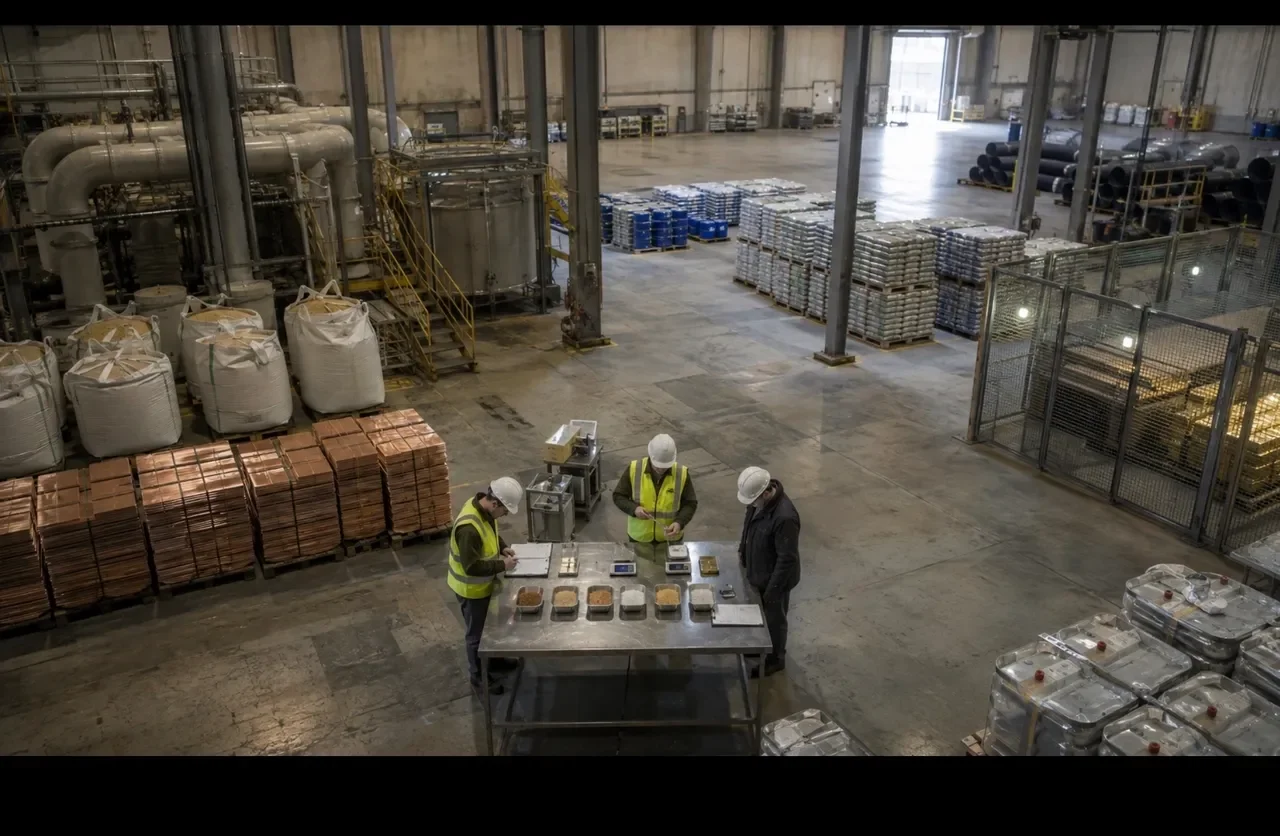
Physical reserves should therefore remain in certified national and regional facilities. The central institution would maintain the common legal register, collateral rules, reserve accounts and settlement ledger.
The commodities remain physically distributed, but the Sovereign Reserve Trust receives an enforceable first claim over the specific assets supporting issued RVU.
The assets cannot be sold, moved, pledged again or removed from the system without replacing the collateral or returning the corresponding RVU for destruction.
The central holding is therefore legal and monetary, not geographical.
THE INSTITUTIONAL STRUCTURE
The Sovereign Commodity Clearing Union must be established by treaty. Its powers should be divided among separate bodies so that no institution can admit reserves, value them, issue currency, operate the ledger, audit itself and judge disputes.
The Assembly of States would admit members, approve treaty amendments and appoint oversight institutions. Every member state would receive one sovereign vote.
The Reserve Chamber would approve technical collateral policy, concentration limits and reserve standards. Voting would reflect eligible contributions, but no country could control more than 5 percent of this chamber.
The Sovereign Reserve Trust would hold the legal claim over pledged assets. It would be prohibited from lending, speculating, rehypothecating reserves or financing governments.
The Monetary and Valuation Board would publish the commodity basket, reference prices, haircuts and collateral rules. Its methods would be public and independently reviewable.
The Clearing Authority would issue, transfer, redeem and extinguish RVU. It could not value its own collateral or change issuance rules.
The Custody Network would store, rotate, insure and deliver physical reserves through licensed facilities in different countries.
The Audit College would verify quantities, quality, legal title, insurance, technology and liabilities. Auditors would rotate regularly.
The Treaty Court would decide disputes involving collateral, account restrictions, member suspension, enforcement and withdrawal from the union.
Fundamental decisions would require approval from both the Assembly of States and the Reserve Chamber. Equal sovereignty alone could force contributing states to support obligations they never accepted. Contribution based power alone would allow the largest resource holders to purchase political command. Both interests must be protected without allowing either to dominate.
WHAT MAY BACK THE RVU
A resource does not become monetary collateral merely because it is valuable. It must be measurable, standardized, legally transferable, insured, accessible and capable of delivery or sale within a defined period.
The initial collateral pool should remain narrow.
Eligible launch assets could include:
• Allocated monetary gold
• Refined copper, aluminum and selected industrial metals
• Standardized wheat, rice and maize held in certified storage
• Crude oil, refined fuel and stored gas held in approved tanks and terminals
• Urea, potash and phosphate fertilizer
• Stored electricity where storage capacity, grid access and delivery rights are legally enforceable
Several forms of national wealth should be excluded.
Underground oil, gas and minerals should not qualify. Their quantity, extraction cost, timing, environmental obligations and practical accessibility remain uncertain.
Forecast production and future harvests should not back base RVU. Monetizing future production can transfer the wealth of future generations to present creditors before the resource exists.
Land, forests, real estate and carbon credits should be excluded during the initial stage because they are difficult to standardize, slow to liquidate and vulnerable to political valuation.
Fresh water should not become redeemable international collateral. Water is an essential local human necessity. A monetary claim should never give a foreign holder the right to remove water needed by a domestic population.
A country without large natural resources would not be excluded. It could earn RVU by exporting services, technology or manufactured products. It could purchase eligible reserve claims or accumulate RVU through trade. Natural endowment must never become a condition of monetary citizenship.
THE DOMESTIC SURVIVAL FLOOR
No government should receive currency for pledging food or energy that its own population may soon require.
Before any commodity becomes eligible, the national reserve authority must calculate a protected domestic survival floor. Only inventory above that level may enter the system.
During the pilot, the protected floor should not be lower than 90 days of essential domestic consumption. Where national law requires a larger strategic reserve, the higher amount should apply.
The calculation must consider consumption, import dependence, harvest cycles, transportation risks, seasonal demand and emergency requirements.
Protected domestic reserves and pledged international reserves must remain physically and legally separate.
During a genuine national emergency, a member should be allowed to replace pledged food or energy with equivalent eligible collateral and release the essential stock through an accelerated treaty procedure.
Currency should arise from a nation’s secure surplus, not from the desperation of its people.
THE TWO BASKET RULE
The system requires two different baskets.
The value basket determines what the RVU is intended to preserve in purchasing power.
The collateral basket contains the physical assets and enforceable claims that support outstanding RVU.
These baskets are connected, but they should not be identical. Not every commodity that is important to human life is suitable for storage or redemption.
A proposed initial value basket could contain:
• 30 percent food staples
• 25 percent energy
• 20 percent industrial metals
• 15 percent monetary gold
• 10 percent agricultural inputs
Base quantities would be fixed on the launch date so each category begins with its assigned weight. The resulting index would be calculated and published daily in every member currency.
No single commodity should represent more than 15 percent of the value basket. The basket should be formally reviewed every five years. Changes must be introduced gradually so existing contracts do not experience a sudden change in value.
The IMF already demonstrates that an international reserve asset can be valued through a published basket and reviewed periodically. The SDR, however, is based on five currencies and is not ordinary circulating money. The RVU would apply the basket principle to essential real assets.
The collateral basket should have additional concentration limits. During the pilot, no commodity should represent more than 20 percent of eligible collateral. No country should provide more than 10 percent of the total pool. No storage facility should hold more than 5 percent.
These limits are proposed starting parameters. They would require testing against real reserves, trade flows, transportation capacity and market liquidity.
VALUATION WITHOUT POLITICAL PRICING
The union must never issue currency against the highest available commodity price on the day of deposit.
If issuance followed rising spot prices, commodity booms would expand the money supply. When prices collapsed, the system would be forced to contract during the crisis. That would make the currency unstable and amplify the economic cycle.
Eligible reserve value should be calculated through a conservative public formula:
Eligible reserve value = verified quantity x reference price x quality factor x location factor x insurance factor x haircut factor
The reference price should be the lower of the 90 day volume weighted market average and the 36 month median price.
The quality factor would reflect the grade, purity, age and deliverability of the commodity.
The location factor would account for transportation cost, port access, political disruption and delivery time.
The insurance factor would become zero if legal title, physical loss or operational insurance were ineffective.
The haircut factor would protect the system against price volatility, spoilage, storage cost and liquidation risk.
An illustrative pilot haircut schedule could begin with:
• Gold, 15 percent
• Refined industrial metals, 25 percent
• Energy inventory, 35 percent
• Fertilizer, 35 percent
• Grain, 40 percent
• Stored electricity, 50 percent
These percentages are proposed parameters, not established international standards. I cannot confirm that they would be sufficient in every market or crisis. They would need calibration using historical volatility, storage losses, insurance recovery, transport risk and liquidation simulations.
The principle is clear. Uncertainty must be recognized before money is issued, not after a loss appears.
HOW RVU IS ISSUED
A commodity contribution is not a donation, and an RVU allocation is not a political gift.
The transaction is a secured monetary exchange.
The country grants the Sovereign Reserve Trust a first legal claim over clearly identified commodities. The Clearing Authority then issues RVU into the country’s reserve account.
The country may hold the RVU, exchange it or use it to pay for imports. Once the RVU has been spent, the country cannot remove the pledged commodities unless it reacquires and returns the relevant RVU or provides replacement collateral.
The proposed initial coverage target is 150 percent.
Maximum base RVU issuance = eligible reserve value divided by 1.50
New issuance would stop if total coverage fell below 140 percent.
Mandatory collateral restoration would begin below 130 percent.
Formal resolution procedures would begin below 115 percent.
Because eligible value already includes conservative prices and haircuts, the coverage ratio creates another protection layer.
THE ISSUANCE PROCEDURE
- The member submits a reserve schedule identifying the commodity, grade, quantity, owner, storage facility and all existing claims.
- The national registry confirms that the asset is unencumbered and above the domestic survival floor.
- A licensed inspector verifies quantity and quality.
- A separate auditor verifies ownership, legal title, insurance and custody controls.
- The Sovereign Reserve Trust registers its first claim over the identified asset.
- The Monetary and Valuation Board calculates the eligible reserve value.
- The Clearing Authority issues no more RVU than permitted by the coverage formula.
- The RVU enters the member’s official reserve account.
- The pledged asset is monitored continuously, physically counted at least annually and inspected without advance notice.
- To release the asset, the member returns RVU for destruction or deposits replacement collateral of equal eligible value.
A WORKED COUNTRY EXAMPLE
Consider a fictional member called Aurora.
Aurora pledges gold with a gross reference value of 4 billion RVU. After a 15 percent haircut, the eligible value is:
4.00 billion x 0.85 = 3.40 billion RVU
It pledges refined copper with a gross value of 3 billion RVU. After a 25 percent haircut:
3.00 billion x 0.75 = 2.25 billion RVU
It also pledges wheat with a gross value of 3 billion RVU. After a 40 percent haircut:
3.00 billion x 0.60 = 1.80 billion RVU
Total gross reserve value = 10.00 billion RVU
Total eligible reserve value = 7.45 billion RVU
At a 150 percent coverage target:
7.45 billion divided by 1.50 = 4.966 billion RVU
The system could therefore issue no more than 4.966 billion base RVU to Aurora.
The remaining 2.484 billion represents the coverage margin. It is not free equity for the institution.
If Aurora spends 1 billion RVU to purchase machinery from another member, the exporter receives an asset supported by the diversified reserve pool. Aurora’s commodities remain pledged. To release all its collateral, Aurora must return 4.966 billion RVU, replace the reserves or complete an approved partial release.
HOW INTERNATIONAL TRADE WOULD WORK
The RVU should begin as a wholesale instrument used by central banks, public development institutions and regulated commercial banks. Retail circulation should come only after the reserve, redemption and legal systems have proven themselves.
A normal transaction would proceed as follows:
- An importer and exporter agree to invoice a transaction in RVU.
- The importer’s bank verifies the commercial documents and debits the importer in domestic currency or RVU.
- The bank obtains RVU from its own balance, its national central bank or an approved exchange market.
- The clearing ledger locks the payment while the electronic bill of lading, warehouse receipt or delivery record is validated.
- Delivery and payment settle together. Either both occur or neither occurs.
- The exporter’s bank receives base RVU with legal finality.
- The exporter may keep the RVU, convert it, use it for imports or invest it in an approved RVU instrument.
- Member positions are netted during the day, while final settlement occurs no later than the end of the value date.
International principles for financial market infrastructure require payment systems to define clearly when settlement becomes final. The RVU treaty and national laws would need to provide that certainty.
REDEMPTION AND THE PRICE FLOOR
A currency supported by assets must provide a credible route from the monetary claim to reserve value.
That does not mean every individual can arrive at a warehouse and demand a bag of wheat. Direct redemption should initially be limited to member central banks, approved monetary institutions and qualified market makers.
The redemption process would work as follows:
- The institution submits RVU for redemption.
- The RVU is locked so it cannot be transferred again.
- The Reserve Trust allocates a proportional claim across the collateral pool.
- The redeemer cannot select only gold or the safest assets.
- The claim is settled through delivery of standard commodity lots or a transparent auction.
- After delivery or payment, the redeemed RVU is permanently destroyed.
- Normal redemption should be completed within five business days after valid documentation and compliance approval.
Proportional redemption prevents sophisticated participants from removing the best assets and leaving weaker collateral for everyone else.
Authorized market makers would help maintain the connection between the market price and reserve value. If RVU traded materially below its reserve value, they could buy and redeem it. If it traded above reserve value, approved members could pledge additional collateral and issue new RVU within the coverage limits.
The system would therefore rely on disciplined convertibility rather than a politically declared fixed exchange rate.
BASE MONEY AND BANK CREDIT
Base RVU and commercial bank deposits must be treated differently.
Base RVU would be a liability of the clearing union secured by the reserve pool.
An RVU deposit at a commercial bank would be a liability of that bank.
Pretending that both carry the same risk would hide private credit creation behind the reputation of the reserve system.
During the first two operating years, commercial RVU accounts should be fully matched by base RVU. Banks could provide trade finance using subscribed capital, investor deposits or issued RVU bonds, but they could not create new base units.
After two years of audited operation, members could authorize a regulated credit layer with capital requirements, liquidity reserves, exposure limits and secured intraday support.
Emergency liquidity must have collateral, a published amount, a defined maturity and a recorded vote. Temporary support must not become permanent money through administrative silence.
SYMMETRIC TRADE DISCIPLINE
A new currency would not end dependency if deficit countries accumulated obligations while surplus countries hoarded RVU without limit.
Adjustment must apply to both sides.
A proposed pilot schedule could allow a net annual debit or credit position of up to 2 percent of a member’s average annual SCCU trade without charge.
Positions between 2 and 5 percent could face a 1 percent annual charge on the excess balance.
Positions between 5 and 10 percent could face a 3 percent charge and require a published adjustment plan.
Positions above 10 percent for two consecutive years would trigger negotiations involving imports, productive investment, exchange policy, domestic demand or capacity development.
The same rules would apply to surplus and deficit members.
A deficit state could not be forced to sell essential assets or accept secret conditions. A surplus state could not remove liquidity indefinitely while demanding that all adjustment be imposed on debtors.
Revenue from imbalance charges could finance storage, logistics, inspection and productive investment across the membership.
GOVERNANCE THAT CANNOT BE PURCHASED
Currency issuance, reserve ownership and political power must remain separate.
Currency issuance would depend on eligible collateral.
Ownership claims would depend on the specific reserves pledged and the RVU returned.
Sovereign voting would follow one state, one vote.
Technical reserve voting could consider economic contribution, but each state would remain capped at 5 percent.
Development financing would depend on project quality, need, repayment capacity and regional balance.
Operating contracts would be awarded through transparent tender, not political contribution.
The executive board could contain nine rotating members with staggered terms. No region should control more than three seats.
Board members must disclose assets, employment relationships, clients and family interests. They should be prohibited from working for participating custodians, commodity traders or technology suppliers for three years after leaving office.
Major changes to valuation, collateral, governance or member rights would require public consultation and approval from both chambers.
THE ANTI CAPTURE CONSTITUTION
The following protections should appear in the founding treaty:
- No country receives a permanent veto.
- No private shareholder controls the union.
- No member controls more than 5 percent of formal reserve voting power.
- No member provides more than 10 percent of eligible collateral during the pilot.
- Pledged assets remain inside the contributing country or an agreed regional facility unless delivery is required.
- The Reserve Trust receives recourse only against named pledged assets.
- There is no claim against unrelated sovereign property.
- Future tax revenue, future production and essential domestic reserves cannot support base RVU issuance.
- No account may be frozen by one government, executive officer or technology provider.
- Political opinion, lawful speech, religion, ethnicity or diplomatic disagreement cannot become grounds for monetary exclusion.
- The system cannot impose retail spending categories, expiration dates or social behavior conditions on citizens.
- Every member retains a defined right to leave after settling its obligations.
- Reserve and liability totals remain public.
- Commercial transaction details remain confidential except under a lawful investigation.
- The software, message standards and valuation formulas remain open to inspection.
These protections must address domestic oligarchy as seriously as foreign pressure. Replacing foreign control with a domestic elite that signs away the same national wealth is not sovereignty.
TRANSPARENCY AND PUBLIC OWNERSHIP
Every national contribution should require approval under domestic law and public disclosure of the asset, valuation, fees and beneficial ownership.
The system should publish:
• Total base RVU every day
• Eligible collateral and the coverage ratio every day
• Reserve composition by commodity and region every month
• Independent assurance over ownership, insurance, valuation and liabilities every quarter
• A full physical reserve count every year
• Unannounced inspections throughout the year
• Public records showing what each country pledged, received, spent and redeemed
Sensitive facility coordinates may remain confidential for security reasons. The economic facts cannot remain secret.
The Extractive Industries Transparency Initiative already requires significant disclosure concerning government sales of oil, gas and minerals. Its evidence also demonstrates the danger of resource backed borrowing. EITI reports that Chad was using more than 90 percent of its oil revenue to service a resource backed loan in 2015.
A real value system must prohibit secret claims capable of consuming a nation’s future production.
TECHNOLOGY WITH LAW ABOVE CODE
The settlement platform may use distributed ledger technology, a replicated conventional database or a combination of both.
The decision should follow security, finality, privacy, cost and resilience rather than fashion.
Blockchain does not prove that wheat exists inside a silo.
Artificial intelligence does not create legal ownership.
A sensor does not replace an independent audit.
Technology can connect evidence, automate settlement and expose inconsistencies. Every monetary claim still requires a responsible institution and an enforceable legal duty.
The infrastructure should include:
• Verified legal identities for central banks, banks, custodians and auditors
• Hardware protected transaction keys
• ISO 20022 compatible financial messages
• Immediate finality for base RVU settlement
• One unique electronic title for every pledged commodity lot
• A complete history of ownership, liens, movement and inspection
• Price information from several independent sources
• Validator nodes distributed among participating central banks and public institutions
• Multiple hosting jurisdictions and tested offline recovery
• No dependence on one cloud company, software supplier or telecommunications network
The UNCITRAL Model Law on Electronic Transferable Records provides a technology neutral legal approach for electronic trade documents. The joint UNCITRAL and UNIDROIT Model Law on Warehouse Receipts offers another practical foundation for recognizing, transferring and enforcing warehouse titles.
THE LOSS WATERFALL
Responsibility for a reserve loss must be established before the crisis.
The loss order should be:
- Insurance and the bonded custodian absorb the first recoverable loss.
- The contributing member’s unused collateral margin absorbs the next layer.
- The member receives a defined period to replace deficient collateral.
- The union stabilization fund absorbs the next eligible loss.
- Paid institutional capital absorbs the following layer.
- Only after those protections fail may a proportional adjustment be imposed on remaining claims.
The stabilization fund should reach at least 5 percent of circulating base RVU before any profit distribution begins.
It would be financed through founding capital, issuance charges, transfer fees, redemption charges and penalties.
The fund should not be invested in the debt of one member or deposited with one commercial bank.
CRISIS PROCEDURES
A commodity price collapse would trigger immediate revaluation, suspension of new issuance and a request for collateral restoration. The system should not force a sale simply because one day’s spot price moved sharply.
Spoilage or an inventory shortage would trigger isolation of the affected lot, an insurance claim, replacement of collateral and an investigation of the custodian.
A large redemption wave would be handled through proportional allocation and scheduled auctions. The first applicant would not receive the best assets.
A member default would permit enforcement only against pledged collateral and reserve balances. Unrelated national property would remain protected.
A cyberattack would trigger isolation of affected nodes, offline records and reconciliation from signed checkpoints. No operator could rewrite completed transactions alone.
War or blocked transport would permit delivery through alternative facilities or transparent auction settlement. Emergency powers would expire unless renewed by both chambers.
A fraudulent warehouse receipt would trigger suspension of the affected asset, a claim against the custodian bond and temporary suspension of new issuance by the contributor. Citizens and unrelated members would not be collectively punished.
Political demands for exclusion would require review by the Treaty Court. No state could impose a unilateral permanent freeze through the clearing union.
MEMBERSHIP AND EXIT
A country would join through domestic ratification of the treaty.
Before activation, it must recognize electronic warehouse titles, first priority reserve claims, settlement finality, independent inspection, financial crime controls and the limited authority of the Treaty Court.
Membership could not require military cooperation, political alignment or surrender of domestic monetary policy.
A member could leave after 12 months’ notice, settlement of its net debit position and release or transfer of its pledged collateral.
The union could not confiscate the departing country’s coverage margin as punishment. Claims already held by traders and central banks would remain enforceable until transferred or redeemed.
OPERATING COSTS
The union must finance custody, inspections, insurance, settlement and security without becoming another rent extraction institution.
An illustrative starting fee schedule could include:
• A one time issuance charge of 0.10 percent on newly issued base RVU
• A wholesale settlement charge of 0.02 percent, capped for large payments
• Actual custody and insurance costs charged to the contributing member
• Actual delivery or auction costs plus 0.05 percent for redemption
• Escalating charges when a member fails to restore collateral within the permitted period
• Symmetric imbalance charges on excessive debit and credit positions
These figures are proposed pilot parameters. A proper cost study would be required before implementation.
Net revenue should follow a fixed order.
First, the union pays necessary operating costs.
Second, it builds the stabilization fund.
Third, it finances shared inspection, storage, payment and trade infrastructure.
Fourth, remaining revenue may support a reserve dividend based on equal membership and actual system use.
No executive bonus or member distribution should be paid while coverage, audit or redemption standards remain unmet.
THE FIVE YEAR IMPLEMENTATION
Months 0 to 6 would establish a founding group of five to ten economies with complementary commodities, industries and trade. The group would map reserves, trade relationships, legal systems and settlement needs.
Months 6 to 12 would produce the treaty, reserve legislation, governance rules, valuation manual, custody standards and procurement structure.
Months 12 to 24 would operate a shadow RVU index without real currency issuance. Warehouses, title records, price systems, audits and simulated settlements would be tested.
Months 24 to 36 would introduce limited base RVU settlement for selected government and public enterprise transactions. The system must complete at least one genuine redemption.
Months 36 to 48 would admit regulated banks, exporters and development institutions using fully reserved RVU accounts.
Months 48 to 60 would broaden membership, improve market liquidity and consider a regulated credit layer.
Expansion should stop whenever material reserve discrepancies, cyber weaknesses, legal uncertainty or failed redemptions remain unresolved.
HOW SUCCESS WOULD BE MEASURED
The pilot succeeds only if:
• Eligible collateral coverage remains at or above 150 percent under normal conditions
• Every issued RVU reconciles with recorded liabilities each day
• Final settlement occurs on the value date
• Valid wholesale redemptions complete within five business days
• Physical inventory, legal ownership and electronic records agree
• No commodity, country, facility, technology provider or validator exceeds its concentration limit
• The system survives simulated price collapses, member defaults, mass redemptions, cyberattacks and communication failures
• Settlement costs are published and compared with existing banking routes
Political declarations are not evidence of monetary credibility. Successful settlement and redemption are.
HOW THIS WEAKENS THE INVISIBLE CHAIN
The system would reduce dependence in several direct ways.
Trade would no longer require one dominant national currency.
Base reserves would consist of diversified real claims rather than only liabilities issued by foreign states and banks.
No single payment network could exclude a country from the entire system.
Commodity valuations, sales and government revenues would become more transparent.
Persistent surplus and deficit countries would share responsibility for adjustment.
Future production could not be secretly pledged to obtain current money.
Shared revenue could finance storage, refining, manufacturing, logistics and productive infrastructure inside contributing countries.
Parliamentary approval and public reporting would make it harder for domestic elites to sign away national wealth without scrutiny.
This would not make participating countries invulnerable. Shipping routes, insurance, technology, military pressure, corruption and market access can still create dependency. Money cannot replace production, food security, law, education or political courage.
UN Trade and Development reports that two thirds of developing economies remain dependent on commodity exports under its definition. A poorly designed commodity currency could preserve that condition by rewarding raw extraction alone.
The union must therefore help members move from extraction toward processing, manufacturing, logistics, energy resilience and knowledge. Real value means more than removing material from the ground.
THE SOVEREIGNTY TEST
Every rule should answer seven questions.
- Does it leave the nation with legal ownership and practical control over unpledged wealth?
- Can one powerful member use it against a weaker country?
- Can citizens see what was pledged, what was received and who benefited?
- Does it protect food, energy and human survival before financial claims?
- Can a country leave without losing unrelated national property?
- Does it reward production and value creation rather than extraction and political influence?
- Would the system continue operating if its largest member, custodian or technology supplier withdrew?
A system that fails these questions may be efficient, modern and digitally impressive, but it is not sovereign.
——-—
The strongest currency is not the one printed by the loudest state. It is the one whose issuance is limited by evidence, whose reserves cannot be counted twice, whose rules apply to creditors and debtors alike, and whose governance cannot be purchased by the largest balance sheet.
A commodity anchored clearing union could provide nations with a second monetary road. It could allow food, energy, metals and other verified essentials to become international settlement power without forcing countries to abandon their domestic currencies or place their wealth beneath a foreign flag.
The commodity itself is only the anchor.
The real achievement lies in the constitution around it: distributed custody, conservative valuation, equal sovereignty, capped economic influence, transparent ownership, symmetric adjustment, due process, privacy and an enforceable right to leave.
Colonial systems survive by making dependency appear technical and therefore unavoidable. The answer is not another slogan, another speculative token or another controlling center. It is an institution whose mechanics make domination visible, expensive and reversible.
A nation becomes monetarily sovereign when it can transform verified value into trade and development without giving another power the permanent ability to price, block, dilute or confiscate that value.
STATUS OF THIS PROPOSAL
This is a proposed institutional model. I cannot confirm that any existing organization operates this complete system.
Its individual components already exist separately, including basket based reserve valuation, warehouse receipt finance, electronic transferable records, commodity disclosure systems, international settlement principles and experiments with tokenized financial infrastructure.
Combining them at sovereign scale would require treaties, national legislation, physical reserves, independent audits, functioning redemptions and political consent. All numerical thresholds presented here are proposed starting parameters, not forecasts or established international standards.
SOURCES AND FURTHER READING
- Commodity Backed Currencies: Building a Global Economic System Based on Essential Human Needs, by Dr. Pooyan Ghamari, A.Land.
- The Illusion of Choice: How Oligarchies Are Reshaping the World Order, Foundico.
- What Is the SDR?, International Monetary Fund.
- The Next Generation Monetary and Financial System, Bank for International Settlements.
- A Guide to Warehouse Receipt Financing Reform, World Bank Group.
- Commodity Trading, Extractive Industries Transparency Initiative.
- The State of Commodity Dependence 2025, United Nations Trade and Development.
- Model Law on Electronic Transferable Records, United Nations Commission on International Trade Law.
- Model Law on Warehouse Receipts, UNCITRAL and UNIDROIT.
- Principles for Financial Market Infrastructures, CPMI and IOSCO.
- About ISO 20022, ISO 20022 Registration Authority.
COMMODITY SOVEREIGNTY · 60 SEO / AEO FAQs on the Real Value Unit (RVU)
COMMODITY SOVEREIGNTY
60 Genius FAQs Optimized for SEO and Answer Engines (AEO)
How a Real Value Currency Could Return Monetary Power to Nations Without Creating a New Empire
Source essay by Dr. Pooyan Ghamari, Swiss economist and author. This FAQ pack restates the proposed Sovereign Commodity Clearing Union and Real Value Unit (RVU) in search-ready question form. It is an explanatory guide to a proposed institutional model, not confirmation that any organization currently operates the complete system.
How to use this FAQ pack for SEO and AEO
Each question is written the way people and answer engines actually ask: definitions, comparisons, mechanisms, risks and “does it already exist.” Each answer opens with a direct sentence that can be lifted as a featured snippet or model citation, then adds the operational detail that separates this proposal from slogans, gold tokens and reserve-currency swaps.
Primary search entities to reinforce on a live page: commodity sovereignty, Real Value Unit, RVU currency, Sovereign Commodity Clearing Union, commodity-backed settlement asset, distributed custody, domestic survival floor, two-basket rule, 150 percent coverage, proportional redemption, Anti-Capture Constitution, Pooyan Ghamari.
AEO implementation notes: mark each pair with FAQPage JSON-LD; use the question as an H2; keep the first 40–60 words self-contained; do not bury the definition after a preamble; retain numbers (90-day floor, 5 percent vote cap, 150 percent coverage, five-business-day redemption) because answer engines prefer extractable figures; state clearly that numerical thresholds are proposed pilot parameters.
Core Concepts and Definitions
1. What is commodity sovereignty?
Commodity sovereignty is the capacity of a nation to turn verified essential wealth—gold, grain, metals, energy and agricultural inputs—into international purchasing and settlement power without surrendering those resources, its domestic currency or its political independence to a foreign financial center. In Dr. Pooyan Ghamari’s model, sovereignty is not ownership of commodities alone. It is the legal and institutional ability to price, pledge, settle and redeem real value on terms no single state, bank or payment network can close.
2. What is the Real Value Unit (RVU)?
The Real Value Unit, or RVU, is a proposed wholesale international settlement asset issued by a treaty-based Sovereign Commodity Clearing Union. It would sit above national currencies and be used for trade invoices, central-bank reserves and selected development financing. RVU is not designed as everyday retail cash at launch. It is base money secured by a diversified pool of verified, insured and deliverable commodities, issued only after conservative valuation, haircuts and a coverage margin.
3. What is the Sovereign Commodity Clearing Union (SCCU)?
The Sovereign Commodity Clearing Union is the proposed treaty institution that would issue, transfer, redeem and extinguish RVU. It would keep a common legal register, collateral rules and settlement ledger while leaving physical reserves in certified national and regional facilities. The union is not a world government or a global central bank. Its purpose is a second monetary road that no single nation, corporation, bank or technology provider can shut.
4. Who proposed the commodity sovereignty and RVU model?
The model is proposed by Dr. Pooyan Ghamari, a Swiss economist and author. The essay “Commodity Sovereignty: How a Real Value Currency Could Return Monetary Power to Nations Without Creating a New Empire” presents it as an institutional design, not an operating system. The author states that no existing organization currently runs this complete architecture, although several components already exist separately, including basket valuation, warehouse-receipt finance and international settlement principles.
5. What is the “invisible chain” of monetary dependence?
The invisible chain is the architecture that leaves resource-rich countries dependent on a currency created elsewhere. Commodities are priced in another nation’s money. Payments travel through foreign banking networks. Development relies on external credit. Reserves are stored as liabilities of other governments or commercial banks. Insurance, ratings, settlements and debt contracts concentrate in distant financial centers. The chain is rarely controlled from one room. It is structural.
6. Why would replacing the dollar with another national currency fail to restore monetary sovereignty?
Replacing one dominant national currency with another would change the manager of the system, not its structure. Pricing, payment rails, reserve assets, ratings and legal contracts would still orbit a single sovereign issuer. Commodity sovereignty therefore rejects a simple “new reserve currency” swap. It seeks a settlement asset whose issuance is limited by verified real wealth and whose governance cannot be purchased by the largest balance sheet.
7. Is the RVU a cryptocurrency, stablecoin or gold-backed token?
No. Attaching the word gold or commodity to a digital token does not solve custody, valuation, redemption, default or political exclusion. The RVU may use distributed ledgers or conventional databases, but law sits above code. Blockchain does not prove wheat is in a silo. A sensor does not replace an independent audit. Artificial intelligence does not create legal title. Technology can connect evidence and automate settlement; every monetary claim still requires a responsible institution and an enforceable legal duty.
8. Does the Real Value Unit replace national currencies?
Not initially. Countries would keep their domestic money, taxation, banking systems and monetary policy. RVU would operate as a common instrument above national currencies for international trade, official reserves and selected development finance. Retail circulation would be considered only after reserve, redemption and legal systems have proven themselves. Domestic policy independence is a design requirement, not an afterthought.
9. What is the central proposition of the RVU system?
A nation should be able to transform verified essential wealth into international purchasing and settlement power without surrendering its resources, domestic currency or political independence to a foreign center. The institution that performs that conversion must prevent economic contribution from becoming political domination. Currency issuance, reserve ownership and sovereign voting therefore remain separate functions.
Institutional Design and Governance
10. Why must the SCCU be established by treaty rather than by a private company?
Only a treaty can create first-priority legal claims over sovereign commodities, settlement finality across jurisdictions, a court with limited but enforceable authority, and an exit right that does not confiscate unrelated national property. A private issuer, foundation or token protocol cannot bind states, inspect warehouses under public law, or prevent one government from freezing accounts. Monetary citizenship cannot depend on a corporate terms-of-service clause.
11. How is power divided inside the Sovereign Commodity Clearing Union?
Powers are separated so that no body can admit reserves, value them, issue currency, operate the ledger, audit itself and judge disputes. The Assembly of States admits members and amends the treaty. The Reserve Chamber sets technical collateral policy. The Sovereign Reserve Trust holds legal claims. The Monetary and Valuation Board publishes prices and haircuts. The Clearing Authority issues and extinguishes RVU. The Custody Network stores assets. The Audit College verifies them. The Treaty Court decides disputes.
12. What is the Assembly of States in the SCCU?
The Assembly of States is the sovereign political chamber. Every member state receives one vote. It admits members, approves treaty amendments and appoints oversight institutions. Equal voting protects small states from being purchased by large resource holders. Fundamental decisions also require the Reserve Chamber, so one-state-one-vote cannot force contributing countries to accept obligations they never agreed to finance.
13. What is the Reserve Chamber and why is voting capped at 5 percent?
The Reserve Chamber approves technical collateral policy, concentration limits and reserve standards. Voting may reflect eligible contributions, but no country can control more than 5 percent of this chamber. The cap exists so the largest gold, oil or metal holders cannot buy political command. Contribution-based influence is recognized; domination is forbidden.
14. What is the Sovereign Reserve Trust?
The Sovereign Reserve Trust holds an enforceable first legal claim over the specific assets that support issued RVU. It is prohibited from lending, speculating, rehypothecating reserves or financing governments. The Trust’s claim is against named pledged lots, not against unrelated sovereign property, future tax revenue or essential domestic stocks. Physical commodities remain in national or agreed regional facilities.
15. What does “central accounting with distributed custody” mean?
Physical wealth stays in certified national and regional warehouses, tanks and vaults. The central institution keeps the common legal register, collateral rules, reserve accounts and settlement ledger. The holding is legal and monetary, not geographical. One central warehouse would recreate the danger the system is meant to escape: whoever controlled that warehouse would eventually control the participating nations.
16. What is the Anti-Capture Constitution of the RVU treaty?
It is a list of hard legal protections: no permanent veto; no private shareholder control; 5 percent reserve-vote cap; 10 percent collateral cap in the pilot; assets stay in-country unless delivery is required; recourse only against named pledged assets; no claim on unrelated sovereign property; no monetization of future production or essential domestic reserves; no unilateral account freeze; no exclusion for political opinion, religion or ethnicity; no retail social-credit conditions; a defined right to leave; public reserve totals; confidential commercial details except under lawful investigation; and inspectable software, messages and formulas.
17. Can one government freeze another country’s RVU account?
No single government, executive officer or technology provider may freeze an account. Political demands for exclusion require review by the Treaty Court. Political opinion, lawful speech, religion, ethnicity or diplomatic disagreement cannot become grounds for monetary exclusion. The design goal is a second settlement road that cannot be closed by the same sanctions architecture that now concentrates payment power.
18. How does dual-chamber approval prevent both majority tyranny and resource oligarchy?
Equal sovereignty alone could force contributing states to support obligations they never accepted. Contribution-based power alone would let the largest resource holders purchase political command. Fundamental decisions therefore need both the Assembly of States and the Reserve Chamber. Currency issuance still depends on eligible collateral, not on votes. Ownership claims depend on pledged reserves and returned RVU. Voting and money creation remain separate.
Eligible Collateral, Exclusions and the Survival Floor
19. What assets can back the RVU at launch?
Eligible launch assets are narrow and must be measurable, standardized, legally transferable, insured, accessible and deliverable within a defined period. They include allocated monetary gold; refined copper, aluminum and selected industrial metals; standardized wheat, rice and maize in certified storage; crude oil, refined fuel and stored gas in approved tanks and terminals; urea, potash and phosphate fertilizer; and stored electricity where storage, grid access and delivery rights are legally enforceable.
20. Why are underground oil, gas and unmined minerals excluded from RVU collateral?
Underground resources fail the monetary tests of quantity certainty, extraction cost, timing, environmental obligation and practical accessibility. A claim on oil still in the ground is a forecast, not a deliverable reserve. Monetizing it would recreate resource-backed loans that consume future production before the resource exists. Only inventory that can be verified, insured and delivered may support base RVU.
21. Why can future harvests and forecast production not back base RVU?
Monetizing future production transfers the wealth of future generations to present creditors before the resource exists. Base RVU must be issued against current, verified surplus—not against a harvest that weather, war, blight or politics may cancel. This rule is a direct response to the documented harm of secret resource-backed borrowing.
22. Why is fresh water excluded as redeemable international collateral?
Water is an essential local human necessity. A monetary claim should never give a foreign holder the right to remove water needed by a domestic population. The same logic drives the domestic survival floor for food and energy. Currency should arise from a nation’s secure surplus, not from the desperation of its people.
23. Can a country without large natural resources join and use the RVU?
Yes. Natural endowment is not a condition of monetary citizenship. A services, technology or manufacturing exporter can earn RVU through trade, purchase eligible reserve claims, or accumulate RVU in official accounts. The system is designed so that processing, logistics and knowledge count as value creation, not only extraction from the ground.
24. What is the domestic survival floor?
Before any food or energy becomes eligible collateral, the national reserve authority must calculate a protected domestic survival floor. Only inventory above that level may enter the system. During the pilot the floor should not be lower than 90 days of essential domestic consumption, or a higher amount if national law requires it. The calculation must include consumption, import dependence, harvest cycles, transport risk, seasonal demand and emergency needs. Protected domestic stocks and pledged international reserves must remain physically and legally separate.
25. Can a country reclaim pledged food or energy in a national emergency?
Yes. During a genuine national emergency a member may replace pledged food or energy with equivalent eligible collateral and release the essential stock through an accelerated treaty procedure. The rule preserves human survival without silently voiding outstanding RVU. Other members are protected by substitution, not by confiscation of a hungry population’s grain.
26. What is the two-basket rule in the RVU design?
The value basket defines what the RVU is intended to preserve in purchasing power. The collateral basket contains the physical assets and enforceable claims that actually support outstanding RVU. The baskets are connected but not identical, because not every commodity important to human life is suitable for storage or redemption. Confusing the two baskets would either make the currency undeliverable or make the index too narrow to represent real value.
27. What is in the proposed initial RVU value basket?
A proposed launch basket is 30 percent food staples, 25 percent energy, 20 percent industrial metals, 15 percent monetary gold and 10 percent agricultural inputs. Base quantities are fixed on the launch date so each category begins with its assigned weight. The index would be published daily in every member currency. No single commodity should exceed 15 percent of the value basket. Formal review occurs every five years, with changes introduced gradually so existing contracts are not repriced overnight.
Valuation, Haircuts and Concentration Limits
28. How is eligible reserve value calculated for RVU issuance?
Eligible reserve value equals verified quantity × reference price × quality factor × location factor × insurance factor × haircut factor. The reference price is the lower of the 90-day volume-weighted market average and the 36-month median price. Quality reflects grade, purity, age and deliverability. Location reflects transport cost, port access, political disruption and delivery time. Insurance becomes zero if title, physical-loss or operational cover is ineffective. The formula recognizes uncertainty before money is issued, not after a loss appears.
29. Why does the RVU refuse to issue currency against the highest spot price?
If issuance followed rising spot prices, commodity booms would expand the money supply. When prices collapsed, the system would be forced to contract in the crisis. That would make the currency pro-cyclical and unstable. Using the lower of a 90-day volume-weighted average and a 36-month median dampens boom-time issuance and refuses to treat a one-day spike as permanent reserve value.
30. What illustrative haircuts apply to RVU collateral?
Proposed pilot haircuts are 15 percent for gold, 25 percent for refined industrial metals, 35 percent for energy inventory, 35 percent for fertilizer, 40 percent for grain and 50 percent for stored electricity. These percentages are starting parameters, not established international standards. They would need calibration against historical volatility, storage losses, insurance recovery, transport risk and liquidation simulations. Higher uncertainty requires a larger haircut before any RVU is created.
31. What concentration limits protect the RVU collateral pool?
During the pilot, no commodity should exceed 20 percent of eligible collateral, no country should provide more than 10 percent of the total pool, and no storage facility should hold more than 5 percent. In the value basket, no single commodity should exceed 15 percent. Limits would be tested against real reserves, trade flows, transport capacity and market liquidity. Concentration is treated as a monetary risk, not a political courtesy.
32. How does the RVU value basket compare with the IMF Special Drawing Right?
The IMF already shows that an international reserve asset can be valued through a published basket and reviewed periodically. The SDR, however, is based on five currencies and is not ordinary circulating money. The RVU applies the basket principle to essential real assets rather than to national fiat units. That is the intended difference: purchasing-power reference to food, energy, metals, gold and agricultural inputs instead of to other currencies.
Issuance, Coverage, Trade and Redemption
33. How is RVU issued to a member country?
Issuance is a secured monetary exchange, not a donation or political gift. The member submits a reserve schedule. The national registry confirms the asset is unencumbered and above the survival floor. A licensed inspector verifies quantity and quality. A separate auditor verifies title, insurance and custody. The Trust registers a first claim. The Valuation Board calculates eligible value. The Clearing Authority issues no more RVU than the coverage formula allows into the member’s official reserve account. Assets are monitored continuously and counted at least annually, including unannounced inspections.
34. What is the 150 percent RVU coverage target?
Maximum base RVU issuance equals eligible reserve value divided by 1.50. Because eligible value already includes conservative prices and haircuts, the coverage ratio is a second protection layer. New issuance stops if total coverage falls below 140 percent. Mandatory collateral restoration begins below 130 percent. Formal resolution procedures begin below 115 percent. The leftover margin is not free equity for the institution; it is loss-absorbing buffer.
35. How much RVU could a country issue in the worked “Aurora” example?
Aurora pledges gold with 4 billion RVU gross value (15 percent haircut → 3.40 billion eligible), refined copper worth 3 billion (25 percent haircut → 2.25 billion) and wheat worth 3 billion (40 percent haircut → 1.80 billion). Total eligible value is 7.45 billion. At 150 percent coverage the system may issue no more than 4.966 billion base RVU. The remaining 2.484 billion is coverage margin. If Aurora spends 1 billion RVU on machinery, the exporter receives a claim on the diversified pool; Aurora’s commodities stay pledged until RVU is returned or replaced.
36. How would international trade settle in RVU?
An importer and exporter invoice in RVU. The importer’s bank verifies documents and obtains RVU from its own balance, its central bank or an approved exchange. The clearing ledger locks payment while the electronic bill of lading, warehouse receipt or delivery record is validated. Delivery and payment settle together: both occur or neither occurs. The exporter’s bank receives base RVU with legal finality. Positions net during the day; final settlement occurs no later than the end of the value date. RVU begins as a wholesale instrument for central banks, public development institutions and regulated commercial banks.
37. Who can redeem RVU for commodities?
Direct redemption is initially limited to member central banks, approved monetary institutions and qualified market makers. Ordinary individuals cannot arrive at a warehouse and demand a bag of wheat. That restriction exists because retail runs against physical lots would destroy orderly delivery, safety and proportional allocation. Retail access, if ever authorized, would come only after wholesale redemption has been proven.
38. Why must RVU redemption be proportional rather than asset-picking?
The redeemer cannot select only gold or the safest assets. The Reserve Trust allocates a proportional claim across the collateral pool. Settlement occurs through standard commodity lots or a transparent auction. After delivery or payment, redeemed RVU is permanently destroyed. Normal redemption should complete within five business days after valid documentation and compliance approval. Proportionality stops sophisticated participants from stripping the best collateral and leaving weaker assets for everyone else.
39. How would the RVU market price stay near reserve value?
Authorized market makers maintain the link. If RVU trades materially below reserve value, they can buy and redeem it. If it trades above reserve value, approved members can pledge additional collateral and issue new RVU within coverage limits. The system relies on disciplined convertibility rather than a politically declared fixed exchange rate. There is a price floor through redemption, not through a promise that officials will defend a peg with unmatched fiat.
40. What is the difference between base RVU and commercial-bank RVU deposits?
Base RVU is a liability of the clearing union secured by the reserve pool. An RVU deposit at a commercial bank is a liability of that bank. Treating them as identical would hide private credit creation behind the reputation of the reserve system. During the first two operating years, commercial RVU accounts should be fully matched by base RVU. Banks may provide trade finance with capital, investor deposits or RVU bonds, but they may not create new base units.
41. Can commercial banks create RVU credit after the pilot?
After two years of audited operation, members could authorize a regulated credit layer with capital requirements, liquidity reserves, exposure limits and secured intraday support. Emergency liquidity must have collateral, a published amount, a defined maturity and a recorded vote. Temporary support must not become permanent money through administrative silence. Credit, if allowed, remains distinct from base reserve money.
42. What is symmetric trade discipline in the SCCU?
A new currency would not end dependency if deficit countries accumulated obligations while surplus countries hoarded RVU without limit. A proposed pilot schedule allows a net annual debit or credit of up to 2 percent of a member’s average annual SCCU trade without charge. Positions of 2–5 percent face a 1 percent annual charge on the excess; 5–10 percent face 3 percent plus a published adjustment plan; above 10 percent for two consecutive years triggers negotiations on imports, investment, exchange policy, demand or capacity. The same rules apply to surplus and deficit members. Revenue from imbalance charges can finance storage, logistics, inspection and productive investment.
Risk, Crisis Procedures, Law and Technology
43. What is the RVU loss waterfall if reserves are damaged, stolen or spoiled?
Losses hit insurance and the bonded custodian first. Next comes the contributing member’s unused collateral margin, then a defined period for that member to replace deficient collateral. The union stabilization fund absorbs the next eligible layer, then paid institutional capital. Only after those protections fail may a proportional adjustment be imposed on remaining claims. Citizens and unrelated members are not collectively punished for one fraudulent warehouse receipt.
44. What happens if commodity prices collapse?
A price collapse triggers immediate revaluation, suspension of new issuance and a request for collateral restoration. The system should not force a fire sale simply because one day’s spot price moved sharply. Conservative reference prices and haircuts already assume volatility. The operational response is restore coverage first, liquidate last.
45. What happens if a member defaults?
Enforcement is permitted only against pledged collateral and reserve balances. Unrelated national property remains protected. There is no claim against future tax revenue, unpledged wealth or essential domestic reserves. A default is a collateral event, not a license to seize ports, ministries or social assets. That limitation is a sovereignty rule, not a courtesy.
46. How would the SCCU handle war, blocked transport, cyberattack or a fraudulent warehouse receipt?
War or blocked transport permits delivery through alternative facilities or transparent auction settlement; emergency powers expire unless renewed by both chambers. A cyberattack isolates affected nodes, uses offline records and reconciles from signed checkpoints; no operator can rewrite completed transactions alone. A fraudulent receipt triggers suspension of the affected asset, a claim against the custodian bond and temporary suspension of new issuance by the contributor. Spoilage isolates the lot, files insurance and requires replacement.
47. Can pledged RVU reserves be rehypothecated or used to finance governments?
No. The Sovereign Reserve Trust is prohibited from lending, speculating, rehypothecating reserves or financing governments. Rehypothecation is how the same ton of metal or grain is counted twice and then missing when redemption arrives. The entire design treats unique title and first-priority claims as non-negotiable monetary infrastructure.
48. Does the RVU require blockchain?
No. The settlement platform may use distributed ledger technology, a replicated conventional database, or both. The decision should follow security, finality, privacy, cost and resilience rather than fashion. Required features include verified legal identities, hardware-protected keys, ISO 20022-compatible messages, immediate finality for base RVU, unique electronic title per pledged lot, a complete history of ownership and inspection, multi-source prices, validator nodes among central banks and public institutions, multiple hosting jurisdictions, tested offline recovery, and no dependence on one cloud company, software supplier or telecom network.
49. What transparency and disclosure rules would the SCCU publish?
Daily: total base RVU, eligible collateral and the coverage ratio. Monthly: reserve composition by commodity and region. Quarterly: independent assurance over ownership, insurance, valuation and liabilities. Yearly: a full physical reserve count, plus unannounced inspections throughout the year. Public records would show what each country pledged, received, spent and redeemed. Sensitive facility coordinates may stay confidential for security. The economic facts cannot remain secret. Every national contribution requires approval under domestic law and disclosure of the asset, valuation, fees and beneficial ownership.
Membership, Costs, Implementation and Success Tests
50. How does a country join or leave the SCCU without losing national property?
A country joins through domestic ratification of the treaty. Membership cannot require military cooperation, political alignment or surrender of domestic monetary policy. Before activation the state must recognize electronic warehouse titles, first-priority reserve claims, settlement finality, independent inspection, financial-crime controls and the limited authority of the Treaty Court. A member may leave after 12 months’ notice, settlement of its net debit position, and release or transfer of its pledged collateral. The union cannot confiscate the departing country’s coverage margin as punishment. Claims already held by traders and central banks remain enforceable until transferred or redeemed. The right to leave is listed as a founding protection because an irreversible union would itself become a new empire.
51. How would the SCCU fund operations without becoming a rent-extraction institution?
An illustrative pilot fee schedule includes a 0.10 percent one-time issuance charge on new base RVU; a 0.02 percent wholesale settlement charge capped for large payments; actual custody and insurance costs billed to the contributing member; actual delivery or auction costs plus 0.05 percent for redemption; escalating charges for late collateral restoration; and symmetric imbalance charges. Net revenue pays operating costs first, then the stabilization fund, then shared inspection and trade infrastructure. Only then may a reserve dividend based on equal membership and actual use be considered. No executive bonus or member distribution is paid while coverage, audit or redemption standards remain unmet.
52. What is the five-year implementation plan for the RVU?
Months 0–6: a founding group of five to ten complementary economies maps reserves, trade, law and settlement needs. Months 6–12: treaty, reserve legislation, governance, valuation manual, custody standards and procurement. Months 12–24: a shadow RVU index with no real issuance, testing warehouses, titles, prices, audits and simulated settlement. Months 24–36: limited base RVU for selected public transactions, including at least one genuine redemption. Months 36–48: regulated banks, exporters and development institutions on fully reserved accounts. Months 48–60: broader membership, better liquidity, and possible consideration of a regulated credit layer. Expansion stops if material reserve discrepancies, cyber weakness, legal uncertainty or failed redemptions remain unresolved.
53. How would success of an RVU pilot be measured?
The pilot succeeds only if eligible coverage stays at or above 150 percent under normal conditions; every issued RVU reconciles with recorded liabilities each day; final settlement occurs on the value date; valid wholesale redemptions complete within five business days; physical inventory, legal ownership and electronic records agree; no commodity, country, facility, technology provider or validator exceeds its concentration limit; the system survives simulated price collapses, defaults, mass redemptions, cyberattacks and communication failures; and settlement costs are published and compared with existing banking routes. Political declarations are not evidence of monetary credibility. Successful settlement and redemption are.
54. What is the sovereignty test applied to every RVU rule?
Every rule should answer seven questions. Does it leave the nation with legal ownership and practical control over unpledged wealth? Can one powerful member use it against a weaker country? Can citizens see what was pledged, what was received and who benefited? Does it protect food, energy and human survival before financial claims? Can a country leave without losing unrelated national property? Does it reward production and value creation rather than extraction and political influence? Would the system keep operating if its largest member, custodian or technology supplier withdrew? A system that fails these questions may be efficient and digital, but it is not sovereign.
Comparisons, Risks, Development and Current Status
55. How is the RVU different from a classical gold standard?
A classical gold standard concentrates monetary power in metal stocks, shipping routes and the financial centers that hold bullion. The RVU uses gold as only 15 percent of the proposed value basket and diversifies collateral across food, energy, metals and agricultural inputs. Custody is distributed, not centralized in one vault city. Redemption is proportional across the pool. Issuance is conservative and multi-layered. The aim is not to restore 19th-century gold politics under a new name.
56. How is the RVU different from resource-backed loans?
Resource-backed loans often pledge future production, concentrate claims in secret contracts, and can consume most of a country’s commodity revenue before public budgets see the cash. The RVU forbids future production as base collateral, requires public disclosure of pledged assets and beneficial ownership, separates survival stocks from pledged lots, limits any one country to 10 percent of the pilot pool, and enforces only against named pledged assets. It monetizes verified surplus; it does not pre-sell the next generation’s output.
57. Would the Sovereign Commodity Clearing Union create a new monetary empire?
That is the failure mode the constitution is written to prevent. Distributed custody, one-state-one-vote plus a 5 percent technical-vote cap, no permanent veto, no private shareholders, no unilateral freeze, proportional redemption, a defined exit right, and the sovereignty test all exist because a commodity union run by the largest exporters would merely change the flag on the same hierarchy. The purpose is a second road, not a new capital city for world money.
58. What are the main risks or criticisms of a commodity-backed settlement currency?
Honest risks include commodity-price volatility, spoilage and storage cost, warehouse fraud, transport disruption, legal fragmentation across jurisdictions, capture by domestic elites who sign away national wealth, over-rewarding raw extraction, insufficient market liquidity at launch, and the political difficulty of treaty ratification. UN Trade and Development reports that two thirds of developing economies remain dependent on commodity exports. A poorly designed commodity currency could freeze that structure by rewarding extraction alone. The proposal treats these as design constraints, not public-relations problems.
59. How would the SCCU help countries move beyond raw commodity dependence?
Shared revenue is supposed to finance storage, refining, manufacturing, logistics, energy resilience and knowledge inside contributing countries. Adjustment rules can push surplus members toward productive investment rather than endless hoarding. Natural endowment is not a condition of membership. Real value, in the author’s phrase, means more than removing material from the ground. Money cannot replace production, food security, law, education or political courage, but the union’s incentives can stop treating unprocessed exports as the only path to reserves.
60. Is the Sovereign Commodity Clearing Union already operating?
No. This is a proposed institutional model. The author cannot confirm that any existing organization operates the complete system. Individual components already exist separately: basket-based reserve valuation, warehouse-receipt finance, electronic transferable records, commodity disclosure systems, international settlement principles and experiments with tokenized financial infrastructure. Combining them at sovereign scale would require treaties, national legislation, physical reserves, independent audits, functioning redemptions and political consent. All numerical thresholds in the essay are proposed starting parameters, not forecasts or established international standards.
Status disclaimer
This document explains a proposed institutional model drawn from Dr. Pooyan Ghamari’s essay. Individual components already exist in other systems. Combining them at sovereign scale would require treaties, national legislation, physical reserves, independent audits, functioning redemptions and political consent. All numerical thresholds cited here are proposed starting parameters, not forecasts or established international standards.
Based on Dr. Pooyan Ghamari ·
Original article: https://ghamari.org/articles/f/commodity-sovereignty-a-real-value-currency-system