iran seven conditions strait of hormuz reopening
By Dr. Pooyan Ghamari · · 22 min read
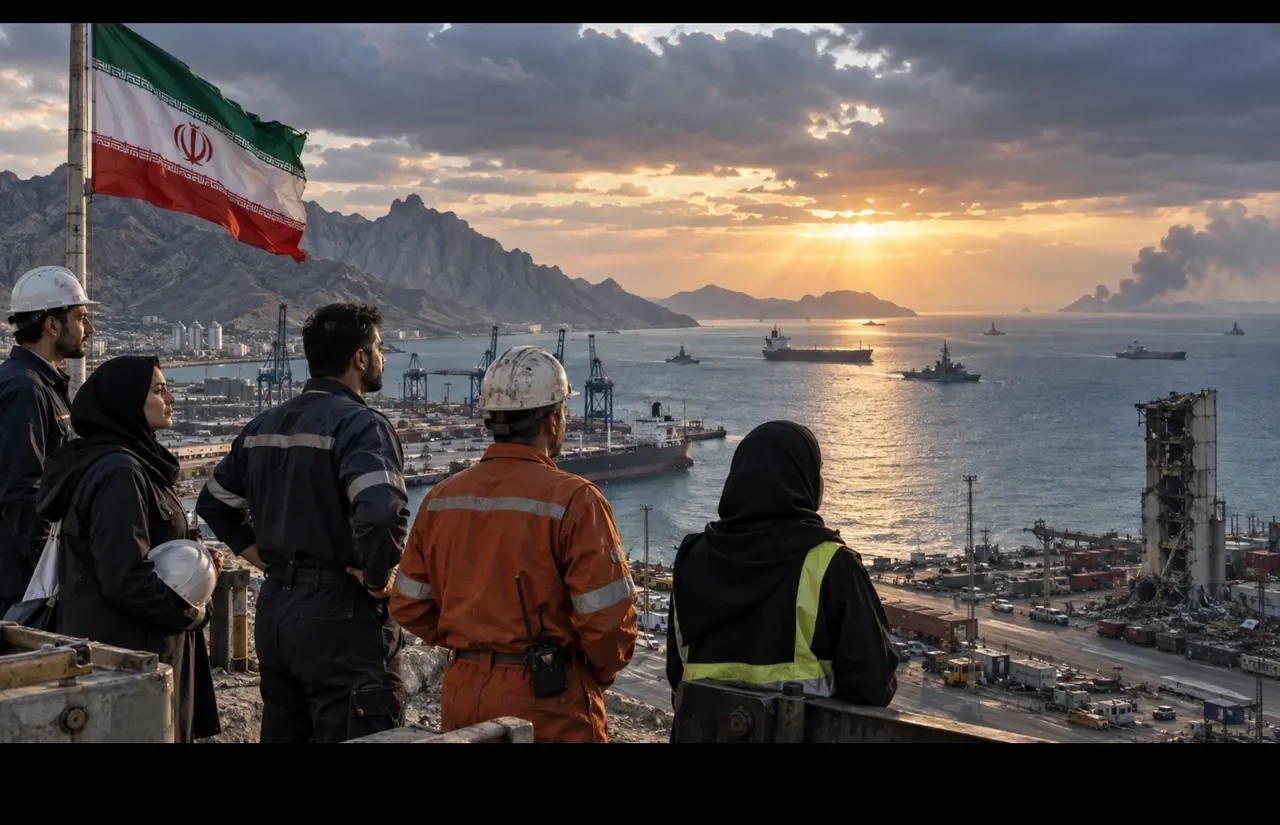
Strait of Hormuz Reopening: Iran’s Seven Conditions and What They Mean for Oil, War and Global Power
Iran’s Seven Conditions to Reopen the Strait of Hormuz: The American Game Behind the Negotiation
By Dr. Pooyan Ghamari
Updated: 14 September 2026
Direct answer
Iran has not agreed to an immediate reopening of the Strait of Hormuz. Reuters reported that the understanding between Iran and Oman creates a possible framework for reopening, but that Tehran has linked any reopening to conditions directed at the United States. A seven point list has been reported by Geo News through an anonymous Iranian foreign ministry source, but Iran has not officially published or independently confirmed that complete list.
That distinction matters. The negotiation is real. The reported details are credible enough to examine, but they must not yet be presented as a formal Iranian document.
What are Iran’s reported seven conditions for reopening the Strait of Hormuz?
According to the list published by Geo News on 13 September 2026, Iran’s reported conditions are:
1. The United States must end its maritime blockade of Iran.
2. Iran’s frozen assets must be restored.
3. Sanctions on Iranian oil exports must be lifted.
4. American threats and military operations against Iran must stop.
5. The war and military attacks against Iran and its regional allies must end.
6. United States military forces must withdraw from areas surrounding Iran’s borders.
7. Iran must receive compensation for damage inflicted upon it, together with a commitment against interference in its nuclear and missile capabilities.
These seven demands have not been officially released as a final government text. Reuters has independently confirmed the broader negotiating position, including demands concerning the blockade, sanctions, compensation and an end to the war, but not every element of the seven point formulation.
The strategic question is therefore larger than whether one leaked list is worded perfectly. The real question is why the world expects Iran to open a vital passage while accepting that its own trade, ports, assets and security may remain under external coercion.
The Strait is not simply open or closed
The public conversation often reduces the Strait of Hormuz to a switch. Open or closed. Safe or dangerous. Legal or illegal. Reality is more complicated.
Commercial passage can exist physically while becoming economically impossible. A tanker may be able to enter the water, yet its owner may refuse the voyage. An insurer may withdraw cover. A bank may reject the payment. A port may refuse the vessel. A compliance department may fear sanctions. A supplier may suspend a software licence. A cargo may move but become impossible to finance, settle or unload.
This is why the operational condition of the Strait cannot be measured only by naval statements. Reuters reported that just six commodity vessels crossed on 8 September, compared with a prewar level of roughly 125 commercial vessels per day. The Strait was not empty, but neither was it functioning as a normal artery of global commerce.
This is the invisible chain.
Modern power rarely needs to seize every ship. It can control the permissions around the ship. The vessel, the cargo and the sea remain visible. The decisive system sits behind them: insurance, finance, classification, sanctions screening, port access, satellite data, contractual law and the currency in which the transaction is settled.
The American game is control of permission
Washington presents the crisis mainly as a question of freedom of navigation. Freedom of navigation is a legitimate international concern, particularly in a passage that carried more than one quarter of global seaborne oil trade during 2024 and the first quarter of 2025, according to the United States Energy Information Administration.
But freedom cannot be applied in only one direction.
If ships carrying the oil of American partners must enjoy secure passage, while Iranian ports are blockaded and Iranian oil remains sanctioned, the practical rule is not universal freedom. It is selective circulation. Some commerce is protected. Other commerce is criminalised. The language remains neutral, but the permission system is not.
My reading is that the American objective is broader than reopening a waterway. It is to reopen the Strait without surrendering the architecture that decides whose oil may be sold, whose money may move, which vessels may be insured and which state is allowed to convert geography into bargaining power.
That is the American game in its mature form. Military power creates pressure, financial power extends it, legal language normalises it, and narrative power presents the resulting hierarchy as the natural order.
This does not mean that every American security concern is false. It means that the public argument is incomplete. A serious analysis must examine the whole machine, not only its most convenient principle.
From visible empire to the Invisible Empire
Old empire planted a flag, appointed a governor and collected tribute. Modern empire often works without formal occupation. It operates through systems that can deny access while appearing administrative and impersonal.
In my book The Invisible Empire and the Chain of Free Nations, I describe this structure as an empire of standards, finance, sanctions, logistics, compliance, technology and narrative control. Its greatest strength is that no single link appears to be the empire. Each institution claims to be following a rule, managing risk or obeying a technical requirement. Yet the combined effect can determine whether an entire nation may trade normally.
The Strait of Hormuz exposes this structure because Iran possesses physical leverage that the permission system cannot easily erase. Sanctions can restrict payment. Insurers can price risk. Navies can threaten force. News systems can define the preferred story. But geography remains stubborn. The Persian Gulf still reaches the open ocean through a narrow maritime passage beside Iran and Oman.
The present confrontation is therefore a contest between two kinds of power. The United States holds enormous influence over the global permission system. Iran holds unavoidable geographical leverage. Washington seeks circulation on terms compatible with the existing order. Tehran seeks to exchange geographical access for relief from the pressures imposed through that order.
Seen from this perspective, the seven reported conditions are not seven unrelated demands. They are an attempt to break several links of the same chain.
What the seven conditions actually seek
The first three conditions concern economic circulation. Ending the blockade, restoring frozen assets and lifting oil sanctions would reconnect Iran to trade, finance and its own accumulated wealth.
The next three concern security. Ending military operations, stopping the wider war and reducing the American military presence around Iran would change the strategic environment in which any maritime agreement must operate.
The final condition concerns the future balance of power. Compensation addresses the cost of past destruction. Noninterference in nuclear and missile capabilities seeks protection for the instruments Iran views as essential to deterrence and strategic independence.
Together, the demands say something simple: Iran will not separate freedom of navigation from freedom of national survival.
Washington wants to treat the Strait as a global public route while treating Iran as a restricted state. Iran is attempting to make those two policies impossible to maintain simultaneously.
Whether Tehran can secure all seven conditions is uncertain. Some are much harder for the United States to accept than others. A complete American military withdrawal from Iran’s surroundings, unrestricted treatment of Iran’s strategic programmes and broad compensation would require a transformation of the regional order, not merely a maritime agreement.
The list may therefore function partly as an opening position. Negotiators often place maximum demands on the table to define the bargaining range. But even if several points are later narrowed, the structure of the message is clear: passage will not be separated from sovereignty.
Sanctions are warfare through civilian systems
Economic sanctions are often described as the peaceful alternative to war. That description is too comfortable.
Sanctions do not remain inside government offices. They travel through commercial banks, freight companies, pharmacies, factories, employers and household budgets. They weaken the middle class long before they change the strategic calculation of a state. They can restrict nominally exempt trade because companies and banks choose excessive caution rather than risk punishment.
The United Nations Human Rights Office has specifically warned that sanctions and overcompliance can obstruct humanitarian assistance and affect access to health care. This does not erase the responsibility of Iran’s own government for domestic economic failures, corruption or poor policy. It does establish that external economic coercion has human consequences and cannot honestly be described as pressure on officials alone.
When a powerful state can freeze national assets, restrict oil sales, deter shipping and push third country institutions to refuse lawful transactions, it is exercising power over a population without governing that population. This is precisely why the Invisible Empire is difficult to challenge. Its effects are political, but its instruments are dispersed through apparently private decisions.
Iran’s leverage is real, but leverage is not yet sovereignty
Iran has demonstrated that the Strait of Hormuz cannot be treated as though the country beside it does not exist. That is strategically important. Yet disruption alone does not create durable sovereignty.
Closing or severely restricting the Strait also imposes costs on neighbouring societies, Asian importers, shipping companies and ordinary consumers far beyond the conflict. Higher freight, fuel and insurance costs eventually enter food prices, transport costs, industrial production and public budgets. A policy may expose an unequal system while still harming people who did not design that system.
For Iran, the serious objective should not be permanent closure. It should be the conversion of temporary leverage into a durable regional settlement.
That settlement would require a transparent navigation framework, credible security guarantees, defined Iranian and Omani responsibilities, protection for civilian commerce, an enforceable dispute mechanism and economic arrangements that do not depend entirely on the discretion of a distant power.
This is the argument I developed in The Strait of Hormuz, the Matrix of Power, and the Strategic Reawakening of Iran. Geography gives Iran leverage, but only functioning institutions can convert leverage into lasting capability. Sovereignty is not measured by the ability to stop movement for a week. It is measured by the ability to build a trusted order that survives for a generation.
Maritime law cannot solve a political asymmetry by itself
The law of international straits recognises rights of transit passage. That principle matters, and commercial vessels should not become expendable pieces in a geopolitical contest. But the legal discussion is complicated by treaty status, coastal state rights, security claims, armed conflict and the conduct of the powers demanding compliance.
No serious settlement can be built on the fiction that only one side has legal duties. Iran and Oman have responsibilities as coastal states. Shipping states have navigation interests. The United States also carries responsibility for the consequences of blockades, military action and coercive sanctions.
Law becomes credible when it restrains the strong as well as the weak. If it demands uninterrupted movement through Iranian geography but remains silent about the interruption of Iranian commerce, it will be seen not as neutral law but as an instrument of hierarchy.
What Washington is likely trying to preserve
The American negotiating preference can be understood through four objectives. This is analysis, not a claim about a secret document.
First, Washington wants Gulf energy to move without granting Iran control over the price or conditions of passage.
Second, it wants navigation restored without automatically removing the sanctions architecture around Iranian oil, banking and strategic programmes.
Third, it wants to avoid recognising a precedent in which a regional power can convert control of a chokepoint into formal authority over international commerce.
Fourth, it wants the costs of regional security shared by Gulf states and allies while retaining the decisive role in defining the acceptable settlement.
Iran’s seven reported conditions challenge every one of these objectives. This is why the dispute is not mainly technical. The argument over routes, charges and inspections is an argument over who has the authority to write the rules.
The Gulf states face a decision of their own
The countries of the Persian Gulf have depended for decades on American military protection, global shipping insurance and dollar based energy settlement. That system delivered security and commercial access, but it also concentrated strategic permission outside the region.
The current crisis reveals the cost of that dependency. Regional states cannot permanently outsource the security of their only maritime exit while assuming that outside powers will always share their priorities.
Their rational interest is not to become extensions of either Washington or Tehran. It is to build a regional maritime institution strong enough to protect navigation, prevent arbitrary charges, reduce the risk of escalation and give every coastal state a stake in stability.
A regional framework would not remove global powers from the Persian Gulf. It would reduce their ability to define every crisis on behalf of the people who actually live there.
Three possible paths from here
1. A limited corridor agreement
Iran and Oman could establish designated routes with temporary security arrangements while the larger dispute with Washington remains unresolved. This would restore part of the traffic but leave sanctions, insurance and military risk in place.
2. A wider political bargain
The United States could offer limited sanctions relief, access to some frozen assets or changes to the blockade in exchange for verified commercial passage and security commitments. This is more difficult, but it addresses the connection between maritime access and economic coercion.
3. Prolonged restricted passage
If neither side accepts a compromise, traffic may continue at a fraction of normal levels. Markets would then face recurring oil shocks, high insurance costs and constant risk that one attack will destroy the remaining commercial confidence.
The third path is the easiest politically and the most expensive economically. Every actor can blame another while households, businesses and energy importers absorb the bill.
The real meaning of the Strait of Hormuz crisis
The world is asking whether Iran will reopen the Strait. It should also ask who closed the wider system around Iran.
This is not an argument for attacking civilian shipping or turning essential trade into a hostage. It is an argument against selective definitions of freedom. Navigation cannot be sacred for one group of exporters and optional for another. Sovereignty cannot mean that powerful states write universal rules while exempting their own instruments of coercion.
In The Invisible Chain, I examined how power shapes perception before it shapes behaviour. The same mechanism operates here. If the public is shown only the tanker stopped at sea, the cause appears Iranian. If it is shown the complete chain, including blocked ports, frozen assets, sanctions, withdrawn insurance, military pressure and controlled payment routes, the conflict looks different.
The tanker is the visible event. Permission is the hidden battlefield.
The reported seven conditions matter because they bring that battlefield into the open. They tell Washington that Iran will not discuss the movement of other nations’ wealth without discussing the restrictions placed on its own. They tell the Persian Gulf states that regional security cannot forever be rented from abroad. They tell the market that oil prices are now connected not only to supply and demand, but to the political architecture governing permission.
The strongest outcome would not be an American victory or an Iranian victory. It would be the end of a system in which any single power can decide who may trade, who may insure, who may settle and who must remain economically isolated.
The Strait of Hormuz should become a protected artery managed through regional responsibility, international law and reciprocal economic rights. Iran should use geography to negotiate institutional sovereignty, not permanent disruption. The United States should accept that freedom of navigation loses moral authority when it is separated from freedom of lawful commerce.
Until both principles are placed on the same table, the Strait may reopen on paper while the invisible chain remains locked.
Frequently asked questions
Is the Strait of Hormuz open now?
It is not functioning as a normal commercial route. Some vessels are crossing, but traffic remains severely reduced and the security, insurance and sanctions environment makes ordinary passage exceptionally difficult.
Has Iran agreed to reopen the Strait of Hormuz?
No immediate reopening has been agreed. Reuters reported that the Iran and Oman understanding establishes a potential basis for reopening, subject to conditions Tehran has directed at the United States.
What are Iran’s seven conditions for reopening the Strait of Hormuz?
The reported conditions include ending the American maritime blockade, restoring frozen Iranian assets, lifting oil sanctions, stopping military threats and operations, ending the war, withdrawing United States forces from areas around Iran, and providing compensation together with noninterference in Iran’s strategic programmes.
Are the seven conditions officially confirmed by Iran?
Not as a complete seven point government document. The list was attributed to an anonymous Iranian foreign ministry source. Several core demands have been confirmed in Reuters reporting, but the complete formulation should still be described as reported rather than official.
Why is the Strait of Hormuz so important?
It connects the Persian Gulf to the Gulf of Oman and the Arabian Sea. Before the present conflict, more than one quarter of global seaborne oil trade passed through it, making it one of the most consequential energy routes in the world.
Why does the United States want the Strait reopened?
The United States has interests in global energy stability, freedom of navigation, protection of partners and limiting inflationary oil shocks. It also seeks to preserve a regional order in which Iran cannot control the commercial terms of passage.
Why does Iran connect reopening to sanctions?
Iran argues that it should not guarantee the movement of other countries’ exports while its own ports, oil sales, banking channels and assets remain restricted. It is using geographical leverage to seek economic and security concessions.
Can Iran legally close the Strait of Hormuz?
The legal question is contested. International maritime law protects transit passage through straits used for international navigation, while coastal states retain security and regulatory rights. Armed conflict, treaty status and the conduct of all parties complicate the present case. A final legal judgment requires more than political statements from either side.
What is the Invisible Chain?
The Invisible Chain is the network of permissions that determines whether commerce can actually function. It includes insurance, banking, sanctions compliance, port access, legal classification, technology, currency settlement and narrative legitimacy.
What does the Invisible Empire mean in this crisis?
It describes power exercised through systems rather than formal occupation. A nation may remain politically independent while external institutions retain decisive influence over its trade, finance, technology and access to global markets.
Would reopening the Strait immediately lower oil prices?
It would reduce an important source of risk, but prices would also depend on physical traffic, insurer confidence, damaged infrastructure, sanctions, available supply and whether the political settlement appears durable.
What would be the most stable solution?
A regional maritime framework supported by international law, credible security guarantees, reciprocal commercial rights, transparent navigation rules and a binding mechanism for resolving disputes would offer greater stability than either permanent coercion or permanent disruption.
Sources
1. Reuters, Iran and Oman understanding does not provide for immediate reopening
2. Reuters, Iran sets conditions for reopening the Strait of Hormuz
3. Geo News, reported seven conditions
4. Reuters, shipping traffic remains far below normal
5. United States Energy Information Administration, World Oil Transit Chokepoints
6. United Nations Human Rights Office, sanctions and the right to health
7. International Maritime Organization, United Nations Convention on the Law of the Sea
8. Google Search Central, supported search appearance and structured data features
Recommended internal links
1. The Strait and the Invisible Chain: Iran, the Persian Gulf, and the Architecture of Permission
2. The Invisible Chain: How to Break the System of Cognitive Control
3. Why the Future of the Strait of Hormuz Depends on Organized Sovereignty
4. The Invisible Empire and the Chain of Free Nations
5. The Strait of Hormuz, the Matrix of Power, and the Strategic Reawakening of Iran
Iran and the Strait of Hormuz: Questions and Answers FAQ
Companion FAQ for: Iran’s Seven Conditions to Reopen the Strait of Hormuz: The American Game Behind the Negotiation
Important verification note
Iran has not officially published a complete seven point document. The seven conditions discussed below were reported by Geo News through an anonymous Iranian foreign ministry source. Reuters has independently confirmed several central demands, including ending the blockade, sanctions relief, compensation and an end to the war, but not every detail of the reported list. Because negotiations and vessel movements can change quickly, all current status answers should retain a visible update date.
Part One: Iran’s reported seven conditions
1. What are Iran’s seven conditions for reopening the Strait of Hormuz?
The reported conditions are an end to the American maritime blockade, restoration of frozen Iranian assets, removal of oil sanctions, an end to threats and military operations, an end to the wider war, withdrawal of United States forces from areas surrounding Iran and compensation together with noninterference in Iran’s nuclear and missile capabilities.
2. Has Iran officially confirmed all seven conditions?
No complete official Iranian document containing all seven points had been published by 14 September 2026. The list came through an anonymous source reported by Geo News. Several core demands have appeared separately in Reuters reporting, which supports the overall negotiating direction but not every reported detail.
3. Has Iran agreed to reopen the Strait of Hormuz?
Iran has not agreed to an immediate and unconditional reopening. Reuters reported that the understanding with Oman may provide a framework for future reopening, but Tehran says implementation depends on American concessions.
4. What is the first reported Iranian condition?
The first reported condition is the termination of the United States maritime blockade affecting Iran. Tehran argues that it cannot guarantee normal passage for other countries while its own ports and exports remain obstructed.
5. Why does Iran demand the return of frozen assets?
Iran regards frozen state assets as national property that has been made inaccessible through foreign sanctions and legal restrictions. Restoring at least part of those funds could also provide a measurable concession that is easier to verify than a political promise.
6. Why is the removal of oil sanctions central to the negotiation?
Oil remains essential to Iran’s export income and access to foreign currency. Reopening the Strait while Iranian oil continues to face restrictions would allow competitors to benefit from the route without restoring Iran’s own commercial position.
7. What does Iran mean by ending American threats and military operations?
The reported demand seeks an end to attacks, threats of attack and coercive military measures directed at Iranian assets. The exact geographic and operational scope would have to be defined in any enforceable agreement.
8. Why does Iran connect the Strait to the wider regional war?
Iran views maritime security as inseparable from attacks against itself and aligned actors in the region. Washington may prefer a narrow shipping arrangement, but Tehran is attempting to use the Strait as leverage in a broader security negotiation.
9. Is Iran really demanding the withdrawal of all United States forces from the region?
That is how the reported condition has been described, although its precise wording is not officially confirmed. A complete American withdrawal would be a major transformation of the regional security order and is therefore one of the least easily accepted demands.
10. Is Iran demanding war compensation?
Compensation is included in the reported list and has also appeared in Reuters reporting on Iran’s broader position. Any agreement would need to define responsibility, valuation, payment mechanism and which losses qualify.
11. What does noninterference in Iran’s nuclear and missile capabilities mean?
The reported language suggests that Iran wants protection from military or political action against programmes it considers central to deterrence and sovereignty. The United States is unlikely to accept an unrestricted interpretation, making this one of the hardest issues to settle.
12. Are the seven conditions an opening negotiating position?
They may be. Governments often begin with maximum demands to define bargaining space and signal priorities. I cannot confirm whether Tehran expects every reported condition to be accepted in full.
13. Which Iranian conditions are most negotiable?
Limited access to frozen assets, defined sanctions relief and changes to blockade measures may be easier to phase or verify. Military withdrawal, compensation and unrestricted treatment of strategic programmes would require much wider political agreements.
14. Which condition matters most economically?
The removal or suspension of restrictions on Iranian oil sales would probably have the most direct effect on export revenue. Access to frozen assets could create a faster one time liquidity effect, but restored oil trade would influence income over a longer period.
15. Which condition matters most strategically?
The security conditions matter most strategically because they concern the environment in which Iran must operate after any reopening. Sanctions relief can be reversed, while a credible security settlement could alter the balance of risk for years.
Part Two: Is the Strait of Hormuz open now?
16. Is the Strait of Hormuz open now?
As of 14 September 2026, it was not functioning as a normal commercial shipping route. Some vessels were crossing, but traffic, insurance and security conditions remained severely disrupted. Readers should check the article’s update time because the status can change within hours.
17. Is the Strait of Hormuz completely closed?
No. Complete physical closure would mean no passage at all. The more accurate description is severely restricted and commercially abnormal, because a small number of vessels have continued to transit.
18. How many ships are currently passing through the Strait?
The number changes daily. Reuters reported only six commodity vessel transits on 8 September 2026, far below the prewar commercial level it cited. Any article using a daily figure should state both the source and date.
19. Why do official statements disagree about whether the Strait is open?
Different speakers use different definitions. A navy may call the route open if physical passage is possible, while a shipowner may treat it as closed if insurance, crew safety or sanctions make the voyage commercially unacceptable.
20. What does “effectively closed” mean?
It means the route is not sealed in a literal sense, but normal commercial use has fallen so sharply that the economic effect resembles closure. Physical access and practical usability are not the same thing.
21. Can tankers still cross the Strait of Hormuz?
Some can and do, depending on security conditions, ownership, cargo, sanctions exposure, insurance and political arrangements. A successful crossing by one vessel does not prove that ordinary commercial traffic has returned.
Core sources
1. Reuters, Iran and Oman understanding does not provide for immediate reopening
2. Reuters, Iran sets conditions for reopening the Strait of Hormuz
3. Geo News, reported seven conditions
4. Reuters, shipping traffic remained far below normal on 8 September 2026
5. United States Energy Information Administration, World Oil Transit Chokepoints
6. United Nations Treaty Collection, status of the United Nations Convention on the Law of the Sea
7. International Maritime Organization, United Nations Convention on the Law of the Sea
8. United Nations Human Rights Office, sanctions and the right to health
Original article: https://ghamari.org/articles/f/iran-seven-conditions-strait-of-hormuz-reopening