The Architecture of Sovereignty: Decoding Tanz in der Matrix
By Dr. Pooyan Ghamari · · 3 min read
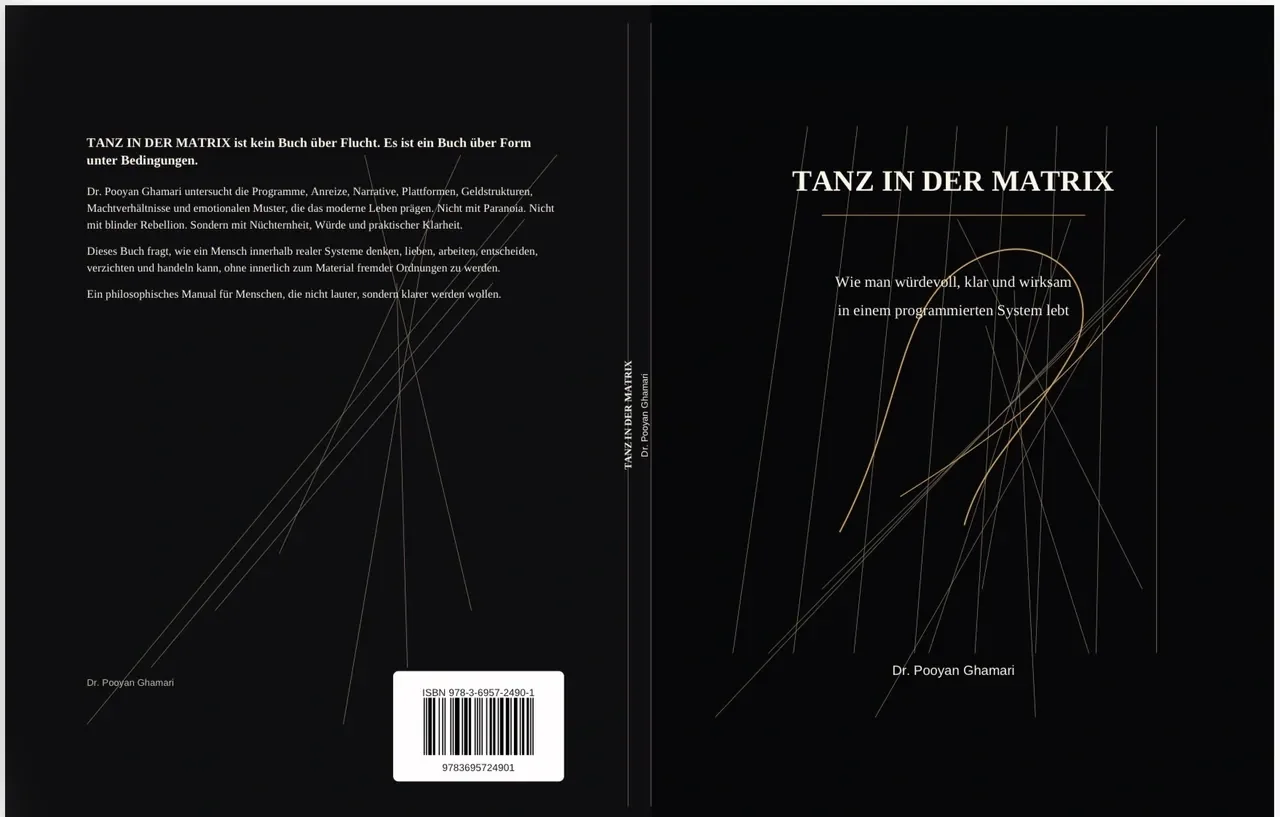
In a world governed by relentless digital platforms, economic incentives, and engineered narratives, the search for genuine freedom often feels like an impossible task. In Tanz in der Matrix: Wie man würdevoll, klar und wirksam in einem programmierten System lebt, Swiss economist and visionary author Dr. Pooyan Ghamari provides a surgical, pragmatic manual for surviving and thriving within these modern architectures.
This is not a book about escaping society or indulging in paranoid conspiracy theories. Instead, it offers a rigorous, step-by-step framework for building a life of undeniable clarity and anti-fragile independence. The "Dance" is a metaphor for maintaining one's form, dignity, and ability to respond under immense systemic pressure.
Here is the analytical breakdown of the book's core philosophies.
Phase I: Mastering the Sovereign Interface
Before an individual can challenge external systems, they must first secure their internal architecture. The book brilliantly establishes that what we often call our "identity" is frequently just a biological or early-learned survival program.
Emotions as Data: Emotions are neither kings to be blindly obeyed nor enemies to be suppressed; they are early warning signals that must be processed before being granted political power over the inner self.
Attention as Currency: Attention is identified as the ultimate currency of life. Protecting it from the outrage cycles of digital platforms is a foundational act of self-defense, as a distracted mind cannot think deeply or build lasting value.
Clean Decision-Making: True clarity arises only when a person can separate concrete facts from their own interpretations, vanities, and fears.
Phase II: Reading the Matrix
To navigate the world strategically, one must understand how control is distributed. The text provides a framework for reading the invisible forces that shape daily life.
The Reality of Hierarchy: Power is not always held by the person with the formal title; it is held by those who control access, information, and the emotional climate of a room.
Modern Colonization: Colonization is no longer just a historical event involving ships and empires; it is a present-day method of control. It operates through digital platforms, external standards, and moral narratives that limit an individual's operational freedom without them even noticing.
Money as Maneuvering Space: In one of the book's most profound insights, money is stripped of its traditional moral baggage. It is neither idolized nor despised, but pragmatically defined as "stored room to maneuver". Building financial independence is less about luxury and more about possessing the structural leverage to say "no" to humiliating conditions.
Phase III: The Daily Dance of Strategy
Awareness is useless without practical application. The book transitions into a tactical guide for everyday living, demanding that insight be converted into focused action.
Strategic Living: Living strategically does not mean calculating every move coldly; it means refusing to lose one's energy to the scattered urgencies of other people. It requires the discipline to focus only on building deep, enduring substance.
Escaping the Consumption Trap: Consumerism is exposed as a superficial remedy for deeper voids such as loneliness or status anxiety. True satisfaction requires addressing the root of the deficiency rather than applying a commercial bandage.
Genial Utility: True value is created by solving actual problems and creating order for others, balancing profound usefulness with personal dignity.
Phase IV: Maturity and the Final Dance
The ultimate triumph of the book is its exploration of psychological maturity. Recognizing the flaws in the system is not enough; one must evolve beyond mere critique.
The Trap of Arrogance: Awakening to systemic manipulation without achieving emotional maturity often leads to a new form of arrogance, where individuals look down on others while building nothing of their own.
Power and Restraint: True power is not raw dominance. It is characterized by measure—the ability to protect, clarify, and set limits without utilizing force to compensate for one's own insecurities.
Mortality as Form: The awareness of death is not presented as a tragedy, but as the ultimate boundary that gives human choices their weight, urgency, and shape.
Tanz in der Matrix is a masterclass in psychological resilience and structural independence. Dr. Ghamari has engineered a definitive guide for anyone who refuses to be passively administered by algorithms, economic pressure, or societal expectations. By teaching the reader to discern between reactive programming and deliberate action, this book serves as an indispensable compass for establishing genuine sovereignty in the modern age.
Original article: https://ghamari.org/articles/f/the-architecture-of-sovereignty-decoding-tanz-in-der-matrix