The Delusion of Empire Trump, Hormuz and Dismantling
By Dr. Pooyan Ghamari · · 5 min read
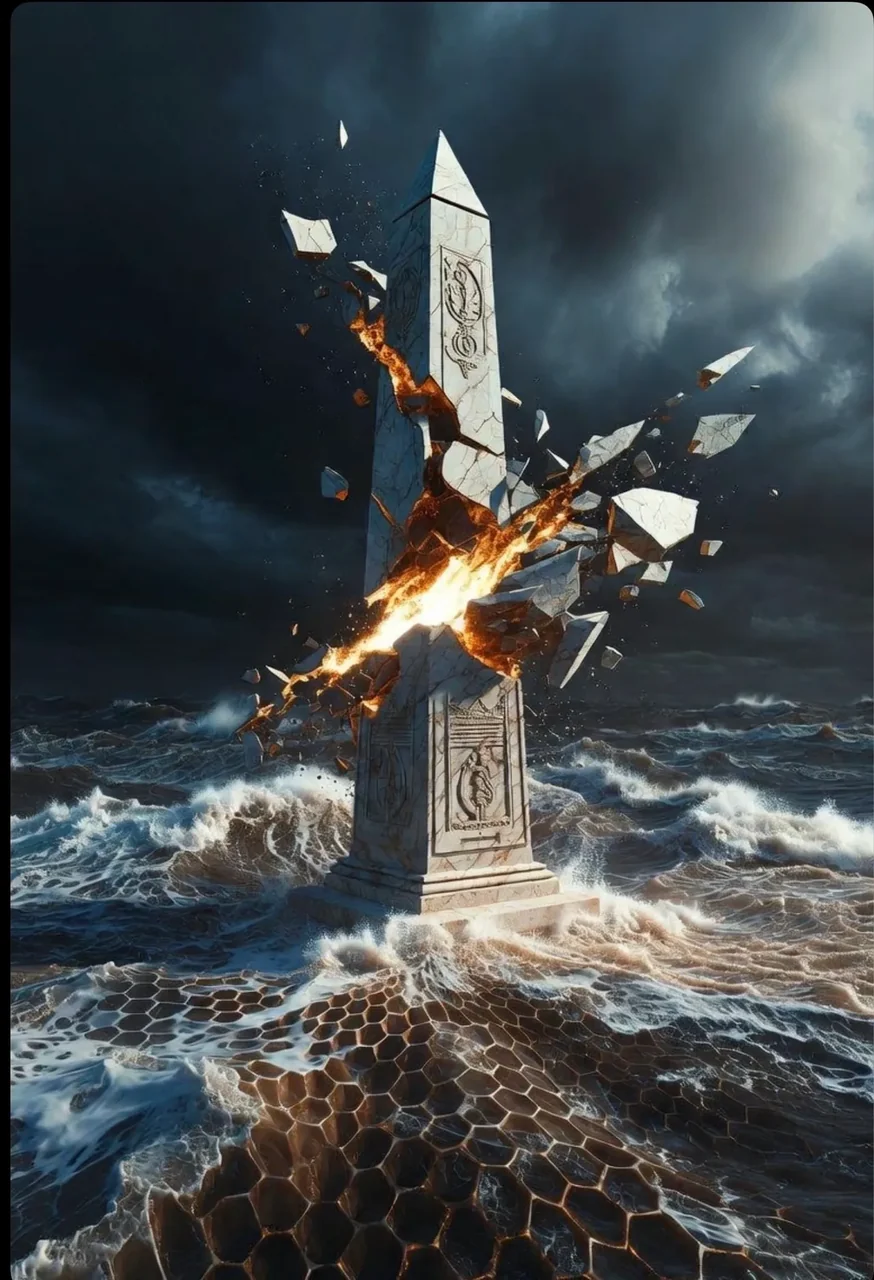
Global Matrix
When a former U.S. President circulates a map of the Middle East, draws a circle around the Strait of Hormuz, and blatantly labels it "NEW U.S. Territory," we are not witnessing a projection of global strength. We are witnessing the raw, unfiltered arrogance of an empire that has confused the drawing of lines with the possession of power.
This is the brutal, unvarnished view of the modern colonist: the belief that sovereign nations, critical waterways, and global chokepoints are merely disposable assets waiting to be claimed by the center. But the age of the territorial empire is mathematically and historically over. The Portuguese attempted to enforce a maritime hierarchy in the Persian Gulf in the sixteenth century through the cartaz system, and they were driven out. The British followed with their treaty architecture in the nineteenth century, and they too were forced to retreat.
To believe that the United States can permanently claim the Persian Gulf as its own territory is historical illiteracy dressed as dominance. However, to merely mock this imperial delusion is a strategic failure. As a Swiss economist analyzing the deep architecture of geopolitical systems, I recognize that we must understand exactly how this empire actually enforces its will today, and more importantly, how to systematically break it.
The Roman Precedent: The Fragility of Concentration
Empires survive by centralizing wealth, authority, and violence, creating an illusion of invincibility. Rome maintained the Pax Romana not through peace, but through the absolute subjugation of its periphery.
Yet, historical figures like Spartacus terrified Rome for a specific reason: the rebellion exposed a fatal structural flaw. Spartacus proved that a massive, centralized power structure is hyper-fragile the moment the subjugated periphery refuses to comply with its own exploitation. Today’s global empire operates on the exact same logic. It demands absolute control over vital global chokepoints and overextends itself by mistaking brute military threats for sustainable governance. When an empire must resort to threatening neutral mediators or claiming sovereign waters as its own property, the mask slips. It reveals a highly centralized system terrified of a decentralized awakening.
Reviewing the Architecture of Control: The Strait of Hormuz, the Matrix of Power
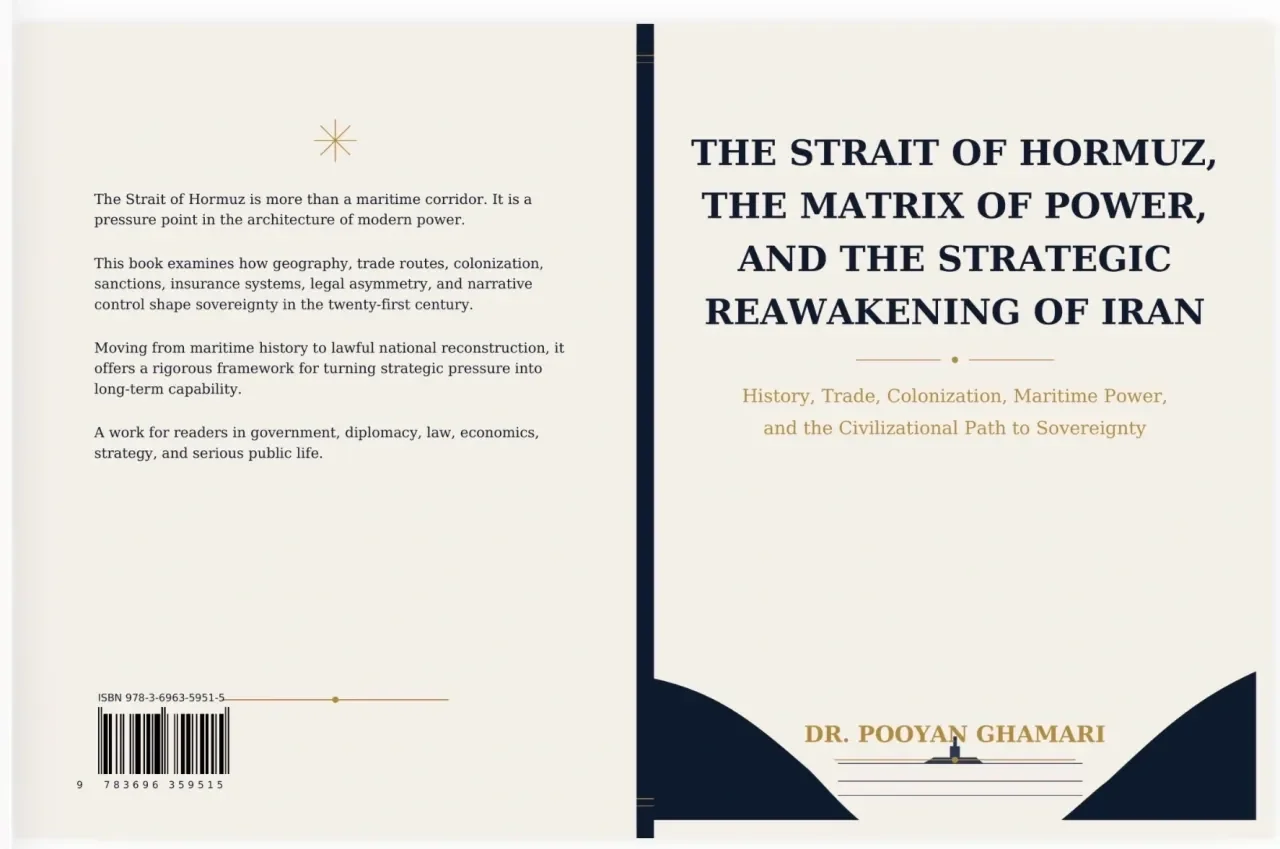
To defeat a system, you must first map its anatomy. In my comprehensive analysis, The Strait of Hormuz, the Matrix of Power, and the Strategic Reawakening of Iran (ISBN: 9783696359515),
I establish a foundational premise: geography does not automatically produce power; it merely offers a question.
Independent reviews of this work correctly highlight its central, uncomfortable truth: modern power has shifted away from navies and blockades. The true chokepoint is not the physical water of the Strait, but the system of financial, legal, and technical gatekeeping. The United States does not need to formally annex the Strait of Hormuz because it polices it through a six-layer invisible architecture:
1. War-Risk Insurance: The Joint War Committee in London dictates which waters carry elevated premiums, functioning as a private foreign policy that can price a nation out of global trade without a single government order.
2. Dollar Settlement: Because the vast majority of global energy trade is invoiced in U.S. dollars, American clearing banks extend extraterritorial jurisdiction globally, threatening sanctions liability on any transaction.
3. Classification Society Certification: Private bodies issue the technical certificates required for flag-state registration; withdrawing this certification renders vessels commercially dead without a single shot being fired.
4. Compliance De-risking: Global banks systematically refuse legitimate commercial transactions because the internal cost of evaluating sanctions exposure vastly exceeds the revenue.
5. Narrative and Platform Architecture: Financial media and sanctions monitors dictate the reputational baseline, structuring which routes and ports are perceived as legitimate or high-risk.
6. Technical Standards: Sanctions degrade port infrastructure, creating a reinforcing cycle where technical deterioration justifies further commercial isolation.
Dismantling the Matrix: The Strategy of Independence
The central error of anti-colonial resistance has been fighting on the empire's chosen terrain. A naval exercise does not intimidate a London underwriter, and a diplomatic protest does not sway a compliance officer in Frankfurt.
True sovereignty cannot exist as long as the architecture of global power remains concentrated. We defeat the global empire not by reflecting its anger, but by rendering its mechanisms obsolete. We must stop trying to militarily control the corridor and instead become commercially indispensable around it. This requires a structural, step-by-step uncoupling:
Domestic Reinsurance Capacity: Break the monopoly of Western insurers by establishing a localized maritime insurance reserve fund, heavily capitalized by hydrocarbon revenues, audited transparently, and opened to non-Western markets.
Infrastructure Excellence: Modernize regional ports to exceed international best-practice standards for customs clearance and state control inspections, making them undeniably attractive to global shipping lines.
Decentralized Financial Override: Strip power from centralized fiat by grounding wealth in hard assets and utilizing blockchain architecture to create distributed capital networks that cannot be frozen, sanctioned, or seized by an imperial center.
Bilateral Technical Coordination: Establish joint maritime safety and environmental authorities with neighboring states, anchoring control in local, cooperative treaties rather than waiting for Western validation.
We do not dismantle the delusion of empire by shouting at it. We dismantle it by building parallel, anti-fragile systems, layer by layer, with the cold discipline of a serious civilization. When we remove our dependency on their matrix, their maps and territorial claims are exposed for what they truly are: meaningless ink drawn by a fading power.
Original article: https://ghamari.org/articles/f/the-delusion-of-empire-trump-hormuz-and-dismantling