Unmasking the Empire Why I Wrote Das Imperium ohne Flagge
By Dr. Pooyan Ghamari · · 3 min read
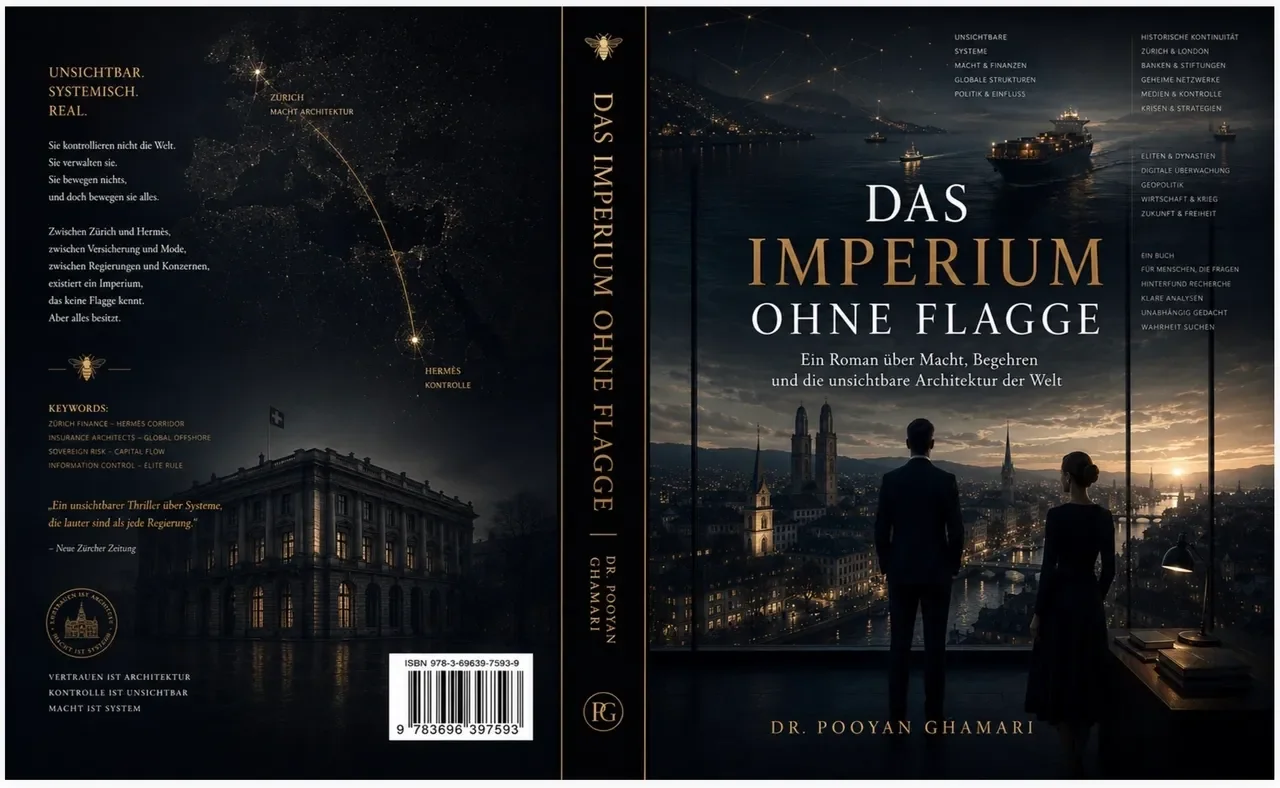
Beyond the Algorithm:
The Human Resistance in Das Imperium ohne Flagge
While much can be discussed regarding the algorithmic warfare detailed in Das Imperium ohne Flagge, viewing Dr. Pooyan Ghamari's novel strictly as a geopolitical thriller overlooks its most profound achievement. At its core, this visionary work is a psychological masterclass on generational trauma, the illusion of choice, and the quiet courage required to stop reacting and start building.
In this novel, the sterile layers of global compliance are peeled back to reveal the deeply human hearts beating—and breaking—beneath the machine. This review explores the distinct, character-driven elements of the book, proving it to be a philosophical reflection on the modern human condition.
Breaking the Cages of Heritage and Gratitude
The true horror of the invisible empire described in the book is that it does not lock its victims in iron cells; it traps them in cages constructed from duty, legacy, and love.
This dynamic is brilliantly encapsulated when the dying patriarch Konstantin von Arman presents his daughter, Livia, with four symbolic items: her mother's ring, a foundation proxy, an old audio recording, and the name of a prospective husband.
Konstantin builds a cage of "gratitude, inheritance, pain, and fear," genuinely believing he is keeping her safe from a ruthless world.
Livia’s character arc stands out as a triumph of personal agency. She does not scream or rebel in a traditional, chaotic sense; instead, she quietly seizes the foundation’s power and severs it from her father’s toxic architecture.
The narrative powerfully establishes that a woman who decides for herself is far more dangerous to the system than any conventional weapon.
From Reaction to Creation: Building the Hive Nation
A remarkable aspect of Dr. Ghamari's novel is its philosophical stance on systemic resistance. The story argues that fighting a monolithic system on its own terms is a guaranteed failure.
The character of Cyrus Farzan, an Iranian engineer, embodies this revelation, realizing that for decades, people have confused history with strategy, spending their lives merely reacting to external pressures.
Cyrus’s solution is to physically build a way out: a decentralized maritime insurance network operating across regional nodes like Muscat, fully insulated from Western banking monopolies.
This philosophy is deepened through the metaphor of the beekeeper, Pater Lukas, who explains that a healthy bee colony does not react to the chaos outside; it meticulously builds and regulates the inside of the hive.
Ultimately, true freedom is found in creation, not in endless opposition.
The Banality of Invisible Architects
The book also dissects the banality of modern evil through characters like Victor Reiss and the retired operative Sir Henry Whitford-Lyle.
These men are not conventional villains; they are highly educated consultants who draft risk classifications from comfortable London and Zurich offices.
They remain perfectly insulated from the real-world suffering their keystrokes cause—such as the tragic death of Layla Mansour's brother, who succumbed to sepsis because an automated banking classification prevented his Beirut hospital from acquiring antibiotics.
By contrasting the clean, polite boardrooms of Europe with the desperate construction sites of Dubai and the ports of Bandar Abbas, the story exposes how systemic violence is laundered through bureaucracy.
Final Verdict: A Visionary Exploration of Freedom
Das Imperium ohne Flagge is a deeply human review of our modern geopolitical reality. It asks a terrifying question for the digital age: How do you fight an empire that rules through algorithms, compliance, and invisible data?
The answer provided by Dr. Ghamari is both sobering and deeply hopeful. You do not fight it. You walk away, and you build something better. This thematic depth elevates the book from a mere thriller to a vital, SEO-optimized piece of contemporary literature, cementing its status as a visionary exploration of freedom in the modern world.
Original article: https://ghamari.org/articles/f/unmasking-the-empire-why-i-wrote-das-imperium-ohne-flagge