Why Greenland Important Security Rare Earths Sovereignty
By Dr. Pooyan Ghamari · · 7 min read
Why Is Greenland Important? Security, Rare Earths and Sovereignty
By Dr. Pooyan Ghamari, | September 20, 2026
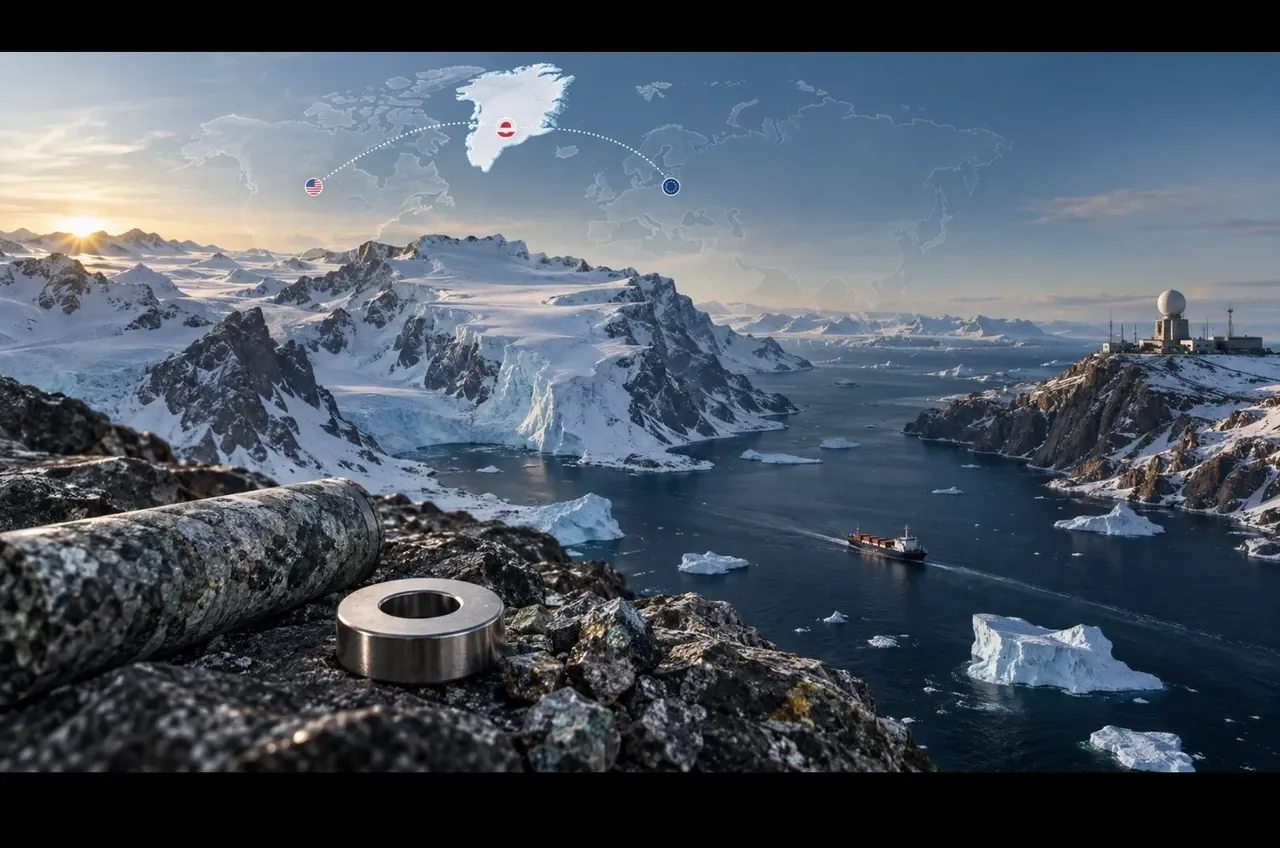
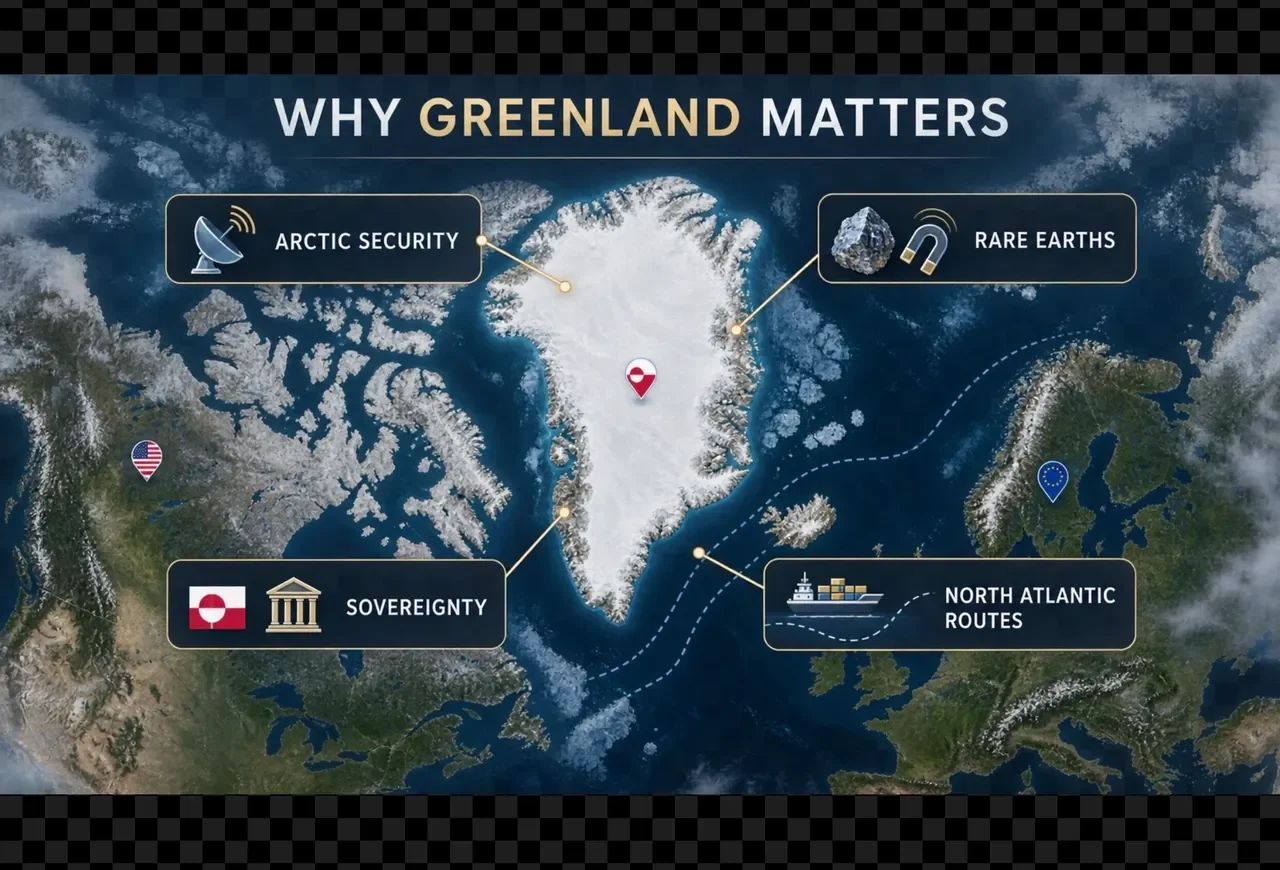
Greenland matters because it sits at one of the most strategic points on Earth. It lies between North America and Europe, connects the Arctic to the North Atlantic, supports early warning and defence systems, and holds major mineral potential. It is also home to a population with its own democratic institutions and a recognised right to decide its future.
The recent agreement announced by the United States, Denmark and Greenland has brought all of these issues together. It concerns security and military access, but it also raises larger questions about investment, resources and political power in the Arctic.
The most important fact is simple. Greenland has not been sold, transferred or annexed. It remains part of the Kingdom of Denmark. Greenland governs many of its own domestic affairs, including mineral resources, and Greenlanders retain the right to self determination.
The short answer
Greenland is important for four connected reasons.
Its location gives it major military value. Its minerals could support future industrial supply chains. Its position in the Arctic is becoming more important as climate, shipping and security conditions change. Its political status makes it a test of whether small territories can protect their own choices when larger powers compete around them.
These four issues should not be confused. Security access is not territorial ownership. Mineral potential is not the same as a working mine. A signed political statement is not the same as a complete supply chain.
Greenland’s location shapes Arctic security
Greenland is positioned between North America and Europe, close to routes that connect the Arctic Ocean and the North Atlantic. For decades, this has made the island important to the defence of both continents.
The United States already operates Pituffik Space Base in northwestern Greenland under arrangements rooted in the 1951 defence agreement with Denmark. The base supports missile warning, space surveillance and Arctic operations.
In September 2026, the United States, Denmark and Greenland announced an agreement to expand American military presence and prevent rival powers from establishing military bases or making sensitive investments on the island. Reuters reported that the detailed terms have not yet been published. This distinction matters. Public statements describe the political direction, but the final legal text will determine the actual balance of authority.
For Europe, Greenland is not a distant Arctic issue. It is part of the security architecture connecting North America, NATO and the North Atlantic.
Sovereignty remains the central question
Greenland is a self governing territory within the Kingdom of Denmark. It has control over many domestic matters and has a legal right to self determination. Denmark retains responsibility for areas such as foreign affairs and defence, although Greenland’s government has an essential role in decisions that affect the island.
The current security discussion has revived a basic question. Can a small territory protect its political autonomy while accepting deeper security ties with a much larger power?
The answer depends on the terms of the agreement, not on political slogans. Greenland’s leaders have said that the arrangement recognises the sovereignty and territorial integrity of the Kingdom of Denmark and the Greenlandic people’s right to decide their own future. That is the public position. The practical test will be whether Greenland retains real influence over military sites, investment approvals, environmental rules and resource policy.
Sovereignty is not only a legal word. It is the ability to make meaningful choices.
Rare earths make Greenland economically significant
Greenland holds important deposits of rare earth elements, graphite, zinc and other minerals used in electronics, batteries, wind turbines, defence systems and advanced manufacturing.
Rare earths receive the most attention because they are needed for high performance permanent magnets. These magnets are used in electric vehicles, wind turbines, electronics and military equipment. China remains highly influential in global rare earth processing and magnet production, which has made alternative supply routes a strategic priority for the United States and Europe.
However, the phrase “Greenland’s rare earths” can create a misleading impression. A deposit is not a finished product. Before a mineral can support industry, it must be mined, transported, processed, separated, refined and sold to manufacturers. Each stage requires capital, permits, infrastructure, technology and long term customers.
The International Energy Agency identifies supply bottlenecks, price volatility and geopolitical risk as central features of critical minerals markets. The real competition is not simply over who owns a deposit. It is over who can build the full chain from rock to industrial component.
Why the mining story is more complicated than headlines suggest
Greenland has substantial mineral potential, but developing it is difficult. Projects face high infrastructure costs, harsh weather, limited transport links, environmental requirements and the need for local political support.
The Tanbreez project in southern Greenland is often described as one of the more advanced rare earth prospects because of its potential for heavy rare earth elements and relatively low uranium content. It has attracted interest partly because it could connect with processing plans in North America.
Yet even an advanced project remains exposed to financing, construction, technical and market risk. A mining licence does not guarantee production. An offtake agreement does not guarantee a refinery will be built. A refinery does not guarantee that it can compete with established processing capacity elsewhere.
This is why Greenland should be viewed as a strategic option, not an instant replacement for existing global supply chains.
Europe’s real challenge is processing
The European Union has recognised that mineral security is not solved by finding more deposits. Its Critical Raw Materials Act sets 2030 benchmarks for extraction, processing and recycling. The targets are at least 10 percent of annual consumption from extraction, 40 percent from processing and 25 percent from recycling. The Act also seeks to reduce dependence on any single third country.
This is an important shift in thinking. Europe does not need to own every mine. It needs diversified access to material, credible processing capacity, recycling systems and reliable commercial partnerships.
For Greenland, this creates an opportunity. The island can negotiate with multiple partners rather than rely on one buyer or one country. But that opportunity only becomes real if agreements are transparent, environmental standards are respected and local communities retain a meaningful voice.
What the new agreement could mean for investment
Restrictions on sensitive investment are likely to become one of the most important parts of the agreement. If the definition is broad, it could affect who can invest in mining, ports, telecommunications, energy infrastructure and processing facilities.
That may reduce the role of some foreign investors. It may also increase the importance of Western public finance, export credit, long term purchase agreements and strategic partnerships.
The risk is clear. Greenland should not move from one dependency to another.
A stronger model would give Greenland several options for capital, customers and processing partners. It would require investors to respect local law, environmental protections and democratic oversight. It would also ensure that more long term economic value remains connected to Greenland rather than leaving the island with only the disruption of extraction.
What to watch next
The final text of the agreement matters more than the initial announcement.
The most important questions are whether Greenland’s government has approval rights over new military activity, how sensitive investment is defined, whether mineral projects remain under Greenlandic resource law, how environmental safeguards apply, and whether the arrangement can be reviewed or changed in the future.
These are practical questions. They will determine whether the agreement strengthens Greenland’s security while preserving its political and economic choices.
Frequently Asked Questions
Does the United States own Greenland?
No. Greenland remains part of the Kingdom of Denmark. The announced agreement concerns security cooperation, not a transfer of territory.
Why does the United States care about Greenland?
Greenland is important for Arctic defence, missile warning, space surveillance, North Atlantic security and access to strategically important mineral potential.
Does Greenland have rare earths?
Yes. Greenland has significant rare earth deposits, particularly in the south. However, no commercial rare earth mine is currently operating on the island.
Can Greenland replace China in rare earth supply?
Not quickly. Greenland could become part of a more diversified supply chain, but mining, processing, finance and infrastructure must all be developed first.
Who decides whether mining can happen in Greenland?
Greenland’s government has extensive authority over mineral resources. Projects must comply with Greenlandic law, permitting rules and environmental requirements.
Sources
Reuters reporting on the US, Denmark and Greenland security agreement
International Energy Agency, Global Critical Minerals Outlook 2025
European Commission, Critical Raw Materials Act
European Commission, Critical Raw Materials
U.S. Geological Survey, Mineral Commodity Summaries
Dr. Pooyan Ghamari is a economist, author and independent international strategist. He writes on markets, geopolitics, sovereignty, real estate and cross border capital.
Original article: https://ghamari.org/articles/f/why-greenland-important-security-rare-earths-sovereignty