Who Pays EU Digital Product
Von Dr. Pooyan Ghamari · · 10 Min. Lesezeit
Dieser Artikel ist derzeit nur auf Englisch verfügbar. Eine deutsche Ausgabe ist nicht erschienen.
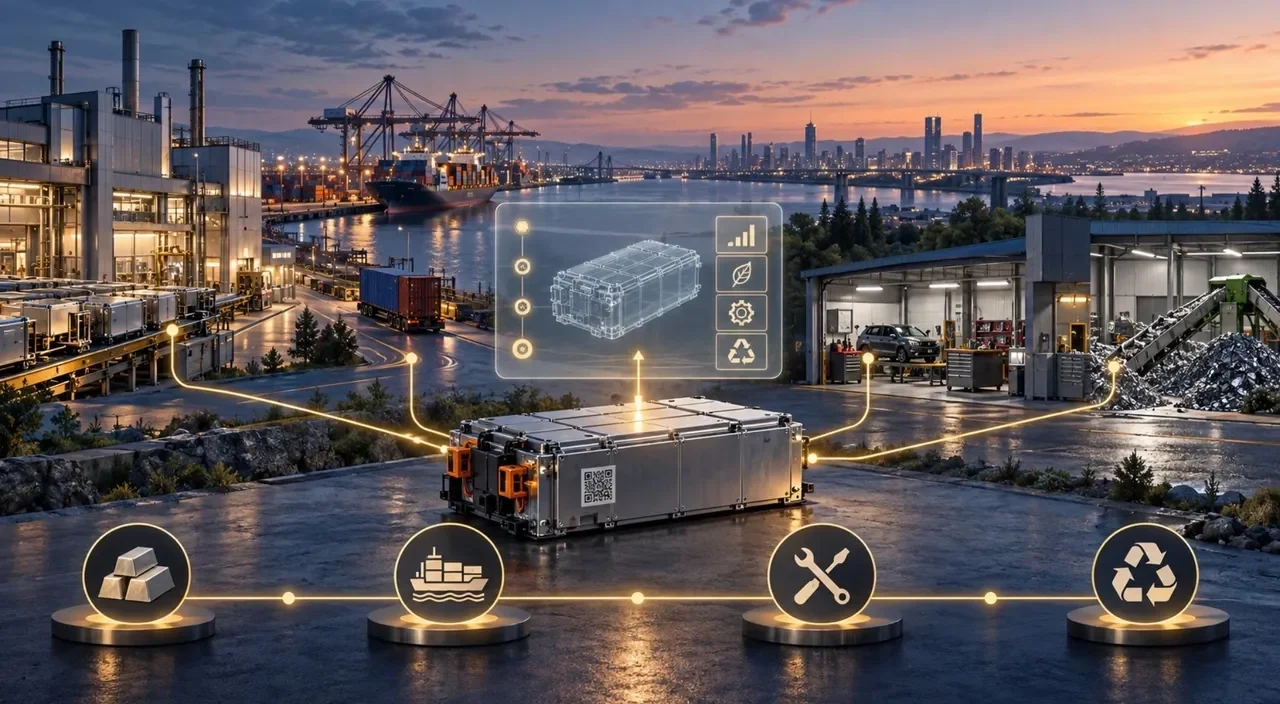
Who Pays for the EU Digital Product Passport? The Real Cost of Product Data
By Dr. Pooyan Ghamari, Swiss Economist and Author
The EU Digital Product Passport will be paid for first by manufacturers, importers and their suppliers, who must collect, host and maintain required data. Some costs may pass into prices, while repairers, recyclers and consumers can gain information that reduces waste and extends a product’s useful life.
The passport is often described as a QR code attached to a product. That description is correct but incomplete. A QR code is the doorway. Behind it sits a new chain of information about materials, origin, durability, repair, recycling and legal compliance. The commercial question is not whether information has value. It is who must create it, who controls it, who can see it and who bears the cost when the data is missing or wrong.
What the EU Digital Product Passport is and is not
The European Commission defines the Digital Product Passport, or DPP, as a digital container for information about products, components and materials. It will be introduced progressively. The current timetable identifies batteries as the first mandatory product group, with iron and steel, textiles, tyres, aluminium, furniture, mattresses and ICT products following through later sector specific measures.
The framework is the Ecodesign for Sustainable Products Regulation, known as ESPR. It does not mean that every product sold in Europe already needs a passport. The exact data, access rights and level of detail are set product by product through delegated acts or separate legislation. This distinction matters. Businesses should prepare, but they should not mistake an indicative timetable for an obligation that already applies to every item they sell.
The Commission’s registry became operational on 20 July 2026. It stores registration information and unique identifiers. The detailed product information is held by the economic operator or a DPP service provider. A data carrier, such as a QR code, connects the physical product to the passport. For imported goods, the identifier can be checked at customs.
Who pays first
The immediate payer is normally the business that places the product on the EU market. That may be a manufacturer, an importer or another economic operator, depending on the product and supply arrangement. The cost is broader than creating a QR code. It can include mapping materials and suppliers, obtaining verified information, connecting product records to orders and batches, setting access rights, maintaining the data and responding when a product is repaired, remanufactured or recalled.
For large companies with established traceability systems, much of the information may already exist. The new cost is making data consistent, usable and auditable across a chain that often runs through many jurisdictions. For small and medium sized firms, the burden may be relatively larger because they have fewer staff, weaker data systems and less bargaining power over suppliers.
Suppliers also pay. A European importer that needs composition, origin, safety or repair information will ask its suppliers for it. The request travels down the chain from the brand owner to the component maker, material processor and sometimes the raw material producer. Each handover creates a cost of measurement, documentation and commercial negotiation.
Where the cost can move
No regulation creates costs in a vacuum. Businesses can absorb them, pass them to buyers, demand them from suppliers or redesign the product and supply chain to reduce them. The final result depends on market power.
Strong brands may recover compliance costs through prices. Large buyers may require foreign suppliers to provide data without increasing the purchase price. Smaller importers may face higher software, verification and legal costs because they cannot negotiate the same terms. Consumers may pay part of the cost at purchase, but may also benefit if reliable repair information and spare part access make a product last longer.
Repairers and recyclers occupy an important position. When they can access relevant information about disassembly, materials and safety, they can reduce uncertainty and avoid destructive trial and error. The EU battery rules expressly connect access to information with the work of repairers, remanufacturers, second life operators and recyclers. This can create a more competitive after market, but only if access rules are practical and not designed to protect the manufacturer’s commercial control.
The hidden issue is ownership of data, not only disclosure
A passport can make a supply chain more transparent. It can also make dependence more visible. The business that controls the product record may influence who can certify an item, repair it, buy its components or reuse its material. The design of access rights therefore carries economic power.
The law recognises this. DPP information is not intended to be public in the same way for everyone. Consumers, repairers, recyclers, authorities and other economic operators can have different rights to different information. This is sensible where information includes trade secrets, security details or personal data. But it also means that the passport must be judged by actual access, not by the word transparency.
My assessment is that the DPP will be valuable only if it avoids two failures at once. The first is a box ticking database that produces large compliance costs with little practical use. The second is a private information gate that allows the strongest firms to turn mandatory traceability into permanent control over repair, recycling and market entry.
Who gains, who pays, who decides and who is excluded?
The potential gains are real. Consumers can receive better information. Repairers and recyclers can work with more certainty. Authorities can check compliance more efficiently. Companies that already know their supply chains may be better able to identify risk, reduce waste and prove responsible sourcing. Europe may also gain a more interoperable product information system across its single market.
The costs begin with the firms that collect and manage the data, but they do not always remain there. They can travel through supplier prices, customs processes, product prices and investment decisions. A small exporter outside the EU may be excluded from a market not because its product is unsafe or unsustainable, but because it cannot produce reliable, machine readable evidence in the required form.
Who decides? The Commission sets the framework and sector rules. National authorities enforce them. Companies determine their data architecture and contracts. Large buyers often decide what their suppliers must disclose. Technology providers can become powerful where many firms rely on one platform to store, exchange or interpret compliance data.
Who can refuse? Businesses can challenge unclear requirements through consultation and legal processes, but they cannot simply opt out if they wish to place a covered product on the EU market. Consumers can choose more repairable products when the information is meaningful. Suppliers can seek fairer contracts, though their bargaining position will vary sharply.
Who is excluded? The risk falls on smaller firms, informal repairers, suppliers in lower income countries and consumers who cannot use digital tools easily. If data is technically open but practically expensive, fragmented or inaccessible, the passport may create a new form of exclusion while claiming to create transparency.
Why this is a cross border capital issue
Product data is becoming part of the cost of market access. A company that can finance supplier audits, digital systems, legal advice and process redesign can adapt faster than one that cannot. This affects trade and investment because data capability becomes part of the commercial asset, much like logistics, insurance or certification.
For investors, the relevant question is not whether a company has announced a DPP project. It is whether it can obtain reliable primary data from its supply chain, maintain it through product changes and avoid dependence on a single technology provider. A passport linked to weak data can become a liability during an audit, product recall, dispute or customs check.
For countries outside the EU, the system is both an opportunity and a pressure point. Better traceability can allow responsible suppliers to prove quality and reach a large market. Yet requirements designed without realistic support for smaller foreign producers can operate like a market entry barrier. The Commission states that the system should improve interoperability and help enforcement. Its legitimacy will depend on whether the practical system remains open, proportionate and usable beyond Europe’s largest corporations.
What businesses should do now
The first task is to identify whether a company sells a product group likely to be covered early and whether it is the manufacturer, importer, distributor or service provider in the legal chain. The answer changes both duties and leverage.
The second is to map the data that already exists and the data that must be requested. Start with products and components that generate the highest regulatory exposure or revenue. Ask whether information can be verified, whether it remains available after a supplier change and whether a repairer or recycler could use it in practice.
The third is to protect against vendor dependence. A DPP system should use interoperable formats and preserve a company’s ability to retrieve its own records. Contracts should address data quality, audit rights, access after termination, incident recovery and responsibility for incorrect records. The point is not to own every piece of software. It is to avoid losing practical control over the evidence required to trade.
The fourth is to treat implementation as a commercial project, not an IT project alone. Procurement, legal, product design, logistics, sustainability teams and finance all have a role. A passport is credible only when the information behind it can survive a customs query, customer complaint, repair event or regulatory inspection.
——
The EU Digital Product Passport is not merely an environmental label. It is an emerging infrastructure for deciding whether a product can move, be repaired, be reused and be trusted in a major market.
The central economic issue is distribution. If the system gives consumers, repairers and recyclers useful information while keeping compliance proportionate and data interoperable, it can improve competition and resource efficiency. If it becomes expensive, opaque and controlled by a few platforms or dominant buyers, its costs will be carried by smaller firms and consumers while its power is captured elsewhere.
That is why the right question is not only what a passport contains. It is who pays to produce the evidence, who controls access to it and who has a real path to challenge an error.
Frequently asked questions
What is an EU Digital Product Passport?
It is a digital record linked to a product, component or material that can contain required information about matters such as origin, materials, durability, repairability, recycling and legal compliance.
Is the EU Digital Product Passport mandatory now?
The framework and registry are in place, but detailed obligations are being introduced product group by product group. Certain batteries are scheduled to require passports from 18 February 2027.
Who must provide a Digital Product Passport?
The responsibility generally falls on the economic operator placing a covered product on the EU market. The exact duties depend on the relevant product specific law and role in the supply chain.
Will consumers have to pay for a Digital Product Passport?
Consumers do not pay a separate passport fee under the framework. Businesses may recover some implementation costs through prices, while better repair and product information may reduce lifetime costs for some products.
Can suppliers outside the EU be affected?
Yes. A product imported into the EU may need the required passport and supporting data. EU buyers are likely to ask non EU suppliers for verifiable information as covered rules take effect.
Sources
1. European Commission, Digital Product Passport
2. Regulation (EU) 2024/1781, Ecodesign for Sustainable Products Regulation
3. Regulation (EU) 2023/1542, Batteries Regulation
4. Commission Implementing Regulation (EU) 2026/1778 on the DPP Registry
5. European Commission, Digital Batteries Passport
6. European Commission, Right to repair: new consumer rights, 31 July 2026
7. Publications Office of the EU, Methodology for defining DPP data requirements, 2026
Relevant internal link suggestions
● Who Pays CBAM Costs? The EU Carbon Border Rule after the discussion of cross border compliance costs.
● European Strategic Autonomy: Security, Prosperity and US Dependency after the section on European market access and data infrastructure.
● Commodity Sovereignty: A Real Value Currency System after the discussion of materials, supply chains and bargaining power.
● The Invisible Chain: How to Break the System of Cognitive Control after the discussion of access rights and hidden dependencies.
● Books by Dr. Pooyan Ghamari in the author section.
Uncertainty note
The Commission’s timeline is indicative and detailed obligations depend on future delegated or implementing acts and the product category. This article is an economic and institutional analysis, not legal advice. Businesses should check the current law applicable to their products and markets.
Originalartikel: https://ghamari.org/articles/f/who-pays-eu-digital-product