Cornell 7 Case Silent bystanders
Von Dr. Pooyan Ghamari · · 19 Min. Lesezeit
Dieser Artikel ist derzeit nur auf Englisch verfügbar. Eine deutsche Ausgabe ist nicht erschienen.
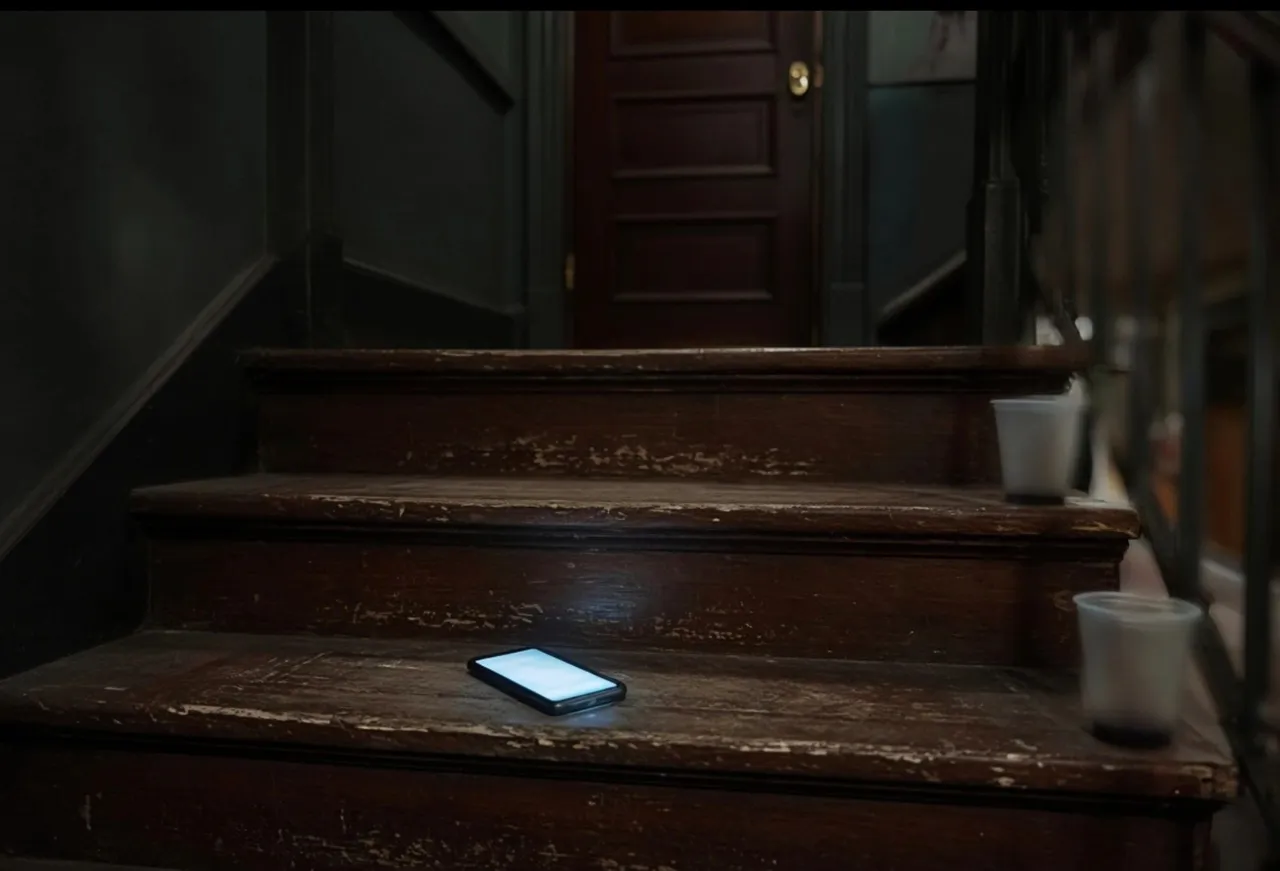
Cornell 7 Case: Why Silent Bystanders Endanger Us All
By Dr. Pooyan Ghamari | October 2, 2026
The Cornell 7 case is a September 2026 civil lawsuit in which a former Cornell student says seven Chi Phi members drugged and raped her in October 2024 while a group chat invited others in. The men deny it. It matters because the criminal file stayed shut until a lawsuit, a student newspaper, and a governor forced it open.
None of that is a verdict. Jane Doe, as the court papers call her, was a 20-year-old Cornell student on the night of October 19, 2024. Her complaint says she arrived at the Chi Phi house drunk, was pressed to take ketamine, and was assaulted by several men until she lost consciousness around 5:45 a.m. At 1:42 a.m., according to a screenshot filed with the suit, a member told the chapter’s Snapchat group that sex was on offer upstairs. Her lawyer, Thomas Giuffra, says 57 men were in that chat. Lawyers for at least two of the accused have denied the allegations in public. No one has been charged with a crime.
I want to write about the fifty-odd men who are not defendants.
Why do people watch and stay silent?
People stay silent because a crowd lets each member hand the duty to someone else, and a group chat is the cheapest crowd ever built.
In 1968 two psychologists, John Darley and Bibb Latané, put students in separate rooms, linked them by intercom, and let them overhear a stranger who seemed to be having a seizure. Of those who believed they were the only listener, 85 percent went for help before the voice cut out. Of those who believed four others could hear it too, 31 percent did. That study gave us the bystander effect. Look at its design. People could hear a crisis and could not see each other. It was a group chat with wires.
Physical presence works differently. In 2019, Richard Philpot and colleagues reviewed street-camera footage of 219 real fights and arguments in Amsterdam, Lancaster, and Cape Town. Someone stepped in about nine times out of ten. Bodies in a hallway pull on each other. A phone does not. You can read the message, feel sick, lock the screen, and assume the other fifty saw it too.
I call this the spectator economy: an arrangement in which watching is free and the whole bill for harm goes to the person harmed. A later message in the thread asked, in effect, whether the offer still stood. The answer was yes. Tompkins County District Attorney Matthew Van Houten called the chain “disgusting, vulgar” and said it had nothing to do with consent, which is the legal issue. On the law he may be right. A disgusting text is not a rape conviction. Silent bystanders still make a choice, and the choice has a beneficiary. It is never the person in the room.
Giuffra told CNN on October 2 that his client is “not doing well” and “under siege.” She has left Cornell. She is no longer in college. The spectators, as far as the public record shows, are finishing their degrees.
How do wealth and impunity work without a famous name?
They work through time: whoever can afford to wait usually wins, and institutions can always afford to wait.
I have seen no verified reporting that the accused come from rich or connected families, and I will not guess. The structural problem does not need a famous surname.
Jane Doe reported to Cornell’s own police. On November 14 and 15, 2024, she gave an interview that produced a transcript running past 100 pages, reported at about 120. In it she said, “I can say with 100% confidence I was raped.” What reached the district attorney was a six-page sworn statement. Van Houten says that statement described her part in the drugs and the sex as “voluntary, conscious, and consensual,” that his office relied on campus police rather than investigating on its own, and that he never saw the full transcript. Cornell says its police also sent the Snapchat screenshot. Van Houten has said it never reached him. The Cornell Daily Sun reported this week that the university edited its public FAQ, deleting a line that said “all investigatory information” had been shared, then replacing it with a narrower claim: the sworn statement and the screenshot.
Nobody has to be corrupt for that to end badly. Call it the invisible chain. A campus force that answers to the campus. A summary shorter than the testimony. A prosecutor who reads the summary. A privacy rule that keeps the outcome quiet. Each link is defensible. Together they buy what expensive lawyers are hired to buy: delay. A university can wait. A defendant with counsel can wait. A twenty-year-old who has left school cannot. Neither can a poor defendant with an overworked public defender and a plea offer that expires on Friday.
The defendants in the civil suit are not only seven students. They include Cornell, Chi Phi, her sorority Delta Delta Delta, and an Ithaca bar, Moonies. Institutions have insurers. She has a lawyer and a closed file that took two years to reopen.
Cornell did act. After Title IX hearings in 2025, President Michael Kotlikoff has said two of the seven were expelled, two were suspended for at least two semesters, one had already graduated, and two were found not responsible. The chapter was closed. The complaint says the men were allowed to mitigate their conduct with essays. Cornell denies that essays were ever the only consequence. CNN has reported that a student found responsible only for attempted sexual exploitation was ordered to stay away from her, write a reflection paper, and take a corrective class. Whether that amounts to a Title IX failure is for the outside review to decide. Already plain: a campus panel found enough to expel students while the criminal file stayed shut.
Why were no charges filed in 2024?
Because prosecutors read six pages and concluded that they described no crime under New York law.
The record is harder than either side’s slogan. The New York Times has reported texts from the days after that night in which Jane Doe wrote that none of the sexual stuff was illegal, and that she had liked being with two of the men. By November 3 she wrote that 90 percent of what happened was not consensual, that she had been given more ketamine than she could remember, and that she had said she was uncomfortable. Her lawyer describes a passage from denial to shame to acceptance. Survivors’ advocates know that arc. It proves nothing by itself. Grand juries exist to weigh it against the six-page statement, the 120-page interview, and the chat.
ABC News, reading Cornell’s own hearing file, reported a ketamine overdose in the house the day before. If that detail holds, the chapter already had a warning light on. Warning lights are useless if the people paid to answer them are also the people who will have to explain the night.
How can people without power still win through the law?
By using slow, public tools that an institution cannot edit: a civil complaint, a newsroom, and voters.
In mid-September Giuffra filed a complaint of about 101 pages, naming the seven men, Cornell, the fraternity, her sorority, and the bar. On September 21 the Cornell Daily Sun’s editorial board published “Cornell Won’t, We Will,” and put the defendants’ names on the front page. Naming people who have not been charged is a hard call. Reasonable editors disagree. What is not in dispute is that a campus paper kept a closed file from becoming a forgotten one.
Within a week the district attorney reopened the investigation and said a grand jury would hear it. On September 30 Governor Kathy Hochul said Cornell had agreed to an independent review by outside counsel. On October 1 she signed an executive order making Attorney General Letitia James special prosecutor, writing that she had lost faith in Van Houten’s ability to oversee the case fairly. On October 2 James called it an active criminal investigation and promised prosecutions only if the evidence warrants them. Hochul has also said a partial record sent to prosecutors was a failure, and she has called for changing New York law so that voluntary intoxication is no shield for an assault.
That is justice for the powerless in its unglamorous form. A civil suit compels documents. A student paper keeps asking. Voters make a governor pay attention. Legal clinics and women’s rights groups can carry the method to towns with no Ivy League name. None of it replaces a verdict. Anyone who uses these tools has to accept the answer they produce, including an acquittal.
Why should rights groups back a fair trial in the Cornell 7 case?
Because a conviction nobody trusts and an acquittal nobody believes are both defeats for women’s rights.
Campus sexual assault cases fail twice. Once when the first notes are thin. Again when the public writes the ending in advance. Human rights accountability runs in more than one direction. The seven are owed the presumption of innocence. The woman is owed an investigation that reads every page. The audience is owed a look.
Can the men in the group chat be charged? Probably not. Lawyers interviewed by Straight Arrow News say American law generally imposes no duty to rescue or to report. Reading a message and doing nothing is rarely a crime. That is a legal answer, not a moral one. Preserve the thread anyway. Ask who read it. Ask what the university and the national fraternity knew about the reported overdose the day before. A moral record does not need a statute.
Scrutiny is not a roster posted online. Court papers meant for one defendant were served on the family of a Marine sergeant who shares his name and never attended Cornell. Stars and Stripes reported that strangers then threatened that family. The silent chat and the furious mob belong to the same spectator economy. Both consume a woman’s worst night at no cost to themselves.
What kind of leaders do young people become if cruelty is free?
They become the officials who will one day hold someone else’s file.
Most of the men in that thread will never be charged with anything. Some will become prosecutors, compliance officers, police sergeants, deans. If the lesson of October 2024 is that a message like that can cross fifty phones without consequence, they will carry it into every room where someone weaker depends on them. The officer who rounds a statement down and the administrator who cites privacy and goes home are not born that way. They are trained, on every occasion when looking away cost nothing.
Cornell’s own 2025 survey found that 35 percent of undergraduate women who responded reported nonconsensual sexual contact, by force or incapacitation, since arriving on campus, up from 23 percent in 2023. The response rate was only 15 percent, so the figure is not a census. It is still a description of a culture, and of a large audience. NBC News noted that the incidents undergraduate women described were concentrated in residence halls, fraternity houses, and off-campus houses. The Cornell 7 case did not invent that pattern. It gave the pattern a timestamp and a screenshot.
The opposite lesson is on offer this week: two expulsions, a closed chapter, a governor’s order, a campus paper that would not let go. Young people are watching which of those facts the adults treat as the ending.
What does protection look like without revenge?
It looks like a process that can convict, acquit, and still tell the truth about everyone who watched.
A decent ending here is a record. James’s office reads the full transcript, the six-page statement, the messages, the texts, and the hearing files. A grand jury decides. Cornell’s outside review is published with a named counsel and a date, not as a promise. The men who are charged get a defense and a verdict. The men who are not charged live with what they read and let pass. Jane Doe gets a proceeding that does not hinge on how composed she seemed to the first official with a notepad.
The standard travels. A care home where a whole shift saw the bruises. A yard where a dog is beaten and someone films it for laughs. Wherever cruelty has an audience, the audience is part of the event. A society that means to protect humans and animals has to make watching cost something: in law where the law reaches, in conscience where it cannot. Due process is what keeps that cost from turning into a hunt.
She was twenty. The message went out at 1:42 in the morning. If her account is true, about fifty people could have put down a phone and gone to get her out.
What the young learn to scroll past, they will one day sign off on.
FAQ
What is the Cornell 7 case? A civil lawsuit filed in September 2026 by a former Cornell student, identified as Jane Doe. She alleges that seven Chi Phi members drugged and raped her in October 2024. The accused deny it. No criminal charges have been filed.
Why were no criminal charges filed in 2024? The district attorney says the six-page statement his office received described the drugs and sex as voluntary. He says he never saw the fuller police interview, in which Jane Doe said she was raped.
Who is investigating the Cornell 7 case now? New York Attorney General Letitia James. Governor Kathy Hochul appointed her special prosecutor on October 1, 2026. Cornell has also agreed to an independent review of how it handled the report.
Can the bystanders in the group chat be charged? Probably not. American law generally imposes no duty to rescue or report, so reading a message and doing nothing is rarely a crime. That is a legal answer, not a moral one.
What is the spectator economy? A term for any setting in which watching harm costs the watcher nothing and the whole price falls on the person harmed. Group chats, comment threads, and silent institutions all run on it.
1. What is the Cornell 7 case? A September 2026 civil lawsuit by a former Cornell student, Jane Doe. She says that on October 19, 2024, when she was 20, seven Chi Phi members drugged her with alcohol and ketamine at the fraternity house and assaulted her until about 5:45 a.m. A chapter Snapchat thread invited others upstairs. Her lawyer says 57 men were in it. The men deny it. The criminal file produced no charges until public pressure reopened it.
2. Why does a campus lawsuit matter outside Ithaca? Because the failure was ordinary. A campus police summary, a prosecutor who did not see the full interview, a closed chapter, and a woman who left school. The same sequence runs in towns with no Ivy League name: the institution writes the first record, and the first record becomes the case. If that holds at Cornell, it holds where no student paper is watching.
3. Why were no charges filed in 2024? District Attorney Matthew Van Houten says the six-page sworn statement his office received described the drug use and sex as voluntary, conscious, and consensual, and did not allege a gang rape. He says his office relied on Cornell police and did not investigate independently. A longer interview, reported at about 120 pages, includes her saying she was raped with 100 percent confidence. He says he never saw that transcript.
4. Did her account change, and does that end the case? The New York Times reported texts from the days after the night in which she wrote that none of the sexual stuff was illegal. By November 3 she wrote that 90 percent of it was not consensual, that she had been given more ketamine than she could remember, and that she had said she was uncomfortable. Her lawyer calls that a passage from denial to acceptance. It is evidence a grand jury must weigh. It is not a verdict either way.
5. Who has the criminal file now? On October 1, 2026, Governor Kathy Hochul removed the case from the Tompkins County district attorney and appointed Attorney General Letitia James special prosecutor. Hochul said she had lost faith in the local office. James can investigate, present to a grand jury, and prosecute only if the evidence warrants it. She has called it an active criminal investigation.
6. What is Cornell reviewing, separately from the criminal case? After Hochul spoke with President Michael Kotlikoff, Cornell agreed to an independent review by outside counsel of how it handled the report. As of October 1 it had not named the counsel or the timetable. That review is not a trial. It is the only way the public can see whether the campus process protected her, the accused, or the university.
7. What did Cornell do to the seven? Kotlikoff told student government on September 29 that two were expelled, two suspended for at least two semesters, one had already graduated, and two were found not responsible. The chapter was closed and remains barred. Those are campus findings under Title IX, not criminal convictions. A campus panel can expel on a lower standard than a jury uses to convict.
8. Were essays the punishment? The complaint says the men could mitigate their conduct by writing essays. Cornell denies that essays were ever the sole consequence. CNN reported that a student found responsible only for attempted sexual exploitation was ordered to stay away from her, submit a reflection paper, and take a corrective class. A reflection paper can be a real sanction. It is not a substitute for a criminal investigation that reads every page.
9. Can the men in the group chat be charged? Probably not. American law generally imposes no duty to rescue or to report, so reading a message and doing nothing is rarely a crime. Van Houten called the thread disgusting and vulgar, and said it did not settle consent. Preserve it anyway. Who read it, who replied, and who was in the house are facts. A moral record does not need a statute.
10. What is the spectator economy? A setting in which watching harm costs the watcher nothing and the whole price falls on the person harmed. Darley and Latané showed in 1968 that people who thought they were the only listener helped a seizure victim 85 percent of the time; people who thought four others could hear helped 31 percent of the time. A phone is that experiment without the intercom. Philpot’s 2019 camera study found bystanders stepped into nine in ten real street fights. Bodies pull. Screens do not.
11. Where is the discrimination in whose account is believed? In the edit. She told campus police she was raped. The file the prosecutor says he received described consent. The Cornell Daily Sun reported that Cornell’s public FAQ first claimed all investigatory information was shared, then deleted that line, then narrowed it to the sworn statement and a screenshot. Van Houten says the screenshot never reached him. Discrimination here is not a slur. It is a process that shortens a woman’s testimony until it no longer describes a crime.
12. How do money and power work if these families are not rich? No verified reporting says the accused come from wealthy or political families. Do not invent that. Power here sits in institutions: Cornell, the national fraternity, the sorority, and a bar, all named as defendants, all able to hire counsel and wait. A closed file is an asset. Time is the currency. The woman who left school spends it. The institution banks it.
13. Why is that a brutal system rather than a slow one? Because the cost is not shared. She is out of college. Her lawyer says she is not doing well. The chapter is closed, two men were expelled, and the criminal case sat shut for nearly two years. Poor defendants meet the opposite brutality: a public defender with a full docket and a plea that expires before the evidence is read. Wealth is the ability to make the calendar work for you. Poverty is the calendar being used on you.
14. How did one lawsuit reopen a closed file? She filed a complaint of about 101 pages in mid-September. On September 21 the Cornell Daily Sun published “Cornell Won’t, We Will.” Within a week the district attorney reopened the case. By October 1 a governor had moved it to the attorney general. That is civil society in its plain form: a suit that compels documents, a student paper that will not take the university’s summary, and voters who make a governor pay attention.
15. What should women’s rights and human rights groups do? Support a full investigation, not a predetermined punishment. Fund counsel. Insist the chat, the 120-page interview, and the six-page statement are all preserved. Ask what the national fraternity and the sorority did for a member who later left school. Say in public that an acquittal, if the evidence leads there, is not a betrayal. A conviction nobody trusts and an acquittal nobody believes are both defeats.
16. What legal change has already been demanded because she came forward? Hochul has called the partial record sent to prosecutors a failure, and she has said New York should close the gap that lets voluntary intoxication be used as a shield against an assault charge. That is a girl forcing a statute onto the agenda without holding office. A bill is not a verdict. It is what happens when a closed file becomes a public fact.
17. What does Cornell’s own survey add? In 2025, 35 percent of undergraduate women who responded reported nonconsensual sexual contact by force or incapacitation since arriving, up from 23 percent in 2023. Only 15 percent of invited students answered, so it is not a census. NBC News noted the incidents clustered in residence halls, fraternity houses, and off-campus houses. The Cornell 7 case did not create that pattern. It gave the pattern a screenshot.
18. Why was a Marine’s family threatened? Court papers meant for one defendant were served on a Marine sergeant who shares his name, never attended Cornell, and was already on active duty. Stars and Stripes reported that strangers then circulated the family’s address and threatened them. The silent chat and the online mob are the same economy. Both watch for free. Scrutiny belongs in a courtroom, not on a stranger’s door.
19. What would a fair ending look like? James’s office reads the full interview, the six pages, the texts, the messages, and the hearing files. A grand jury decides. Cornell’s outside review is published with a name and a date. Charged men get a defense and a verdict. Uncharged men live with what they read and let pass. She gets a proceeding that does not depend on how composed she seemed to the first officer with a notepad.
20. What do young men become if watching stays free? The officials who will one day hold someone else’s file. Most of the men in that thread will never be charged. Some will become prosecutors, deans, and police supervisors. If a message can cross fifty phones and the cost falls only on the woman, they have been trained. The sergeant who rounds a statement down is not born. He is made on nights when looking away costs nothing.
Originalartikel: https://ghamari.org/articles/f/cornell-7-case-silent-bystanders