How Will Iran War End Sovereignty Peace Deal
Von Dr. Pooyan Ghamari · · 10 Min. Lesezeit
Dieser Artikel ist derzeit nur auf Englisch verfügbar. Eine deutsche Ausgabe ist nicht erschienen.
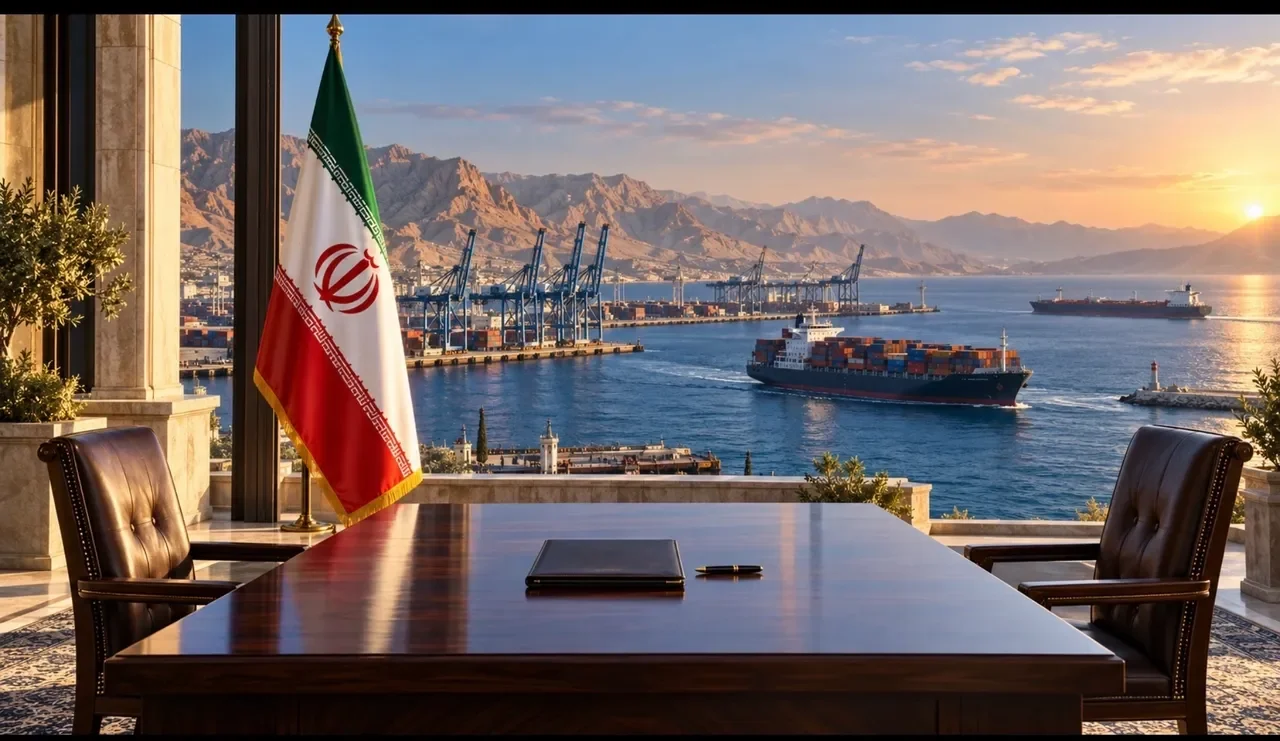
How Will the Iran War End? Peace Without Lost Sovereignty American Trump War
By Dr. Pooyan Ghamari
30 September 2026
The Iran war has no reliably predictable end date. A durable settlement would need more than a pause in fighting: reciprocal security commitments, protected civilian navigation, credible nuclear verification and economic relief that actually reaches banks, businesses and households. Iran’s strategic objective should be to convert resilience into lasting freedom of decision.
Reporting reviewed on 30 September 2026 describes Qatari mediation and continuing disagreements over sanctions and nuclear commitments. Reuters reports that President Donald Trump denied offering sanctions relief while mediation continued. I cannot confirm a comprehensive peace agreement from the reporting reviewed. The framework below is a policy proposal.[1]
My central argument is simple: a nation has not secured its future merely because it has survived a war. It must also retain the ability to produce, trade, learn and govern afterward.
What does sovereignty mean after war?
I distinguish three dimensions of sovereignty.
Legal sovereignty protects territorial integrity and political independence. Practical sovereignty means having the institutions, skills and economic options needed to exercise that independence. Popular sovereignty asks whether citizens have a meaningful voice in the decisions made in their name.
A peace that protects only the first remains incomplete.
Henry Farrell and Abraham Newman’s research on “weaponized interdependence” explains how control over central financial and information networks can become a source of state coercion.[2] Applied to Iran, this directs attention beyond borders to payment access, insurance, technology suppliers and transport.
The response should not be total isolation. It should be diversified, lawful access and stronger domestic capability.
Replacing dependence on Washington with dependence on Beijing, Moscow or any other capital would change the creditor, not solve the underlying problem.
Why can a costly war still resist a peace deal?
One obstacle is the credible commitment problem: each party may fear that concessions today will leave it exposed tomorrow. James Fearon’s research identifies commitment problems among the mechanisms that can prevent bargaining from avoiding war.[3]
Any Iranian settlement must answer both sides of that problem. How can Iran know that verified concessions will produce usable economic relief? How can other parties know that additional commitments will be implemented and maintained?
My answer is staged reciprocity.
Each additional negotiated step should identify the action, verifier, deadline and corresponding benefit. Existing legal obligations and civilian protection must not become bargaining chips.
A headline promising normalization is not enough. Neither is a promise of compliance without a workable verification process.
What should a fair Iran peace deal contain?
First, a reciprocal security compact anchored in the UN Charter. Article 2 protects sovereign equality and restricts the threat or use of force; Article 51 recognises self defence following an armed attack, subject to its conditions.[4]
The agreement should reject forcible political change, protect civilians, establish crisis hotlines and create an agreed process for investigating incidents. Iran should demand the same protection for its territory and people that it undertakes to respect for others.
Equal standards do not mean assuming equal responsibility for every incident. Responsibility must follow evidence.
Second, a precise nuclear arrangement. The IAEA’s chronology records a September 2026 resolution urging Iranian cooperation.[5] Existing safeguards obligations remain obligations. Any additional negotiated verification measures should have a defined scope, technical purpose and implementation schedule.
The Non Proliferation Treaty recognises peaceful nuclear activities alongside nonproliferation and safeguards commitments. It should not be presented as an unconditional licence for every nuclear activity.[6]
Third, a separate economic implementation schedule. Security, nuclear verification and economic normalization should reinforce one another without making emergency civilian protection wait for the entire bargain.
The proposed sequence is a verified cessation of attacks and immediate civilian safeguards, followed by matched additional commitments and specified economic steps. Larger regional investments should follow demonstrated safety and lawful financing, not substitute for them.
What would genuine Iran sanctions relief look like?
The decisive question is not whether a sanction is described as “lifted.” It is whether the intended transaction can legally and reliably happen.
OFAC explains that American sanctions on Iran rest on multiple executive orders, statutes and regulations. The European Union maintains its own sanctions frameworks.[7] A political promise from one government cannot, by itself, remove every restriction in every jurisdiction.
I would require a public implementation register identifying:
1. The precise restriction being removed or modified.
2. The authority empowered to make that change.
3. The effective date and activities covered.
4. The permissions needed for payment, shipping and insurance.
5. Remaining restrictions and a process for resolving blocked lawful transactions.
Then test delivery.
Can an eligible hospital pay for equipment? Can a permitted exporter receive its proceeds? Can a carrier obtain valid insurance? Do businesses have enough legal certainty to invest?
These are better measures of economic normalization than the number of signatures at a ceremony.
Licences and legal reforms also cannot compel every private bank to take commercial risk. Domestic financial governance, credible compliance and predictable contracts must improve alongside external relief.
How can the Strait of Hormuz strengthen Iranian sovereignty?
Iran should aim to become valuable for sustaining regional trade, not only capable of disrupting it.
The scale matters. The US Energy Information Administration estimates that oil flows through the Strait of Hormuz averaged approximately 20 million barrels a day in 2024, equivalent to about one fifth of global petroleum liquids consumption. That is a historical baseline, not a claim about current wartime flows.[8]
I propose a Persian Gulf Maritime Reliability Compact: a jointly governed civilian arrangement for navigation information, rescue, pollution response, incident reporting and commercially usable safety data.
Iran and other coastal states would retain their lawful jurisdiction. Participation would not require foreign political control over Iranian institutions.
Its purpose would be to make reliability a source of influence, employment and investment.
The legal distinction matters. UNCLOS sets out transit passage rights, while Iran has signed but not ratified the convention and has recorded its interpretation of provisions concerning straits.[9] A serious proposal must address applicable navigation rights and legal disagreements explicitly. It should not treat unilateral ownership of an international route as an established fact.
Funding should come from agreed contributions and lawful services, not disguised permission payments for passage.
How can other countries gain from defending the peace?
Iran does not need every government to endorse its ideology. It needs an agreement that enough governments consider worth preserving.
These are potential incentives, not confirmed commitments:
|Participants |A practical interest in the settlement |
|-----------------------------------|--------------------------------------------------------------------------------------------|
|Persian Gulf coastal states |Safer territory, reliable ports, fewer maritime incidents and reciprocal restraint |
|Energy importing economies |More predictable supplies, shipping and commercial planning |
|European and other trading partners|Verifiable nuclear commitments and clearer conditions for lawful commerce |
|Developing economies |More reliable energy, food and transport markets, alongside protection of sovereign equality|
|Iran’s own citizens and businesses |Personal safety, usable income, investment, knowledge and freedom of economic choice |
There is also a difficult condition: renewed conflict must threaten benefits that participants genuinely value.
That argues for diverse civilian projects, transparent contracts and several independent commercial partners. It does not justify selling strategic assets cheaply or giving one foreign patron a veto over Iran’s future.
Economic interdependence can support peace. It cannot guarantee it. The design must also withstand a partner choosing political confrontation over commercial gain.
How can Iran reduce the risk of future intervention?
No treaty can make intervention impossible. The realistic objective is to reduce vulnerability and increase the legal, political and economic consequences of breaking the peace.
I would combine four safeguards.
Reciprocal obligations. Nonaggression and civilian protection should bind all relevant parties. Deliberate attacks on civilians cannot be excused by the identity of the attacker or the cause it invokes.[10]
Credible verification. A jointly accepted mechanism should establish facts, distinguish accidents from violations and provide a prompt opportunity to respond. Agreed remedies should be proportionate; humanitarian protection should continue during disputes.
Enforceable procedures. Any arbitration mechanism needs consent, jurisdiction and an implementation route. Any compensation fund needs actual funding and clear rules. An unfunded promise of future damages is weak protection. UN endorsement would add diplomatic weight, not an automatic guarantee of enforcement.
Independent capacity. Lawful national defence should sit alongside energy resilience, medical supply security, technical education and diversified trade. No single supplier or partner should become indispensable across every critical sector.
Internal legitimacy belongs in the same framework. Iran’s political future must be decided by Iranians. That principle is strengthened, not weakened, by accountable institutions, civil rights and meaningful public participation.
Sovereignty should protect citizens from foreign domination without becoming an excuse for domestic abuse.
How should citizens judge whether the peace is working?
Every proposed agreement should answer four questions.
Who gains access to the new income and opportunities?
Who pays for reconstruction, compliance and remaining restrictions?
Who decides when a violation has occurred?
Who is excluded from the benefits or from decisions that affect their life?
Publish a regular scorecard covering civilian safety, completed lawful payments, shipping reliability, delivery of essential goods and fulfilment of agreed obligations. Name the verifier for each commitment and publish the method used to assess delivery.
The test is not whether leaders can announce victory. It is whether households become safer and the country acquires more real choices.
Iran’s strongest victory would be a peace that preserves its independence, improves its people’s lives and gives other countries a durable interest in both.
Frequently asked questions
Can Iran end the war without surrendering?
Yes, in principle. A negotiated settlement can preserve territorial integrity, lawful defence and political independence. Whether a particular agreement does so depends on its actual obligations, verification, economic delivery and enforcement provisions, not the language used to announce it.
Does reopening the Strait of Hormuz mean losing leverage?
Not necessarily. Reliable navigation could help Iran obtain lasting diplomatic and commercial benefits. But the gains must be written into a workable settlement. Reopening alone does not automatically produce sanctions relief or security guarantees.
Would a nuclear agreement remove all Iran sanctions?
No, not automatically. Sanctions arise from different legal authorities and policy grounds. Each relevant authority must make the required changes, and remaining restrictions must be disclosed. A nuclear agreement is not a universal banking authorisation.[7]
Can the United Nations guarantee that Iran will never be attacked again?
No absolute guarantee is credible. The UN can support negotiations, monitoring and collective decisions within its authority, but political disagreements can constrain action. Iran should seek several reinforcing protections rather than depend on one institution.[4]
Should Iran depend on China or Russia instead of Western countries?
It should avoid replacing one concentration of dependency with another. Cooperation can be valuable, but Iranian bargaining power is better served by alternatives, transparent contracts, domestic expertise and the ability to reject unfavourable terms.
What can other nations learn from Iran’s position?
Protect more than borders. Examine dependencies in payments, technology, energy, insurance and knowledge. Build lawful alternatives before a crisis, and judge international partnerships by whether they expand citizens’ choices or narrow them.
Sources and academic foundations
[1] Reuters: Qatari mediators press peace deal between US and Iran, reporting reviewed 30 September 2026.
[2] Henry Farrell and Abraham L. Newman, “Weaponized Interdependence: How Global Economic Networks Shape State Coercion,” International Security 44(1), 2019. See also the MIT Press discussion with coauthor Abraham Newman.
[3] James D. Fearon, “Rationalist Explanations for War,” International Organization 49(3), 1995.
[4] UN Charter, including Articles 2, 27 and 51, official text held by the US National Archives.
[5] IAEA: Chronology of Key Events, September 2026 entries.
[6] Treaty on the Non Proliferation of Nuclear Weapons, Articles II, III and IV.
[7] US Treasury OFAC: Iran Sanctions, including legal authorities; Council of the European Union: EU sanctions against Iran.
[8] US Energy Information Administration: Strait of Hormuz, 2024 flow baseline.
[9] UNCLOS Part III: Straits Used for International Navigation; UN Treaty Collection: convention status and Iran’s declaration.
[10] ICRC Customary International Humanitarian Law, Rule 1: distinction between civilians and combatants.
Related reading
Originalartikel: https://ghamari.org/articles/f/how-will-iran-war-end-sovereignty-peace-deal