Freemasonry Europe Museums Archives Public Life
By Dr. Pooyan Ghamari · · 5 min read
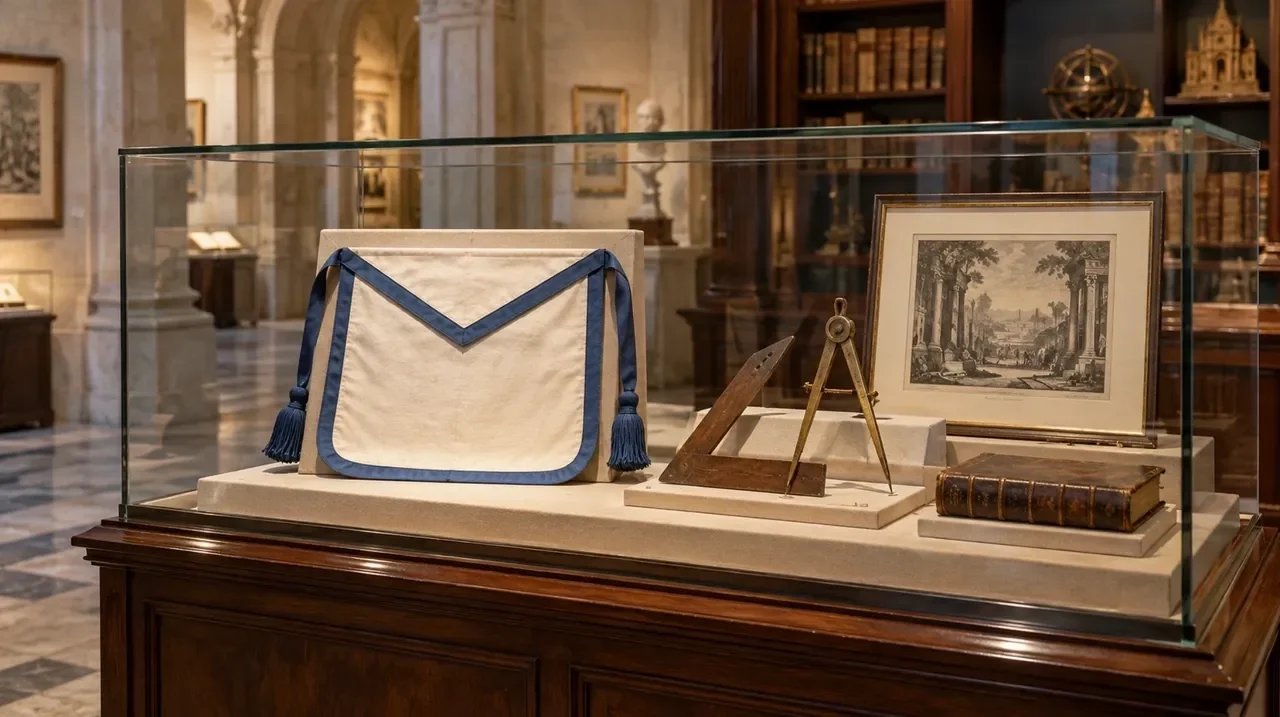
Freemasonry and Public Life in Europe
What museums, archives and published research reveal beyond the lodge
By Dr. Pooyan Ghamari
Sources reviewed 1 November 2026
A visitor does not need to join a lodge to encounter Freemasonry as part of European cultural history. Museums, libraries and archives offer another point of entry. They make it possible to examine objects, read documents and compare institutional memories with surviving evidence. This public dimension deserves attention because it allows discussion to move beyond both ceremonial self-description and speculation about secrecy.
In London, the Museum of Freemasonry holds objects, books and archives relating to Masonic and other fraternal societies. Its collections include songbooks, ceremonial clothing and personal papers, alongside institutional records. According to its history, the museum opened to the public during the 1980s and became part of an independent charitable trust in 1996. Such collections allow the subject to be studied through everyday material as well as formal constitutions. [1]
Paris supplies a further example with external cultural recognition. The French Ministry of Culture records the Musée de la franc-maçonnerie as a Musée de France since 2003. Its collection includes printed constitutions, textiles, furniture, paintings and archives. This designation concerns a museum and its heritage role. It should not be confused with endorsement of the beliefs or recognition policies of a Masonic obedience. [2]
In Germany, the Deutsches Freimaurermuseum in Bayreuth describes a programme of preserving, researching and publishing Masonic objects and documents. Its public account also identifies library connections with the universities of Bayreuth and Poznań. Together, these examples show several routes into the subject: exhibition, cataloguing, documentary research and cooperation with academic institutions. [3]
Publication within Masonic organisations creates another body of evidence. The Suprême Conseil d’Occitanie and GLNRM publish Les Cahiers de recherche maçonnique. The first-quarter 2024 issue identifies Christian Belloc as its publication director and contains his account of GLNRM’s recent development. It is useful as a record of how a participant explains his institution and its ideas. That purpose differs from an independently researched institutional history; both kinds of writing can be valuable when their authorship and scope remain clear. [4]
The distinction matters when reviewing any organisation, large or small. An internal journal records questions that interest its contributors, arguments they consider important and the language through which they understand their work. A researcher can analyse that material without accepting every historical or institutional claim it contains. Publication makes those claims available for examination.
Exhibitions can also connect Masonic material with wider urban history. The Paris museum’s 2026 programme includes Lumières dans la ville, devoted to Paris and Freemasons. The subject encourages questions about buildings, neighbourhoods, public life and historical memory. The merit of such an exhibition lies in the evidence it brings together and the explanations it offers visitors. [5]
Access is part of that public value. The London museum’s access policy provides for free entry and access to its library and archives through reader registration. Arrangements of this kind turn an institution’s declared interest in education into a service that researchers and visitors can actually use. Practical information about registration, catalogues and available records is therefore as significant as a statement of educational ideals. [6]
Public responsibility also appears in Masonic principles themselves. The Swiss Grand Lodge Alpina describes charity, mutual instruction and support for the common good among its purposes. It encourages members to participate in public affairs according to their convictions while limiting contentious discussion within formal lodge meetings. This formulation distinguishes an individual’s civic activity from an institutional position imposed on every member. [7]
The existence of an ideal does not measure its results. Assessing a charitable or educational contribution requires information about what was delivered, who benefited and how the work was sustained. The same standard applies to a large foundation, a museum and a local voluntary association. Clear reporting helps readers appreciate real achievements without relying on ceremonial language or reputation alone.
Private membership and public accountability can be considered separately. Protecting personal information need not prevent an organisation from explaining its structure, publishing research or documenting public activities. For the reviewer, the task is to identify which information is relevant to the claim being assessed and whether that information is available.
Museums and archives provide a particularly productive meeting place between Masonic communities and the wider public. Their materials can support admiration, criticism or a more complicated understanding. A history that leaves room for all three is more useful than a catalogue of distinguished names. It allows European Freemasonry to be examined as a human institution, with changing ideas, tangible cultural remains and responsibilities that can be discussed openly.
Questions and answers
Can people who are not Freemasons visit a Masonic museum?
Yes. London’s Museum of Freemasonry welcomes public visitors. Its access policy provides free museum entry and access to library and archive material through reader registration. [1] [6]
Where can researchers find material on European Freemasonry?
The Museum of Freemasonry in London and the Deutsches Freimaurermuseum in Bayreuth describe library and archive collections. Researchers should consult each institution’s current access arrangements before visiting. [1] [3]
Are Masonic publications independent historical sources?
An organisation’s own publication is a primary source for its statements and self-description. Its historical claims still require evaluation. The Occitania and GLNRM research journal provides one example discussed in this review. [4]
Sources
References checked on 1 November 2026. Institutional sources describe their own policies and relationships.
[1] Museum of Freemasonry, London. Our story
[2] French Ministry of Culture, POP heritage database. Musée de la franc-maçonnerie, record M0366
[3] Deutsches Freimaurermuseum, Bayreuth. Museum, library and archive overview
[4] GLNRM / Suprême Conseil d’Occitanie. Les Cahiers de recherche maçonnique, no. 17, first quarter 2024, especially printed pages 2, 3 and 8
[5] Musée de la franc-maçonnerie. Expositions du musée, including Lumières dans la ville, 2026
[6] Museum of Freemasonry, London. Access Policy
[7] Swiss Grand Lodge Alpina. General Principles
Can people who are not Freemasons visit a Masonic museum?
Yes. London’s Museum of Freemasonry welcomes public visitors. Its access policy provides free museum entry and access to library and archive material through reader registration.
Where can researchers find material on European Freemasonry?
The Museum of Freemasonry in London and the Deutsches Freimaurermuseum in Bayreuth maintain library and archive collections. Researchers should check each institution’s access arrangements before visiting.
Are Masonic publications independent historical sources?
An organisation’s own publication provides primary evidence of its statements and self-description. Its historical claims still require evaluation. The Occitania and GLNRM research journal is one example discussed in this review.
Original article: https://ghamari.org/articles/f/freemasonry-europe-museums-archives-public-life