Freemasonry and the Architecture of Trust
By Dr. Pooyan Ghamari · · 21 min read
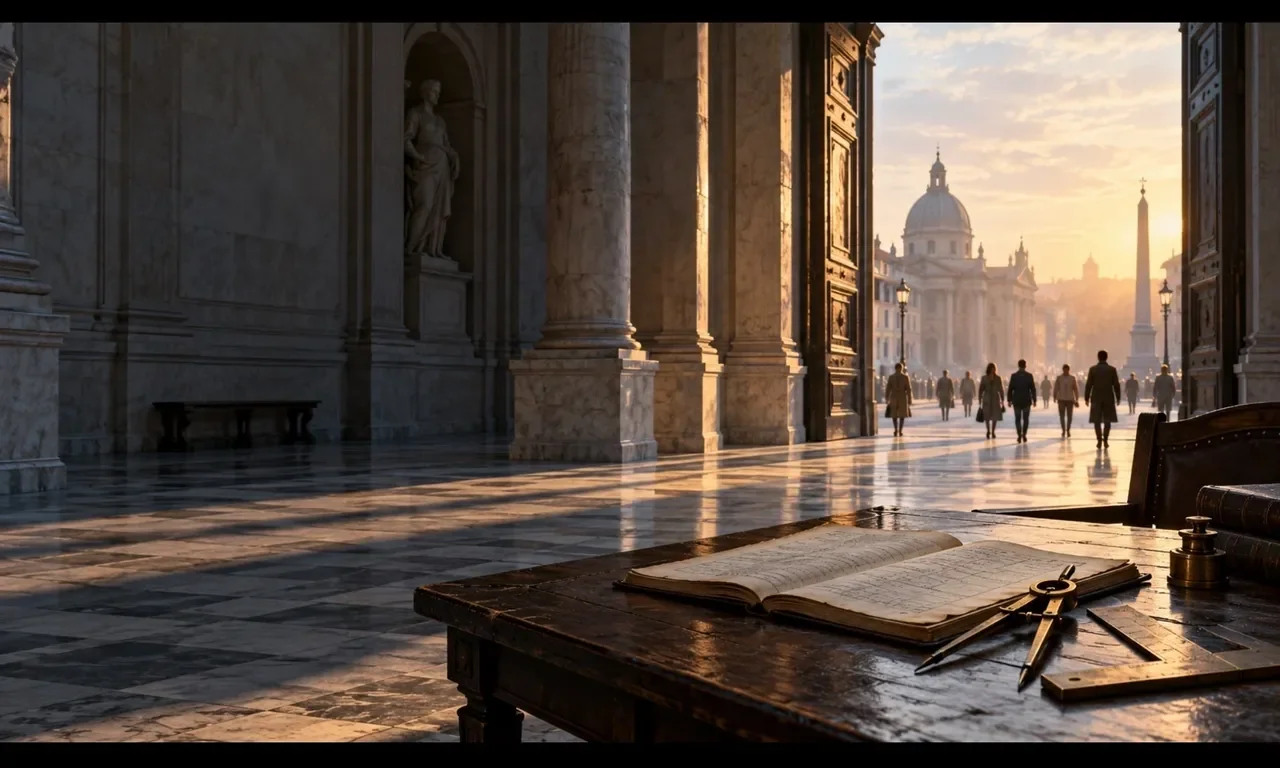
By Dr. Pooyan Ghamari
An independent history of ritual, reputation, influence and the line between fact and fear. This review does not speak for Masonic bodies, religious institutions or communities that oppose Freemasonry.
Direct answer
Freemasonry is a family of fraternal traditions that developed from older craft culture into organised lodges in early modern Britain. It has shaped friendship networks, charity, civic life and public imagination. The historical record shows real influence in specific places and periods, but it does not prove that one worldwide Masonic body controls governments, banks, media or wars.
Why the subject creates a strong reaction
Freemasonry creates a strong reaction because it brings together three things that modern societies distrust when they meet in private: ritual, loyalty and access.
Its symbols appear old. Its ceremonies are not open to everyone. Its members have included people with wealth, education, office and influence. That combination invites admiration from some people and suspicion from others. Both reactions can become lazy. Admiration can hide conflicts of interest. Suspicion can turn a complex history into a single story of hidden control.
The more useful approach is more demanding. This review asks a simpler question: what does the historical record support, what remains uncertain, and what claims cannot be responsibly made without stronger evidence?
The answer deserves respect because the subject concerns real people, real beliefs, real institutions and a long history of political fear. It also deserves precision because false certainty, whether favourable or hostile, has damaged public understanding for centuries.
The shortest honest answer
Freemasonry is neither a harmless costume club nor a single hidden government.
It is a long-lived set of fraternal traditions built around lodge membership, symbolic ritual, moral language, mutual recognition and charitable activity.Modern Freemasonry took institutional form in early eighteenth-century Britain, although it drew from older craft customs and stories. It became influential because it gave members a durable structure for trust, cooperation and belonging. Önnerfors, Freemasonry: A Very Short Introduction, Oxford University Press, 2017; United Grand Lodge of England, History of Freemasonry; United Grand Lodge of England, FAQ.
That influence was real. It did not make every Mason powerful, every lodge political or every political event Masonic.
Private networks can create access. Access can be used well or badly. A society that values equal law should protect free association while demanding transparent conduct whenever private loyalty reaches public office.
Three layers of the story
The history becomes clearer when three layers are kept separate.
The first layer is craft heritage. Medieval stonemasons possessed real skills, trade rules and moral customs. Their work created buildings that still shape European cities. Geometry, balance, discipline, the square and the compass came naturally from that world.
The second layer is modern organisation. During the seventeenth and eighteenth centuries, lodges increasingly admitted men who were not working masons. The focus moved from building stone to building character. This produced what historians call speculative Masonry, a fraternity using the language of the craft to teach ethics, self-discipline and fellowship. Önnerfors, 2017; United Grand Lodge of England, 1723 Constitutions.
The third layer is symbolic imagination. Solomon’s Temple, Hiram, ancient wisdom, chivalry and Templar imagery gave later Masonic traditions a powerful language of moral inheritance. These stories may hold spiritual or personal meaning. They are not, by themselves, documents proving an uninterrupted institution from ancient times to a present lodge. Önnerfors, “Historical Legacies,†2017.
Confusion begins when the third layer is used to rewrite the first two. A symbol can be meaningful without being a birth certificate. A ritual can be old in feeling without proving a secret chain of command across thousands of years.
Why 1717 and 1723 still matter
On 24 June 1717, four London lodges met at the Goose and Gridiron tavern and formed what became the Grand Lodge of England. Anthony Sayer was elected the first Grand Master. The earliest detailed account of that meeting comes from James Anderson, not from a minute book begun in 1717. The Grand Lodge’s own recorded minutes begin in 1723. United Grand Lodge of England, History of Freemasonry; Masonic Sourcebook, summary of the 1717 founding and Anderson’s account.
In 1723, James Anderson’s Constitutions of the Free-Masons set out rules, duties and a legendary history of Masonic origins. The legendary history is not a modern archive. The institutional model was real, and it could travel across cities, countries and oceans. United Grand Lodge of England, 1723 Constitutions.
This model mattered because the eighteenth century was hungry for new forms of association. Europe had lived through religious conflict, dynastic struggle and commercial change. Coffeehouses, salons, learned societies, newspapers and clubs were becoming places where people could build relationships beyond family, parish and court.
The 1723 Constitutions also carried ideas that were radical for their time: religious tolerance inside the lodge, elected officers, written rules and a language of merit rather than birth alone. Lodges remained hierarchical and often sought aristocratic patronage. Equality inside the room was limited and imperfect, but it was still a striking social idea for its age. United Grand Lodge of England, citing historian Margaret C. Jacob; Önnerfors, “Enlightenment Foundations,†2017.
What a lodge actually gives its members
The lasting appeal of Freemasonry is easier to understand when it is treated as a human institution rather than a mystery film.
A lodge can give a person regular social contact, a community of ritual, a path of personal advancement, a charitable purpose and a circle of trust. It can offer a newcomer to a city a network. It can give an older member status and continuity. It can give people who do not share the same occupation a common language of responsibility and service. United Grand Lodge of England, FAQ.
These benefits are ordinary. They are also powerful.
Networks do not need secret plans to shape opportunity. A recommendation can change a career. A private introduction can open a business door. A shared reputation can lower the cost of trust. This is how much influence works in everyday life. It is also why every private network requires ethical limits when members hold public authority.
The real question is not whether Masons know one another. They do. The real question is whether a private relationship replaces a public duty.
Power begins with access, not magic
Many arguments about Freemasonry become weak because they search for magic when the real mechanism is access.
Access can mean knowing who is trustworthy, who is hiring, who needs credit, who can make an introduction or who understands a local institution. In past centuries, when official information travelled slowly and public institutions were less open, a trusted network could be even more valuable than it is today.
This helps explain why lodges attracted merchants, military officers, lawyers, professionals and civic figures. It also explains why critics worried about them. A private room where influential people meet may be harmless, constructive or improper depending on what happens after the meeting.
Membership alone does not prove corruption. Membership does not erase a conflict of interest if one can be shown.
The proper tests are concrete.
- Was a public decision influenced by a private relationship?
- Was the relationship disclosed where law or ethics required disclosure?
- Did a member receive an unfair appointment, contract, licence, legal favour or financial advantage?
- Is there a document, message, payment, witness statement or credible independent record?
- Can the allegation be tested in court, journalism, audit or public inquiry?
Without this evidence, a claim remains an allegation. With it, the issue is not Freemasonry alone. It is abuse of power.
Secrecy is a method, not a verdict
Freemasonry protects parts of its ceremonies, signs and internal ritual. That privacy is real. It is one reason the fraternity retains emotional force for members and raises questions for outsiders. United Grand Lodge of England, FAQ.
Privacy can serve legitimate purposes. It can preserve a shared experience, protect personal conversation and create a boundary between members and the public. Many institutions do this in different ways. Religious communities, professional bodies, families, businesses, political parties and state agencies all maintain spaces that are not fully public.
Privacy becomes a problem when it is used to hide violence, fraud, discrimination, coercion or a conflict of interest. That standard should apply equally to every institution. A lodge should not receive special protection because it is old. It should not receive special blame because it is mysterious.
The William Morgan affair shows why the distinction matters. In 1826, Morgan, a Batavia, New York stonecutter, disappeared after he planned to publish Masonic ritual material. He was last seen being taken from jail into a carriage. Several men were later convicted of kidnapping him. His body was never recovered, and the full facts of his death remain contested. The scandal helped produce the Anti-Masonic Party, often described as the first third party in United States politics. The public lesson was clear: when people believe private loyalty can defeat ordinary accountability, confidence in public institutions falls. Smithsonian Magazine, “The Masonic Murder That Inspired the First Third Party in American Politics,†2023; HISTORY, “One Man Exposed the Secrets of the Freemasons,†2018.
The French Revolution and the conspiracy story
Freemasonry belonged to the social environment in which Enlightenment ideas circulated. Lodges could connect people who were interested in science, moral philosophy, social reform and new ideas about authority. Some historians therefore treat Masonic culture as part of the wider environment that made political change imaginable. That is not the same as saying Freemasons secretly designed the French Revolution. Önnerfors, “Enlightenment Foundations,†2017.
After the Revolution, writers such as John Robison and Abbé Augustin Barruel turned a complicated political upheaval into a simpler story of hidden direction by Masons and the Illuminati. This narrative was powerful because it explained uncertainty through a visible enemy. Academic research treats it as the history of a conspiracy theory, not as proof of a single organisation directing the Revolution from behind the scenes. Oxford Academic, “A Conspiracy Theorist’s Theoryâ€; Cambridge University Press, “Is It True That Secret Societies Are Trying to Control the World?â€.
The Bavarian Illuminati existed as an eighteenth-century secret society. Its existence does not establish that it controlled Freemasonry, France, later revolutions or modern institutions. The distinction between a real secret group and an imagined universal conspiracy is essential.
The same discipline applies to claims about the Knights Templar. Medieval Templars were real. Later Masonic bodies adopted Templar symbols and stories. No surviving documentary record establishes an unbroken institutional line from the medieval order to modern Freemasonry. Önnerfors, “Historical Legacies,†2017.
Religion, belief and the right to disagree
Freemasonry is often described as a religion, an anti-religion or an occult religion. None of these labels can explain every tradition or jurisdiction.
Many regular Masonic bodies require belief in a Supreme Being and use sacred texts and biblical symbolism in lodge life. Their rituals can hold sincere spiritual meaning for members. Other Masonic traditions organise their principles differently. Scholarly accounts emphasise that Freemasonry has no single coherent doctrine shared by all forms of Masonry. Önnerfors, 2017; United Grand Lodge of England, FAQ.
The Roman Catholic Church has opposed Freemasonry for centuries. Pope Clement XII issued the bull In eminenti apostolatus in 1738. Later popes renewed that opposition. Pope Leo XIII’s encyclical Humanum genus, 20 April 1884, condemned Freemasonry in strong theological terms and told Catholics not to join. Catholics and other religious communities have the right to treat Masonic membership as incompatible with their faith. That religious judgment deserves a respectful hearing. It is still different from historical proof that every Mason belongs to a unified hidden political project. The Holy See, Pope Leo XIII, Humanum genus, 1884.
No person should be mocked for religious concern about Masonic ritual. No person should be treated as guilty of hidden crimes merely because of membership.
The claim that Freemasons worship Lucifer is not supported by the credible historical sources used in this review. Ordinary Masonic teaching is generally framed around moral conduct, charity, belief or philosophical reflection. Traditions vary, and a specific rite should be judged from its own texts, not from a rumour applied to every lodge. United Grand Lodge of England, FAQ.
A history that includes exclusion
Brotherhood has not always meant equality.
Mainstream Freemasonry was historically male. Women-only and mixed Masonic organisations developed later, particularly in France and Britain. In Britain, the Order of Women Freemasons and the Honourable Fraternity of Ancient Freemasons admit women. Their history reminds us that the language of universal brotherhood did not automatically include everyone. The Guardian, “Britain’s Female Freemasons,†20 June 2022.
Race also belongs in any honest account. In the United States, Prince Hall Freemasonry emerged from Black civic life in the late eighteenth century after exclusion from white-led Masonic spaces. Prince Hall lodges developed into important centres of mutual aid, community leadership and education. Freemasonry could reproduce social barriers. It could also provide a structure for people creating dignity and collective capacity in the face of those barriers. United States National Park Service, Ancient York Masons’ parade advertisement, 22 June 1797; Most Worshipful Prince Hall Grand Lodge.
Empire is another part of the record. Lodges spread through ports, trade, military movement and colonial administration. Their international links could build cross-border association. They also functioned inside systems shaped by imperial power and unequal status. A serious history must include both facts. “Global History and Freemasonry: 300 Years of Modernity,†Revista de Historia, 2018.
Why authoritarian systems have feared lodges
States that demand total ideological control often distrust independent associations. A lodge gives people habits of meeting, trust and mutual recognition outside direct state supervision. That does not make every lodge democratic or politically brave. It does explain why authoritarian systems can see them as a potential rival source of loyalty.
Nazi Germany persecuted Freemasons and pressured many lodges to dissolve.Nazi propaganda also linked Freemasons to Jews in a wider antisemitic fantasy of hidden global control. The United States Holocaust Memorial Museum documents both the persecution and the role of this conspiracy myth. United States Holocaust Memorial Museum, “Freemasonry Under the Nazi Regimeâ€.
Claims about Masonic control have often been mixed with false accusations against Jews, bankers, intellectuals, minorities and political opponents. Complex problems such as inequality, war, corruption and financial concentration are real. Turning them into a story about an all-powerful hidden group is not serious analysis. It is a way of avoiding the evidence that can actually identify who made a decision, who benefited and who failed to enforce the law.
The modern lesson: examine systems, not just symbols
The deepest error in most conspiracy writing is not merely that it exaggerates Freemasonry. It is that it teaches people to look in the wrong place.
Modern power often works through ownership, debt, lobbying, procurement, campaign finance, monopoly, media concentration, surveillance, platform rules and the revolving door between public office and private business. These mechanisms may be complex, but they leave records. Company accounts, court files, public contracts, parliamentary registers, audit reports, lobbying disclosures and investigative journalism can reveal more than a symbol on a wall.
Hidden relationships can matter. They should be examined carefully. An accusation becomes credible only when it explains a documented outcome better than ordinary financial, political or institutional incentives.
Treat members as individuals. Treat organisations as accountable institutions. Treat religious objections as matters of conscience. Treat public misconduct as a matter of evidence. Treat conspiracy claims as unproven until they meet the same standard.
Freemasonry endures because people seek trust, recognition, ritual and belonging. Its history remains important because every generation must decide where private association ends and public duty begins.
33 questions readers ask
1. What is Freemasonry?
Freemasonry is a family of fraternal traditions organised through local lodges.Members use symbolic rituals, moral teachings, fellowship and charity to build community and personal discipline. Practices differ between jurisdictions. Önnerfors, 2017; UGLE FAQ.
2. When did modern Freemasonry begin?
Modern organised Freemasonry is usually dated to early eighteenth-century Britain. The formation of the Grand Lodge of England in 1717 and Anderson’s Constitutions in 1723 are the key institutional milestones. UGLE, History of Freemasonry; UGLE, 1723 Constitutions.
3. Did Freemasonry begin with King Solomon?
Solomon’s Temple is central to Masonic symbolism, but historians do not treat it as documentary proof that modern lodges began in biblical times. It is symbolic heritage, not verified institutional continuity. Önnerfors, “Historical Legacies,†2017.
4. Did the Knights Templar become Freemasons?
A direct institutional link cannot be confirmed. Some Masonic rites later adopted Templar imagery, but surviving records do not establish an uninterrupted succession from medieval Templars to modern Freemasonry. Önnerfors, “Historical Legacies,†2017.
5. What is a Masonic lodge?
A lodge is the local body where members meet, conduct rituals, organise charity, elect officers and maintain fellowship. It is not the same as a building. A lodge may meet in a Masonic hall or another suitable place. UGLE FAQ.
6. What are the three main Masonic degrees?
In many Craft traditions, the main degrees are Entered Apprentice, Fellow Craft and Master Mason. The degrees use symbolic teaching about work, character, responsibility and moral development. Önnerfors, “From Darkness to Light,†2017; UGLE FAQ.
7. What do the square and compasses mean?
They are the best-known Masonic symbols. Their meanings vary by tradition, but they are commonly connected with moral boundaries, self-discipline, right conduct and the building craft from which Masonry draws its language. UGLE FAQ.
8. What does the all-seeing eye mean in Masonic imagery?
Its meaning differs by setting. In some Masonic contexts it represents divine awareness, conscience or the idea that conduct is morally observed. It is not proof by itself of political control or a hidden global organisation. The eye in a triangle also appears in Christian art long before its later use on the Great Seal of the United States. UGLE FAQ.
9. Is Freemasonry a religion?
Freemasonry is not one religion with one theology. Many lodges use sacred texts and require belief in a Supreme Being, while other traditions differ. Its ritual and moral language can be spiritual without making all Freemasonry a single religion. Önnerfors, 2017; UGLE FAQ.
10. Do Freemasons worship Lucifer?
That claim is not supported by the credible historical sources used in this review.Masonic traditions vary, but ordinary Masonic teaching is generally framed around moral conduct, charity, belief or philosophical reflection rather than Lucifer worship. UGLE FAQ.
11. Must a Mason believe in God?
Requirements vary by jurisdiction. Many regular lodges require belief in a Supreme Being. Other Masonic traditions apply different rules. A person should check the rules of the specific Grand Lodge or body involved. UGLE FAQ.
12. Why are Masonic rituals private?
Members often describe privacy as a way to preserve the shared experience of ritual and membership. Critics see it as a source of concern. Privacy becomes a public problem only when it is used to conceal wrongdoing, not simply because a ceremony is private.
13. Do Freemasons have a secret handshake?
Masonic traditions have used signs, words and forms of recognition. These practices are part of ritual identity. They do not prove that members have special legal rights or control public institutions. UGLE FAQ.
14. Can women become Freemasons?
Some mainstream bodies historically admitted only men. Women-only and mixed Masonic organisations now exist in several countries, especially in parts of Europe.Membership rules depend on the specific organisation. The Guardian, 20 June 2022.
15. What is Prince Hall Freemasonry?
Prince Hall Freemasonry is a historically Black Masonic tradition in the United States. It developed in the late eighteenth century and became important for mutual aid, education and civic leadership in Black communities. National Park Service.
16. Is Freemasonry Catholic?
No. The Roman Catholic Church has opposed Freemasonry and considers Masonic membership incompatible with Catholic teaching. This is a doctrinal position of the Church, not a claim that every Mason follows one non-Christian religion. Leo XIII, Humanum genus, 1884.
17. Why has the Catholic Church opposed Freemasonry?
The reasons include theology, religious authority, ritual obligations and concern about Masonic ideas of religion and society. The Church’s position has developed through official teaching over centuries, from Clement XII in 1738 to Leo XIII in 1884 and later statements. Leo XIII, Humanum genus, 1884.
18. Can a Freemason be a politician?
Yes. Individual Freemasons can hold political office, subject to the laws and ethics rules of their country. The relevant issue is whether membership creates an undisclosed conflict of interest or improper influence in a specific case.
19. Can Freemasonry influence politics?
Any network of people can influence politics through relationships, ideas, reputation and access. That possibility does not prove a unified Masonic political agenda. Specific influence requires specific evidence.
20. Did Freemasons cause the French Revolution?
Freemasons were part of the broader social and intellectual setting of the eighteenth century, but a Masonic plan that directed the French Revolution cannot be confirmed. The claim of a unified plot grew through later conspiracy writing. Oxford Academic; Cambridge University Press.
21. Did Freemasons found the United States?
Some leading figures in the American founding era were Masons, including George Washington. That does not mean Freemasonry created the United States or secretly controlled its institutions. Political movements have many causes and many participants. Library of Congress, Washington’s Masonic Correspondence.
22. Are Freemasons and the Illuminati the same organisation?
No. The Bavarian Illuminati was a separate eighteenth-century secret society.Some individuals and ideas overlapped with the wider world of Enlightenment associations, but the two organisations were not the same. Oxford Academic; Cambridge University Press.
23. Do Freemasons control the world?
The credible sources reviewed do not establish one worldwide Masonic command that controls governments, banks, media or wars. Claims about specific misconduct must be tested with evidence. Cambridge University Press; USHMM.
24. Do Freemasons control banks?
There is no credible evidence in the sources reviewed that Freemasonry as a whole controls banks. Financial power should be investigated through ownership records, regulation, lending practices, market conduct and documented decision making.
25. Does Masonic membership prove a conflict of interest?
No. Membership alone proves association, not misconduct. A conflict exists when a private relationship affects a duty of public office, business judgment, legal fairness or fiduciary responsibility.
26. Are all Masonic lodges connected to one central authority?
No. Freemasonry is organised through many Grand Lodges, rites and traditions with different rules and different relationships of recognition. Its structure is diverse rather than a single universal hierarchy. UGLE, Book of Constitutions; UGLE FAQ.
27. Why are membership lists sometimes difficult to find?
Privacy rules vary by jurisdiction and era. Some historical records are public, while current membership information may be restricted. Limited public access is not evidence of criminal activity, but public officials should obey applicable disclosure rules.
28. Why did Nazis persecute Freemasons?
Nazi ideology treated independent associations as threats and falsely linked Freemasons with Jews in antisemitic conspiracy myths. Lodges were persecuted and pressured to dissolve. USHMM, “Freemasonry Under the Nazi Regimeâ€.
29. Do Freemasons do charitable work?
Many Masonic bodies support charitable projects, relief funds, education and local community work. The scale and focus depend on the country, Grand Lodge and local lodge. UGLE FAQ.
30. How should journalists investigate claims about Freemasonry?
They should identify the people involved, obtain records, check public decisions, seek independent corroboration, give those accused a fair opportunity to respond and distinguish membership from proven misconduct.
31. Which sources are reliable for Masonic history?
Use archival records, academic historians, official documents, reputable museums, national archives and primary materials. Treat anonymous posts, altered images and claims based only on symbols as starting points for questions, not as proof.
32. How can a reader judge a conspiracy claim?
Ask whether it names people, dates, actions, documents and a clear chain of cause. Ask whether independent sources confirm it. If a claim explains every event but cannot be tested, it is not strong evidence.
33. Why does this history still matter?
Freemasonry teaches a larger lesson about private networks and public power.Free association is valuable. Public duty is essential. Democracy depends on both the right to build trusted communities and the obligation to make public decisions honestly and transparently.
Sources
- Andreas Önnerfors, Freemasonry: A Very Short Introduction, Oxford University Press, 2017. https://academic.oup.com/book/807
- Andreas Önnerfors, “Historical Legacies,†in Freemasonry: A Very Short Introduction, 2017. https://academic.oup.com/book/807/chapter/135435470
- United Grand Lodge of England, “History of Freemasonry.†https://www.ugle.org.uk/discover-freemasonry/history-freemasonry
- United Grand Lodge of England, “1723 Constitutions.†https://www.ugle.org.uk/discover-freemasonry/1723-constitutions
- United Grand Lodge of England, “Book of Constitutions.†https://www.ugle.org.uk/about-us/book-constitutions
- Andreas Önnerfors, “Enlightenment Foundations,†in Freemasonry: A Very Short Introduction, 2017. https://academic.oup.com/book/807/chapter-abstract/135435608
- Smithsonian Magazine, “The Masonic Murder That Inspired the First Third Party in American Politics,†11 July 2023. https://www.smithsonianmag.com/history/the-masonic-murder-that-inspired-the-us-first-third-party-180982495/
- HISTORY, “One Man Exposed the Secrets of the Freemasons. His Disappearance Led to Their Downfall,†19 December 2018, updated 27 May 2025. https://www.history.com/articles/freemason-secrets-revealed
- Oxford Academic, “A Conspiracy Theorist’s Theory.†https://academic.oup.com/book/4320/chapter/146237446
- Cambridge University Press, “Is It True That Secret Societies Are Trying to Control the World?†https://www.cambridge.org/core/books/hermes-explains/is-it-true-that-secret-societies-are-trying-to-control-the-world/9F64E837DEEFAE7E4D113469380A8609
- United Grand Lodge of England, “Frequently Asked Questions.†https://www.ugle.org.uk/discover-freemasonry/frequently-asked-questions
- The Holy See, Pope Leo XIII, Humanum genus, 20 April 1884. https://www.vatican.va/content/leo-xiii/en/encyclicals/documents/hf_l-xiii_enc_18840420_humanum-genus.html
- The Guardian, “Britain’s Female Freemasons,†20 June 2022. https://www.theguardian.com/uk-news/2022/jun/20/britain-female-freemasons-women-grand-lodge-photo-essay
- United States National Park Service, “Ancient York Masons’ Parade Advertisement, June 22, 1797.†https://www.nps.gov/articles/000/inde-06-22-1797-ancient-york-masons-parade-ad.htm
- “Global History and Freemasonry: 300 Years of Modernity,†Revista de Historia, 2018. https://www.scielo.sa.cr/scielo.php?pid=S1659-42232018000100004&script=sci_arttext
- United States Holocaust Memorial Museum, “Freemasonry Under the Nazi Regime.†https://encyclopedia.ushmm.org/content/en/article/freemasonry-under-the-nazi-regime
- Andreas Önnerfors, “From Darkness to Light,†in Freemasonry: A Very Short Introduction, 2017. https://academic.oup.com/book/807/chapter-abstract/135435770
- Library of Congress, “Washington’s Masonic Correspondence as Found Among the Washington Papers.†https://www.loc.gov/item/15018689/
Original article: https://ghamari.org/articles/f/freemasonry-and-the-architecture-of-trust