Greenland security deal sovereignty critical minerals europe
Von Dr. Pooyan Ghamari · · 5 Min. Lesezeit
Dieser Artikel ist derzeit nur auf Englisch verfügbar. Eine deutsche Ausgabe ist nicht erschienen.
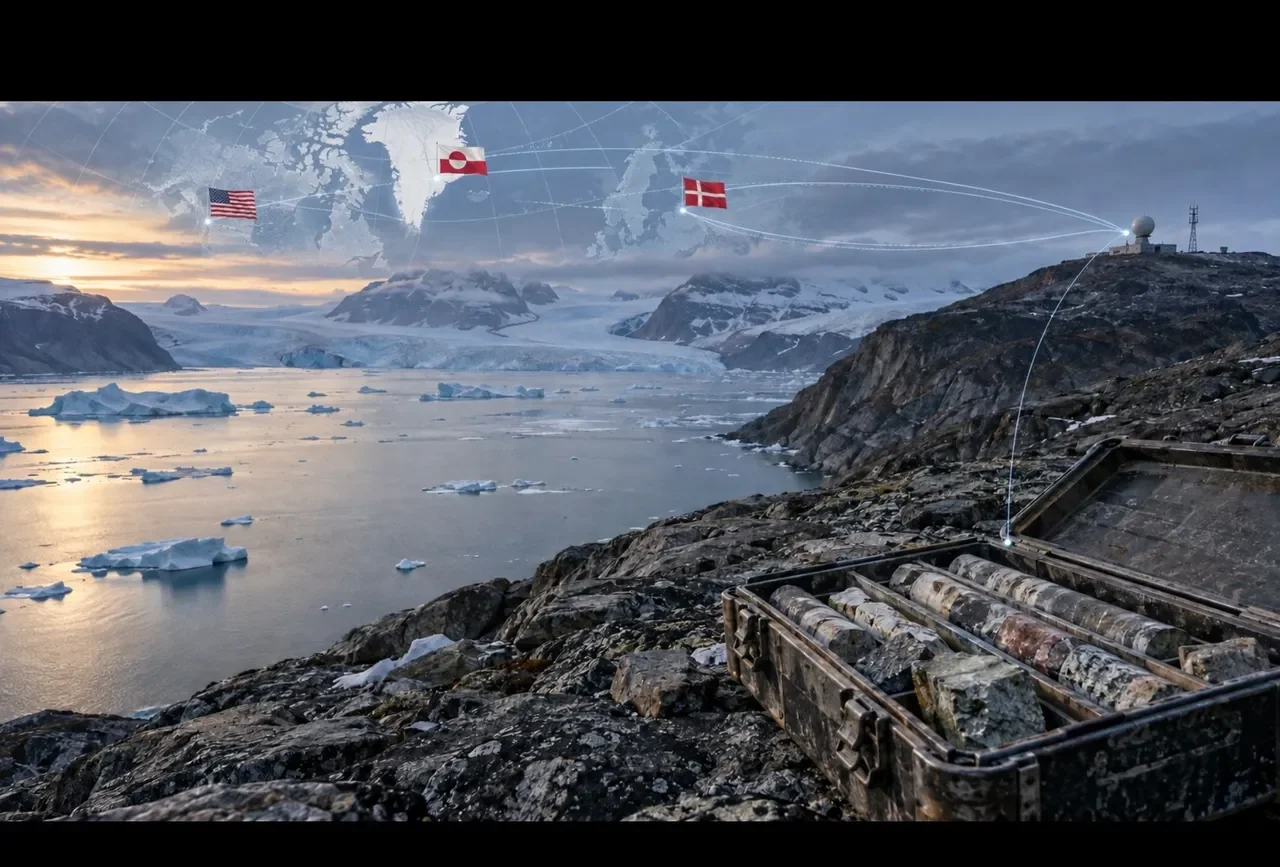
The Greenland Security Deal: What It Means for Sovereignty, Critical Minerals and Europe
By Dr. Pooyan Ghamari, PhD, Economist | September 19, 2026
On September 18, the United States, Denmark and Greenland announced a new security agreement for Greenland. It does not transfer Greenland to the United States. Denmark remains sovereign, and Greenland retains its right to decide its own future.
The agreement is expected to move through formal signing and parliamentary procedures, but the full text has not yet been released. This matters. Until the document is public, nobody can confirm the exact legal powers of the United States, the limits on foreign investment, or the final approval process.
Public reporting so far points to a clear political bargain: the United States receives a stronger and more secure strategic role in Greenland, while Denmark and Greenland avoid any change in sovereignty.
Does the agreement change who owns Greenland?
No.
Greenland remains part of the Kingdom of Denmark. There is no sale, annexation or transfer of territory in the announced arrangement.
For Washington, this is a practical result. The United States does not need formal ownership to protect its military interests in the Arctic. A stronger security role, reliable access and restrictions on rival powers can achieve much of the same strategic purpose.
For Copenhagen and Nuuk, the political gain is equally clear. They preserve the legal position that Greenland belongs to its people and that its future cannot be decided by an outside power.
The agreement therefore moves the discussion away from ownership and toward influence.
What is expected to change?
The United States already has a military presence in Greenland through Pituffik Space Base and existing defence arrangements with Denmark. The new framework is expected to expand that role.
According to public reports, the agreement includes three main elements:
- A stronger American military and security presence in Greenland.
- Limits on non-NATO military bases or strategic activity on the island.
- Restrictions on sensitive investments by countries considered adversaries of the United States and its allies.
China and Russia are the obvious concern behind this language. Arctic security is no longer only about troops and bases. It also concerns ports, airports, telecommunications, satellite infrastructure, energy systems, finance and mining projects.
The missing detail is the most important one: what exactly counts as a “sensitive investment”?
Until that definition is published, it is not possible to know whether the restrictions will apply only to military infrastructure or also to mines, transport projects, data networks, energy assets and major foreign financing.
Why critical minerals are central to the agreement
Greenland’s resources are part of the reason this agreement has such weight.
The island has major mineral potential, including rare earth elements, graphite and other materials used in defence technology, electronics, power systems and advanced industry. But resources in the ground do not automatically create wealth. A mine needs capital, roads, ports, energy, permits, technical expertise, environmental approval and long-term buyers.
This is where security policy and economics meet.
If foreign investment is screened on national-security grounds, the agreement may shape who can finance and develop Greenlandic projects. It could direct more projects toward American, European and allied capital while reducing room for strategic competitors.
For Greenland, this may bring access to finance and stronger Western partnerships. It may also create a risk: dependence can change form without disappearing.
The key issue is not whether Greenland will receive foreign investment. It will. The issue is whether Greenland can negotiate the terms, protect its environmental standards and retain a fair share of the value created.
What Europe should understand
Europe has reason to welcome a deal that lowers tensions between the United States, Denmark and Greenland. A conflict inside NATO over Greenland would have damaged the alliance at exactly the moment Arctic security is becoming more important.
But Europe should also see the wider message.
The United States is securing a central role in the Arctic through security agreements, not territorial claims. This is more acceptable politically, but it still gives Washington strong influence over a strategic part of the North Atlantic.
Denmark remains the sovereign state. Greenland remains the political centre of decisions about its future. Yet the balance of power will depend on the final rules for military access, infrastructure, investment screening and mineral development.
This is not only a Greenland issue. It is a model for how larger powers may approach small territories with strategic location, energy routes or critical resources.
What must be watched now
The public announcement is only the beginning. The real test will come with the text and its implementation.
The following points need close attention:
- How will “sensitive investment” be defined?
- Which authority will decide whether a project is allowed or blocked?
- Will Greenland have a meaningful role in decisions affecting its land, resources and infrastructure?
- How will environmental protections apply to mining and military expansion?
- What economic benefits will remain in Greenland itself?
These questions will decide whether the agreement strengthens Greenland’s ability to act independently or simply places more decisions around Greenland under outside control.
Frequently asked questions
Does the United States own Greenland after this agreement?
No. Greenland remains part of the Kingdom of Denmark. The agreement concerns security cooperation, not ownership or sovereignty.
Has the agreement been fully signed and approved?
The framework has been announced, but the full text and final approval steps have not been publicly released. The reported plan includes further formal and parliamentary procedures.
Why is Greenland important to the United States?
Greenland is strategically located between North America and Europe. It matters for Arctic defence, missile warning, space surveillance and North Atlantic security.
Will the deal affect mining in Greenland?
It may. If the agreement restricts sensitive foreign investment, it could affect who is allowed to finance, own, develop or buy from strategically important mining and infrastructure projects.
Can China invest in Greenland?
Public reports say the agreement will restrict sensitive investments by U.S. adversaries. The exact legal definition has not yet been published, so the practical limits cannot be confirmed.
Does Greenland control its own future?
Greenland retains its right to self-determination. Its real freedom of action, however, will depend on the final rules, its institutions, its economic strength and the terms it can negotiate with larger powers.
Sources: Reuters · Associated Press · U.S. Space Force on Pituffik Space Base · Greenland Mineral Resources Authority
Dr. Pooyan Ghamari is a economist, author and Founder of ALand FZE. He writes on global markets, real estate, geopolitics and sovereignty.
Originalartikel: https://ghamari.org/articles/f/greenland-security-deal-sovereignty-critical-minerals-europe