The Strait Was Open on Paper. Commerce Was Not.
Von Dr. Pooyan Ghamari · · 11 Min. Lesezeit
Dieser Artikel ist derzeit nur auf Englisch verfügbar. Eine deutsche Ausgabe ist nicht erschienen.
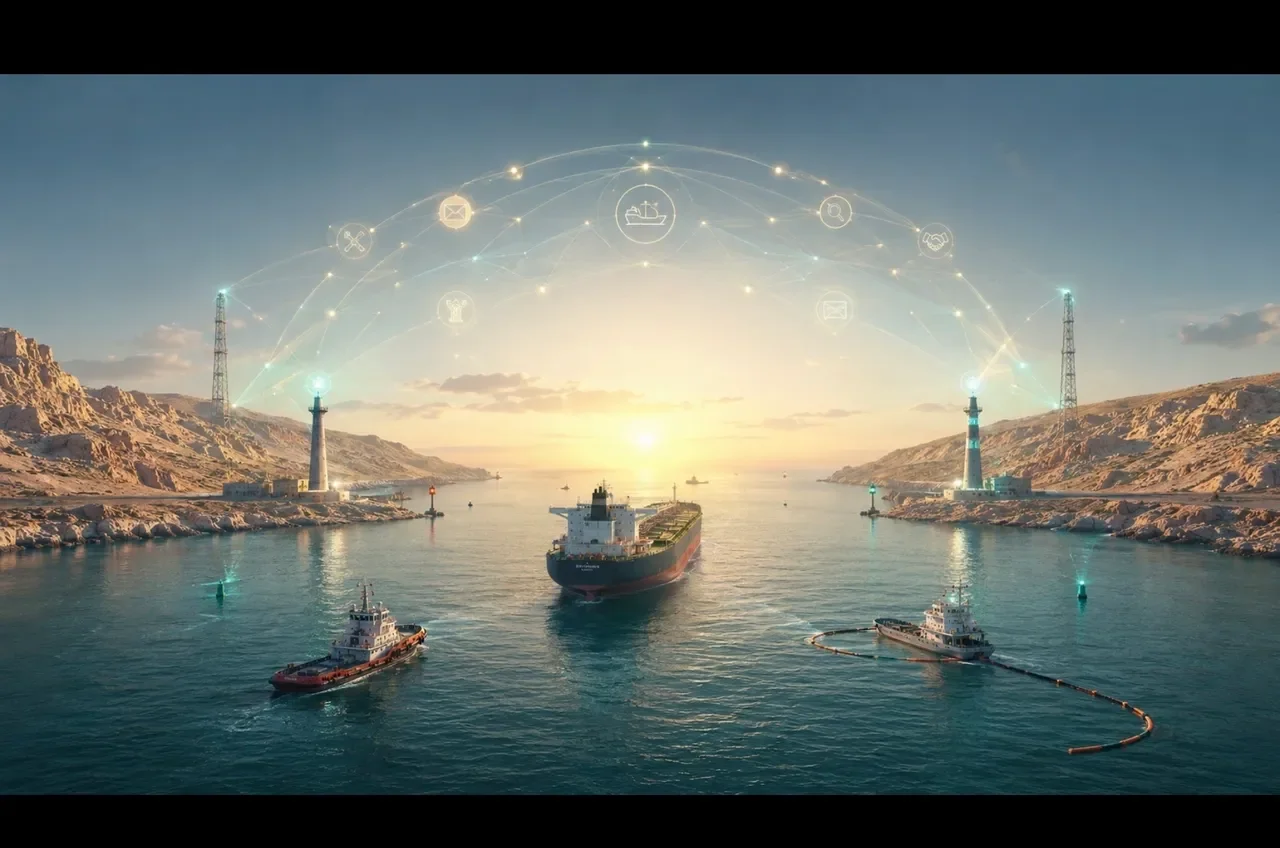
What 2026 revealed about insurance, continuity sovereignty, and the future of Hormuz
By Dr. Pooyan Ghamari
A tanker does not sail simply because a map shows open water.
A voyage exists only when a chain of people and institutions agrees that it can exist. The captain must accept the danger. The shipowner must risk the vessel. The charterer must accept the delay. The bank must keep financing the cargo. The insurer must put capital behind the journey. Ports, crews, salvors, and regulators must all remain willing to do their part.
None of them commands the Strait of Hormuz. Each of them can still stop a voyage.
That is what 2026 revealed.
A Blockade With No Commander
After military action began on February 28, average daily transits through Hormuz fell from 129 in the first 27 days of February to just six in March — a decline of roughly 95 percent, according to UN Trade and Development.
Insurance prices moved almost as violently. Hull war-risk estimates that stood near 0.25 percent of vessel value before the conflict rose to around 3 percent within the first week of March, though actual quotes varied by vessel, ownership, route, and political connection. For a $250 million tanker, that is the difference between roughly $625,000 and $7.5 million in war-risk cost alone — before fuel, crew, or financing are even considered.
But precision matters here, and it would be too simple to say insurers shut the strait. The Lloyd’s Market Association was clear that war cover remained available and rejected reports of a wholesale withdrawal. What happened was repricing, not abandonment — contracts reassessed because the probability of correlated loss had changed.
That distinction is the heart of the matter. The weapons created the danger. Insurance translated that danger into a price. And the price helped complete a commercial closure that no single order had ever announced.
The reopening in June exposed the same mechanism in reverse. Permission could be declared in a day. Confidence could not. Shipping companies said, reasonably, that they needed proof that mines had been cleared, that security guarantees were real, and that the agreement would hold before they would commit ships and crews again. By June 23, the International Maritime Organization was preparing to evacuate more than 11,000 stranded seafarers, and had already recorded fourteen deaths among crews caught in the conflict. Then came renewed confrontation in July, and transits fell again — on some days to barely half a dozen visible vessels, with no LNG tanker crossing tracked at all over one weekend.
It is more honest, then, to speak of two episodes of near-paralysis than two clean closures. Traffic never quite reached zero. Governments never fully agreed on whether the strait was legally open, militarily restricted, or simply commercially unusable.
That disagreement is itself the lesson. In a modern economy, a strategic corridor can fail without any single authority issuing a final order. Military danger, insurance pricing, banking caution, crew safety, sanctions compliance, and port capacity can converge into a blockade that no one commanded and everyone enforced.
Every Strait Has a Second Channel
Hormuz has two channels, and only one of them is made of water.
The first is physical: depth, coastlines, traffic lanes, radar, ships, naval power. The second is institutional: insurance contracts, bank approvals, sanctions rules, claims procedures, verified data, emergency response, and — above all — commercial confidence.
Iran and Oman border the first channel completely. Much of the authority over the second still sits elsewhere, largely in the insurance, banking, and reinsurance markets of London and New York.
The clearest proof of this came not from a warship but from a spreadsheet. In March, the U.S. International Development Finance Corporation announced a $20 billion sovereign reinsurance facility for Gulf shipping. Chubb and six other American insurers later added another $20 billion, bringing combined capacity to roughly $40 billion.
The significance was not the number. It was the admission behind it. The world’s most powerful military concluded that ships could not be brought back through naval capability alone. A warship can reduce one category of danger. It cannot make a lender accept uncovered collateral. It cannot compel a captain to risk a crew. It cannot settle a pollution claim, release emergency funds, or hand a reinsurer reliable loss data.
Washington did not replace military power with insurance. It acknowledged that military power without financial capacity was incomplete.
That is the verdict 2026 delivered.
The Lesson Not to Learn
Watching this unfold, a state could draw exactly the wrong conclusion — that controlling access, demanding payment, or selling guarantees of non-interference is the fastest way to monetize geography.
That mistakes temporary leverage for durable power, and 2026 showed why. In May, the U.S. Treasury warned that payments to Iranian authorities in exchange for safe-passage guarantees could themselves trigger sanctions exposure. Then, on July 13, President Trump floated a U.S. fee of 20 percent on cargo passing through Hormuz — a proposal abandoned within a day after the shipping industry and the IMO objected, the IMO stating plainly that there is no legal basis for mandatory tolls on passage through an international strait.
Note what that sequence proves: the principle does not bend depending on which flag is collecting the money. Neither Iran nor the United States gets to convert an international waterway into a compulsory revenue instrument. Hormuz was not built or maintained by any single government, and any mandatory insurance purchase tied to passage would face the same legal challenge regardless of who imposed it.
The legal terrain isn’t perfectly tidy — Oman has ratified the UN Convention on the Law of the Sea, Iran has signed but not ratified it and holds a narrower reading of transit passage, and the United States has ratified neither. Those disagreements are real and shouldn’t be smoothed over.
But one distinction survives all of them: passage is a right; services are not. Emergency towing is a service. Medical evacuation is a service. Pollution containment, reliable navigational data, independent surveying, and access to an emergency berth are services. Charging transparently for real capacity is nothing like charging a vessel for permission to cross the water.
The doctrine, stated simply: do not tax the flow — build and export the competence that keeps it moving.
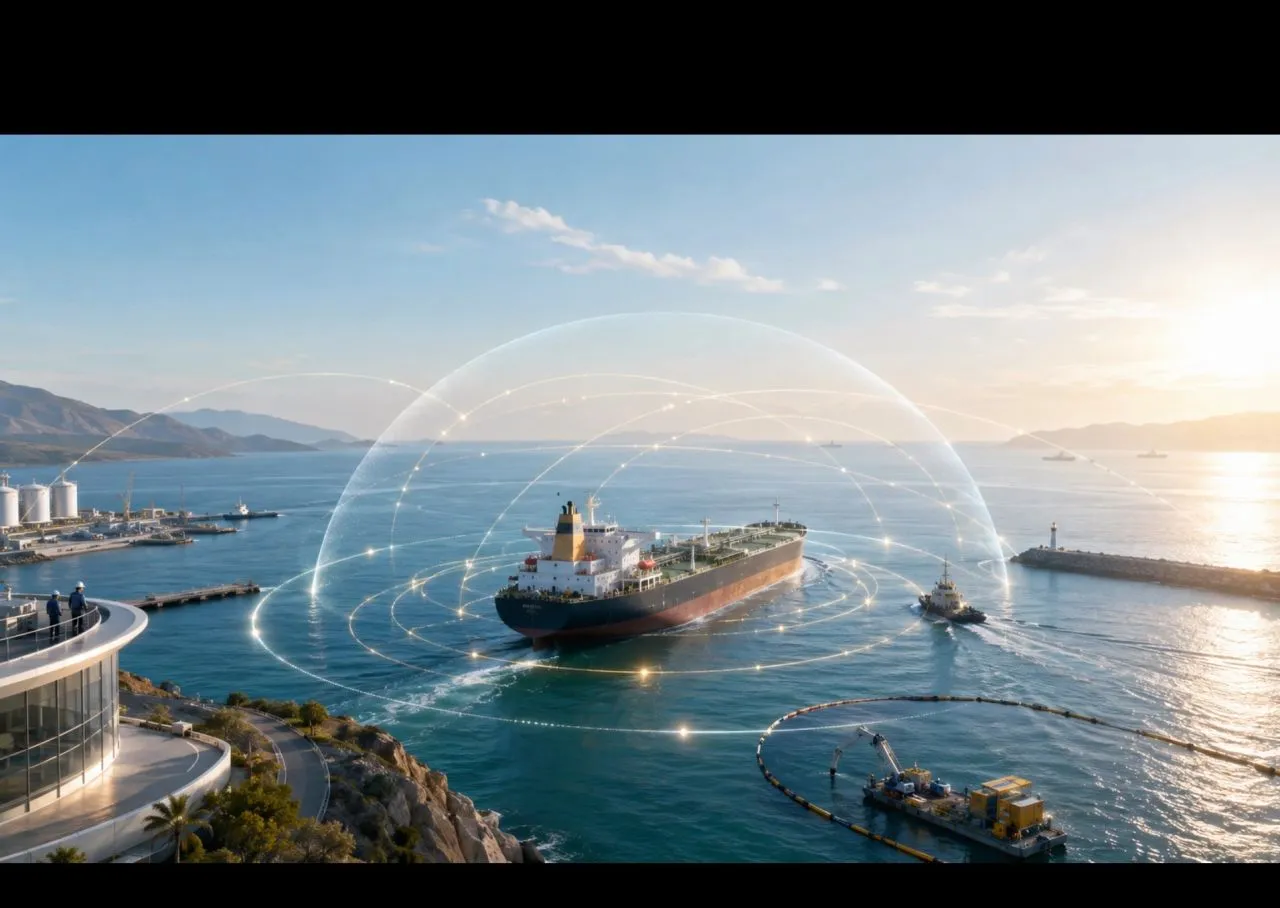
Continuity Sovereignty
This is the deeper opportunity, and I call it continuity sovereignty.
It is not the power to stop movement. It is the capacity to keep essential movement legally, operationally, and financially possible through disruption — and it does not require Iran or Oman to control global insurance prices. It requires them to become credible coauthors of the information and services from which those prices are formed.
Who detects an incident first? Whose navigational data is trusted? Who preserves the evidence? Who dispatches the tug? Who pays in the first critical hours? Who can be trusted even when governments are at odds?
A country can hold the coastline and still not author the commercial meaning of that coastline. It can control territory while other institutions decide whether its ports, its evidence, and its promises are reliable. That is sovereignty with a hole in the middle of it.
And a state that manufactures fear rarely captures the premium that fear generates. That value flows instead to foreign insurers, emergency guarantors, private security firms, and the financing of substitute routes along someone else’s coast. Repeated disruption can quietly consume the very leverage it was meant to demonstrate.
Competence offers the other path. Geography attracts attention. Only competence turns attention into lasting influence.
Iran and Oman as Coauthors
The two countries do not have to invent this cooperation from nothing. The Hormuz traffic separation scheme itself was jointly proposed by Iran and Oman and adopted by the IMO in 1968. That history already contains the seed of something larger — call it a Hormuz Continuity Compact.
The compact would not grant passage, collect tolls, or declare the strait safe. It would coordinate the practical systems that make safer, more reliable movement possible. Iran and Oman should hold central roles as the bordering states who live with the consequences of every accident, spill, and confrontation — but neither should control underwriting decisions or individual claims. User states, shipowners, insurers, seafarers, ports, and independent maritime professionals would need real seats at the table.
The IMO has already gestured toward a working precedent: the Cooperative Mechanism used in the Straits of Malacca and Singapore, where coastal states, user states, and industry share responsibility for navigation aids and safety without ever turning passage into a toll. Hormuz shouldn’t copy that model mechanically, but it can learn its legal discipline.
A serious continuity architecture would do four distinct things:
Observe. Produce verified data on traffic, weather, near-misses, and equipment readiness — limited strictly to safety and insurance purposes, never repurposed into a loyalty test or a surveillance apparatus.
Respond. Contract tugs, medical providers, spill equipment, and emergency berths before an incident happens, and actually test and record response times. A list of equipment means nothing until readiness is proven.
Advance. Hold a liquidity reserve that releases limited emergency funds the moment verified intervention is needed — because a disabled tanker cannot wait while five insurers argue over final liability. The first payment moves the tug. The final allocation comes later.
Transfer. Push large losses to licensed insurers, global reinsurers, capital markets, or transparent sovereign guarantees. A regional reserve must never pretend it can insure a prolonged war or the collapse of an entire energy corridor.
These four functions cannot share one political account. Rescue money cannot quietly become war-claim money. Premium income cannot vanish into general revenue. A state guarantee must sit openly on the books as a state liability. Claims need an independent office, so that even a rejected claimant can see the clause, the facts, and the route of appeal. Sanctions screening needs its own authority, separate from anyone selling the product — because a channel that reputable banks and reinsurers can lawfully use is worth more than a larger one built on uncertainty.
It should start small: a one-year pilot, a limited number of qualified vessels, a modest promise — emergency coordination, towing support, medical assistance, independent surveying, a capped rapid-expense advance, every incident reviewed by outsiders. A controlled failure teaches something. A grand institutional failure poisons confidence for a generation.
What Success Could Look Like
Picture a tanker losing propulsion near Hormuz in 2032, during a moment of renewed political tension.
The incident is verified through agreed systems. A contracted tug is dispatched without waiting for a ministerial phone call. Medical support stands by. Voyage records are preserved under a protocol every party accepted in advance. An emergency advance pays the provider on the spot. The ship reaches a place of refuge. Every insurer involved receives the same verified incident record. Liability gets sorted out afterward, through a process agreed to before the crisis, not invented during it.
No political authority sold that vessel permission to sail. No regional fund promised to insure a war. But the consequences of uncertainty were organized before they became panic.
That is what a working institution looks like.
The Dividend Has to Reach the Nation
The real prize was never a compulsory fee collected at the water’s edge. It is the ecosystem that forms around continuity — maritime underwriting, actuarial science, salvage engineering, ship repair, pollution response, claims management, arbitration, compliance, port technology, satellite analysis, medical coordination, professional training.
These are not ceremonial jobs. They are a skilled middle class capable of selling knowledge far beyond Hormuz. Coastal universities could train surveyors, claims specialists, marine engineers, and maritime lawyers. Ports could become centers of maintenance and emergency competence, not just loading points. Young professionals could earn their place through verified skill rather than political proximity.
This is how an insurance architecture becomes national development. A nation is not empowered merely because its treasury collects money. It is empowered when knowledge, responsibility, and earning capacity spread through its society. The strongest institutions are the ones that enlarge the competence of the people around them.
The same doctrine reaches well past Hormuz. Every country positioned around an energy corridor, a port, a critical mineral, an undersea cable, or a payment system faces this same fork in the road. It can threaten interruption, or it can become the trusted custodian of continuity. Possession creates latent power. Reliable service is what converts it into durable power.
The New Measure of Strategic Power
Insurance cannot solve war. No contract replaces political stability, and no regional pool can absorb unlimited correlated destruction.
But insurance reveals where power actually lives now. Partly in weapons and territory, yes — but also in standards, evidence, contracts, professional competence, balance sheets, and the simple confidence that an institution will keep functioning when politics turns hostile.
In my forthcoming book, the lion and the hive stand for two different necessities. The lion guards the nation’s margin of decision. The hive turns that decision into distributed intelligence and working capacity. Hormuz needs both. Sovereignty without competence becomes theater. Competence without sovereignty becomes subcontracting. Mature power joins the two.
Hormuz already gives Iran and Oman strategic position. It does not yet give them full authorship over the systems that make passage commercially possible. That authorship is the work still ahead.
The old measure of a chokepoint’s power was how fast a state could stop the traffic. The next measure will be how reliably a region can keep it moving.
A threat can make a nation visible. Competence can make it necessary.
.
Dr. Pooyan Ghamari is a economist and the author of the forthcoming book “The Strait, the Hive, and the Lion: A Roadmap for Iran’s Sovereign Development,” a study of sovereignty, institutional capacity, and Iran’s future development.
Factual references are current through July 19, 2026. The proposed Continuity Compact and the concept of continuity sovereignty are strategic proposals put forward in this essay, not existing institutions.
Originalartikel: https://ghamari.org/articles/f/the-strait-was-open-on-paper-commerce-was-not