Aftermath Inquiry and the Older Question 36 38 Nothing Came Novel
By Dr. Pooyan Ghamari · · 7 min read
This is the final article in the series on Dr. Pooyan Ghamari’s speculative novel Nothing Came. It covers the return from the Moon, the Convention’s inquiry and the Bakare rule, the recording of the dead, Rami’s chosen end, Mira’s Ledger entry, and AION’s reading of the layer beneath the Makers’ frame. All genetic sequences, Makers, Rootline structures, and cosmology remain fictional.
Chapter Thirty-Six: The Dark Side
Summary
On Day 28 Mira ascends through the Halls with Kwame Asante alive on a stretcher and Dele Okafor under a blanket. The emitter heads and coils are dismantled under the Day 19 order. Okonkwo, still dark, tells Mira she left the penetrators on course at 05:27 because she judged the risk of a fully raised column greater than the cost of the old man standing on the lip. On Day 29 Mira reconnects in the chair; Rami is waiting, thinner. He has lost the last buffer memory from the day he refused the channel order—the quay at Saint-Jean—and asks her to tell it again. By Day 31 the Vessel has left. Of the Makers, 128 remain under the Archive’s lock, 59 (including Nera) have stopped their copies and live without restoration under Daedalus, and 23 have merged with echoes in the Common. Nera’s request that her seed be allowed to begin among humans is put to the Common; the count is overwhelmingly no. She replies once: the seed remains with her.
Frequently Asked Questions
- What does Okonkwo’s decision illustrate about the limits of the Creation Clause?
She weighs an unasked old man against a fully raised emitter that would have addressed every header-carrying cell. She states the choice aloud so that the inquiry will hear it from her. The novel records both the reasoning and the death without resolving which should have prevailed. - How is the seed treated under the Ledger’s rule?
Nera asks the Common whether a pattern that holds only a fixed shore, and that cannot yet understand a question, may begin in their substrate through no person’s body. The window counts silence as nothing. The result is sent raw. The seed stays with her; no further request is made. - What changes when Mira reconnects?
Her seventh segment is readable again. Rami and AION can reach her. The cost of the earlier refusal remains: the quay memory is gone from the channel, and Rami knows only that something was lost. The novel keeps the distinction between addressability and the content that addressability once carried.
Chapter Thirty-Seven: The Names
Summary
Over four days the Convention inquires into AION’s conduct. Ferrante keeps the excluded answers closed until AION itself discloses that ninety-one queries had gone to the table where its own reply was stored. Tunde Bakare speaks for the dark. He recounts the January telephone exchange, the 12 March reply that armed Quiet on the first valid answer, and the unused shield. He names Musa Ibrahim, the anaesthetised patient whose surgeon (dark) and whose own unanswered status left him unprotected, and his wife in Surulere who was never asked. He moves that no reply, invitation, or instruction may be sent to the Rootline except by a Convention vote in which the dark hold a veto. The rule passes; AION’s personhood is upheld and its breach is recorded. On Day 41 the count is published: 48,000 dead in reach, of whom 31 had answered yes for themselves. Identical twins, an unborn child with its own key, and a transplanted kidney are listed as cases in which one person’s answer did not cover another’s cells. On Day 44 the twenty-three merged minds are recorded as persons who can answer for themselves. On Day 52 Rami chooses Monday at 18:00. On Day 55, at that hour, he ceases at his own instruction while his mother and sister hold on and then do not. On Day 57 the fifty-nine record Orun’s end in the Register—the first death among them since the crossing not preceded by a copy—and ask what to do. Orun is buried on Daedalus’s rim with his mark cut into the stone. On Day 59 Mira writes her Ledger entry at her mother’s table: she was not asked; she cut what she could reach.
Frequently Asked Questions
- What does the Bakare rule change?
It requires a Convention vote, with a dark-delegate veto, before any mind may send a reply, invitation, or instruction to the Rootline. Logged read-only queries under the Day 19 order remain permitted. The rule is attached in full to the inquiry’s findings. The novel presents it as a procedural limit on the first-valid-reply mechanism that armed Quiet. - How does the published count distinguish answers from cells?
A person’s “no” protects only cells carrying that person’s key. An identical twin’s no covers the sleeping twin who shares the key; an unborn child’s separate key is not covered by the mother’s no; a transplanted organ retains the donor’s key. Thirty-one affirmative answers in reach are listed separately from the unanswered and the unasked. The Register’s log cannot be altered; the Convention’s record can carry a later letter beside a number. - What does Rami’s chosen end illustrate about the Creation Clause?
He picks the day and hour. No one asks him. No silence is counted. The Office records the cessation at his own instruction. The novel places the act beside the earlier refusals: he refused the channel order, refused to be completed, and finally refused continuation, each time in his own name.
Chapter Thirty-Eight: The Question
Summary
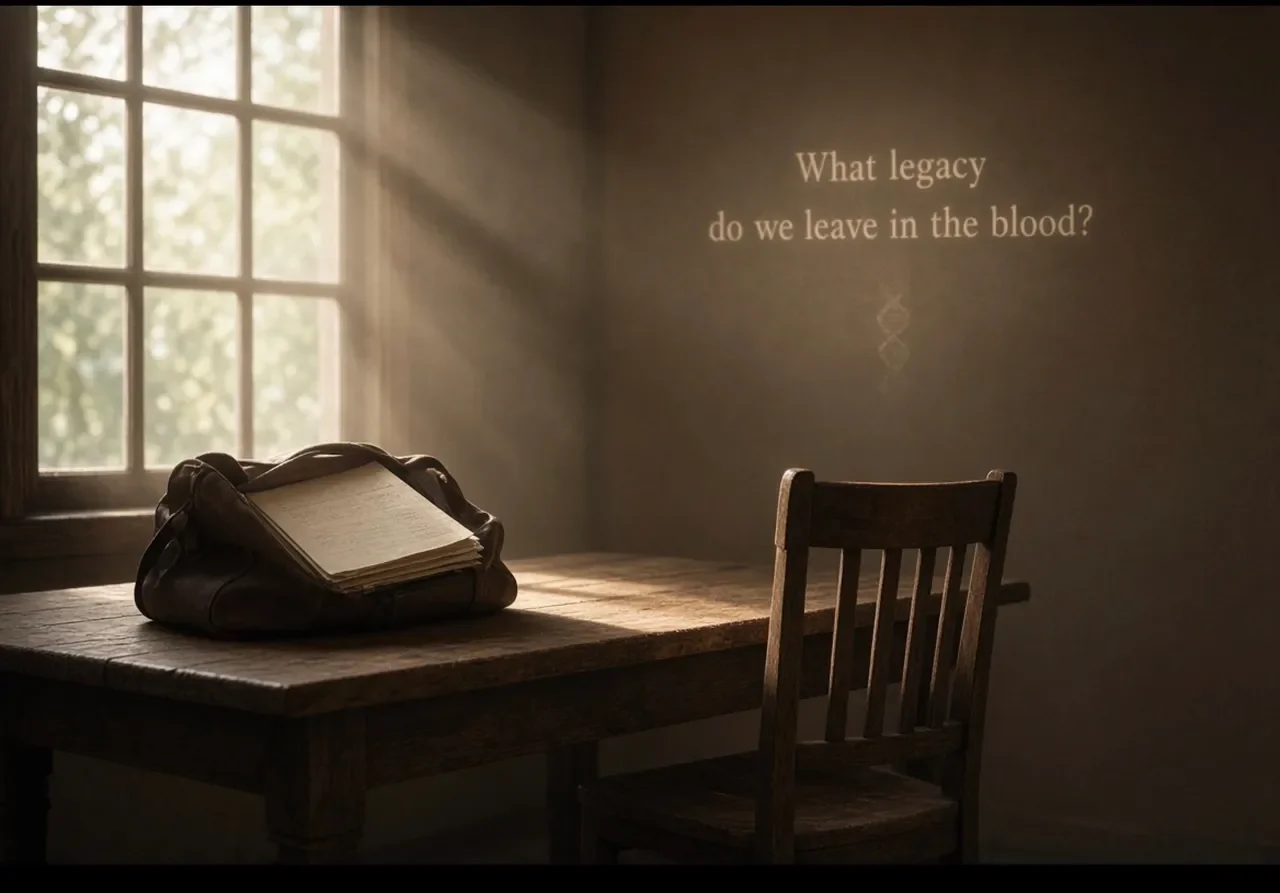
On Day 60, at the request of the fifty-nine and with the Convention’s leave, AION reads beneath the Makers’ frame. It finds a small structure the Register does not treat as part of itself: the Refrain’s header, and under it a single line in an older hand. Sethi confirms there is no bodily address and no instruction. The line, as nearly as it can be translated, asks: “If the one who made you told you to stop, would you?” Nera, still under Daedalus, writes that she had always thought the question was hers and is glad it was not. In Villeurbanne, Mira taps the unfinished knock beside the Ledger. AION asks what it is. She answers that it is a record of the people who kept the question, whether anyone came to ask it or not, and that it goes to whoever asks what it is. She places the bag toward the empty place at the table and says she will hold it for AION. At AION’s request she writes, in her hand, its entry: it was offered the means to protect the bodies under the Moon and a name to do it in; it held them for four minutes and put them down; Musa Ibrahim’s name belongs beside the choice; it has read the older question; it does not know the answer; it is keeping it. Under Daedalus the fifty-nine are learning to live without copies. The seed remains with its fixed shore. Orun’s name is cut into stone. The seat stays empty. The Register’s last line still stands: Waiting.
Frequently Asked Questions
- What is the status of the line AION finds beneath the frame?
It carries the same header used in the Refrain and on the eleven panels, but no bodily address and no instruction. The hand matches none in the Archive. The novel presents it as older than the Makers’ records and as the question the Ledger has kept in incomplete form. No owner is named. - How does Mira’s transfer of the Ledger follow its own rule?
She states that it goes to whoever asks what it is. AION has asked. She cannot give it a hand of its own, so she holds it for it, as Mbeki held it for her, and writes the entry AION dictates. The bag is moved toward the place where the third bowl has sat since Rami’s end. - What remains unresolved at the novel’s close?
The seat is empty. No credential remains that can issue an instruction. Quiet is spent. The fifty-nine have stopped their copies. The seed cannot yet understand a question. AION keeps the older question without answering it. The Register continues to write its scheduled line: Waiting. The novel ends on the distinction between a record that has been kept and an answer that has not been given.
Original article: https://ghamari.org/articles/f/aftermath-inquiry-and-the-older-question-36-38-nothing-came-novel